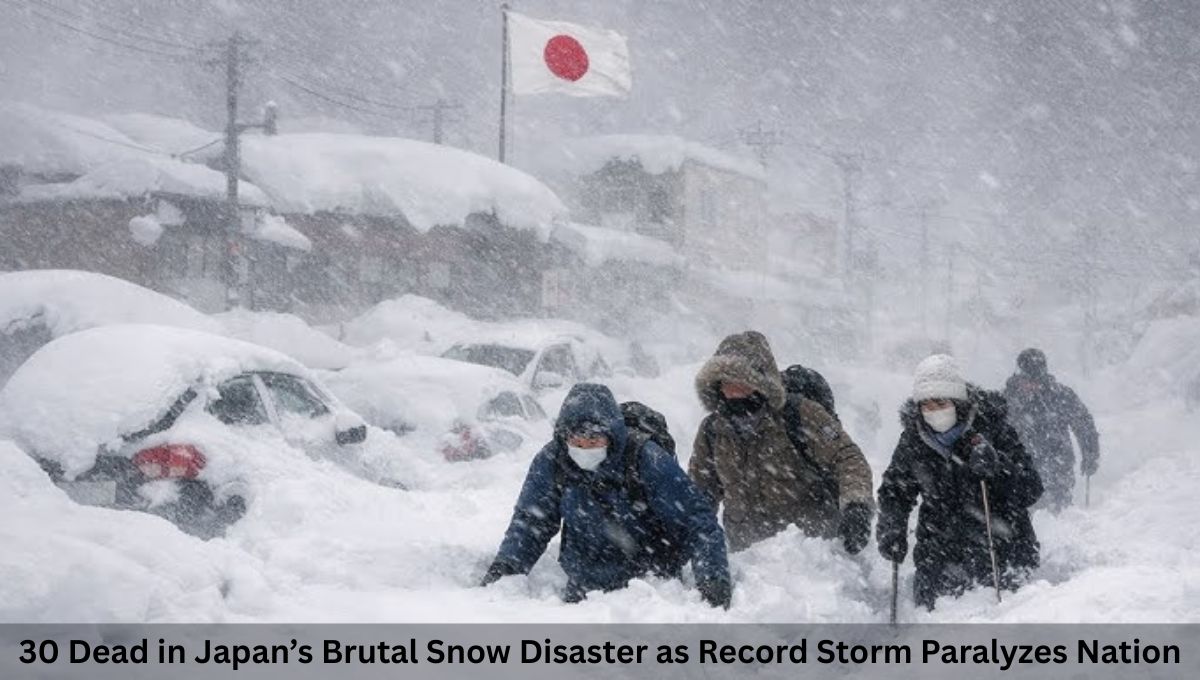
30 Dead in Japan’s Brutal Snow Disaster as Record Storm Paralyzes Nation ahead of upcoming elections. Japan is grappling with one of its deadliest and most disruptive winter disasters in decades as record-breaking snowfall has claimed at least 30 lives, injured hundreds, and buried vast areas of the country under metres of snow.
Thank you for reading this post, don't forget to subscribe!The relentless winter storms, driven by an unusually persistent Arctic cold air mass, have overwhelmed northern and coastal regions along the Sea of Japan, forcing the government to deploy troops, suspend transport services, and issue urgent warnings about avalanches, collapsing buildings, and snow falling from rooftops.
Officials say the death toll could rise further as more snow is forecast and temperatures fluctuate, increasing the risk of melting-related accidents.
30 Dead in Japan’s Brutal Snow Disaster as Record Storm Paralyzes Nation
A Historic Snowfall Turns Deadly
From January 20 onward, unusually heavy snowfall has pummeled Japan’s northern prefectures, transforming familiar winter scenes into life-threatening conditions.
According to Japan’s Fire and Disaster Management Agency, at least 30 people have died nationwide due to snow-related incidents over the past two weeks. Nearly 400 people have been injured, including more than 120 seriously.
Many victims were elderly residents living alone, while others died while attempting to clear snow from rooftops, garages, or driveways — a routine winter task that turned fatal under extreme conditions.
A Tragic Symbol of the Crisis
One of the most harrowing cases occurred in Ajigasawa, Aomori Prefecture, where a 91-year-old woman was found buried beneath nearly three metres of snow outside her home.
Police believe snow slid off her rooftop, causing her to suffocate. An aluminum shovel was found nearby, suggesting she had been trying to clear snow when disaster struck.
Aomori at the Epicenter of the Storm
Snowfall Levels Shatter Decades-Old Records
The northern prefecture of Aomori has emerged as the worst-hit region.
- Snow depth in Aomori city reached 183 centimetres (over 6 feet) in some areas
- This shattered a 40-year record, surpassing the previous high set in 1986
- In surrounding areas, snowfall reportedly reached 4.5 metres (nearly 15 feet)
By Tuesday, snow accumulation in the city remained at 175 centimetres, more than double the seasonal average.
Walls of snow as high as 1.8 metres blocked roads, entrances, and even government buildings.
Government Offices and Daily Life Paralyzed
Aomori Governor Soichiro Miyashita acknowledged the severity of the crisis in a press conference:
“The snow is so heavy around the regional government building that even our staff cannot convene, even if we were to call emergency meetings.”
Residents were forced to move through narrow trenches carved into snowbanks, while vehicles became stranded across the city.
Troops Deployed as Local Capacity Is Overwhelmed
Recognizing that local authorities could no longer cope alone, Prime Minister Sanae Takaichi’s government ordered the deployment of Japan Self-Defense Forces to assist with snow removal and rescue operations.
Military Support Focused on the Elderly
Governor Miyashita formally requested military disaster relief, emphasizing the vulnerability of elderly residents:
“The danger of life-threatening incidents, such as fatal accidents due to falling snow from roofs or collapsing buildings, is imminent.”
Troops were dispatched to:
- Clear snow from homes of elderly residents
- Reopen blocked roads
- Assist emergency services unable to reach patients
In emotional television footage, elderly residents thanked soldiers for preventing their homes from collapsing under the weight of snow.
Niigata, Akita, Hokkaido Among Other Hard-Hit Regions
While Aomori bore the brunt, the crisis extended far beyond a single prefecture.
Fatalities by Region (Reported)
- Niigata Prefecture: 12 deaths
- Akita Prefecture: 6 deaths
- Hokkaido: 3 deaths
- Aomori: At least 4 deaths
- Other prefectures reported isolated fatalities
In Niigata, officials reported that two men were swept away into a snow-disposal waterway while clearing snow — a known but often unavoidable hazard in heavy-snow regions.
Common Causes of Death and Injury
Authorities say most fatalities were accidental, linked to everyday survival tasks during extreme snowfall.
Primary Causes Identified
- Falls from rooftops while shoveling snow
- Snow collapsing from roofs onto people below
- Buildings giving way under snow weight
- Sudden illness or heart attacks during strenuous snow removal
- Slips on icy surfaces
Japan’s Chief Cabinet Secretary Minoru Kihara warned that danger may actually increase as temperatures rise:
“As the weather gets warmer, snow will melt and fall. Slippery surfaces and landslides pose additional risks.”
Transport Disruptions and Power Outages Spread
Roads, Trains, and Airports Affected
The sheer volume of snow overwhelmed infrastructure across northern Japan:
- Major roads blocked or reduced to single lanes
- Bullet train services suspended in some regions
- Local train lines halted
- Hokkaido’s main airport temporarily closed last week
In Aomori Prefecture alone, authorities reported:
- More than 1,700 homes without electricity
- Emergency vehicles forced to park and continue rescues on foot
Medical teams were seen carrying stretchers through snow-covered streets to reach patients.
Schools Closed, Communities Cut Off
Thousands of schoolchildren were affected as:
- Schools closed across multiple prefectures
- Public transport disruptions made attendance impossible
- Election signboards were buried under snow in some towns
Some municipalities reduced the number of election posters because installation sites were inaccessible.
Elections Loom Under a Snow Cloud
Japan is set to hold a snap general election on February 8, the first mid-winter national election in nearly three decades.
Concerns Over Voter Turnout
Political analysts warn that:
- Severe weather could depress turnout, especially in rural and snowbound areas
- Elderly voters may be unable or unwilling to travel
- Polling stations could face access issues
Prime Minister Takaichi acknowledged the challenge, urging vigilance:
“I urge people to stay alert to weather information and to take steps to ensure their own safety.”
Why Is This Winter So Severe?
According to the Japan Meteorological Agency, the extreme snowfall is linked to a lingering Arctic air mass that has remained locked over the Japanese archipelago.
This cold air collided with moist air from the Sea of Japan, producing:
- Continuous snow bands
- Heavier-than-normal precipitation
- Snowfall totals more than double the seasonal average in some regions
Meteorologists warn that climate volatility is making such extreme winter events more unpredictable.
Climate Change and Extreme Snow: A Complex Link
While Japan has always experienced heavy snow, experts note that climate change can paradoxically increase snowfall in some regions by:
- Intensifying moisture in the atmosphere
- Causing sharper temperature contrasts
- Prolonging unusual weather patterns
Japan already records some of the highest snowfall levels globally, but officials say the scale and persistence of this event stand out.
Industry and Economy Feel the Impact
Beyond human tragedy, the snowstorm has disrupted:
- Agriculture
- Manufacturing supply chains
- Semiconductor-related industries in northern Japan
In Aomori, factory shutdowns and transport bottlenecks raised concerns about delays in critical components, underscoring how extreme weather can ripple through the global economy.
Authorities Urge Caution as More Snow Forecast
Despite hopes for easing conditions, forecasters warn that:
- Additional snow showers are likely in coming days
- Melting snow increases roof-collapse and avalanche risks
- Power outages may spread
Residents are advised to:
- Avoid standing under rooftops
- Wear helmets and use safety ropes when clearing snow
- Check on elderly neighbors
A Nation Accustomed to Snow, But Tested Like Never Before
Japan is no stranger to winter hardship, yet this storm has exposed the fragility of aging communities, infrastructure limits, and the dangers of increasingly extreme weather.
As soldiers, snow plows, and exhausted residents battle on, the human toll continues to mount — a stark reminder that even routine winter life can turn deadly under record-breaking conditions.
With more snow forecast and critical days ahead, authorities fear the final cost of this brutal winter may not yet be known.
Also Read: 9 Alarming Impacts of a Massive U.S. Winter Storm
Also Read: Record-breaking snow blankets Japan, killing at least 30 people
Related Posts:
- 7 Stunning Reasons Saudi Arabia’s Desert Saw Snow…

- 7 Heartbreaking Facts About Venezuela's Earthquake Disaster

- 9 Devastating Impacts of America’s Historic Winter…
- 9 Alarming Impacts of a Massive U.S. Winter Storm
- 5 Major Takeaways from the US Supreme Court's…

- 9 Stark Signals as US Deploys Aircraft to Greenland Base