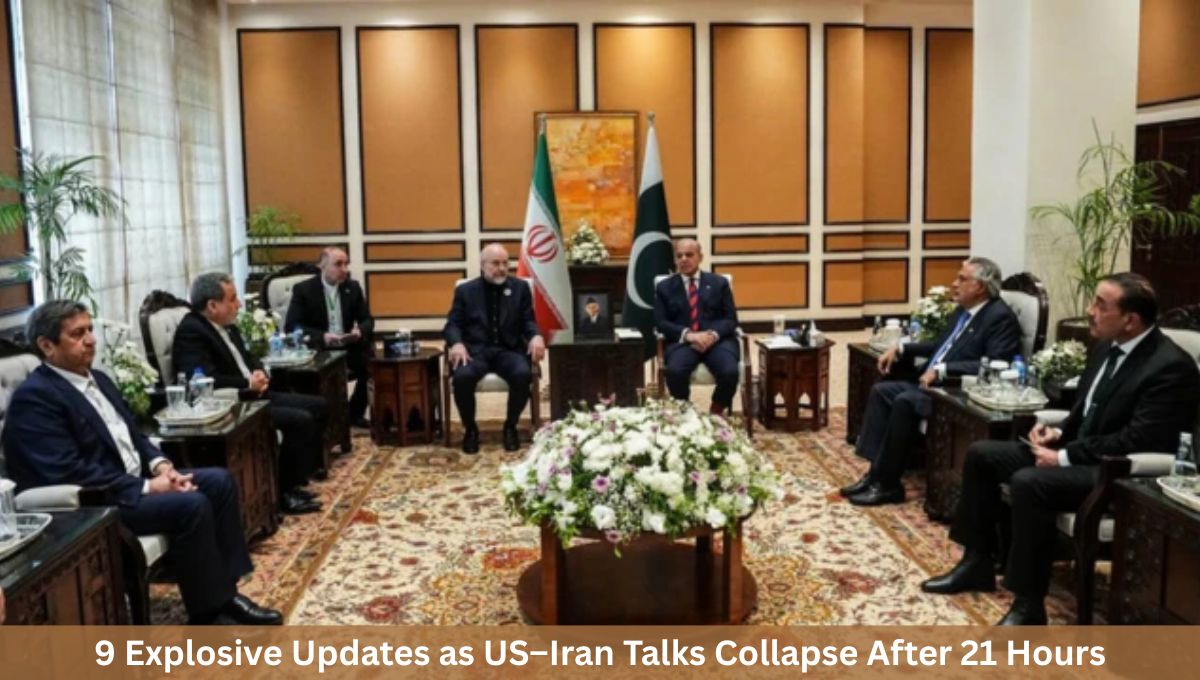
9 Explosive Updates as US–Iran Talks Collapse After 21 Hours of Negotiations. The much-anticipated peace talks between the United States and Iran ended without a breakthrough after 21 hours of continuous negotiations in Islamabad.
What was expected to be a turning point in a six-week-long conflict instead exposed deep-rooted disagreements, particularly over nuclear commitments and strategic control of the Strait of Hormuz.
Despite intensive diplomatic engagement and mediation efforts, both sides walked away without an agreement, leaving a fragile ceasefire hanging in uncertainty and raising fears of renewed escalation in the Middle East.
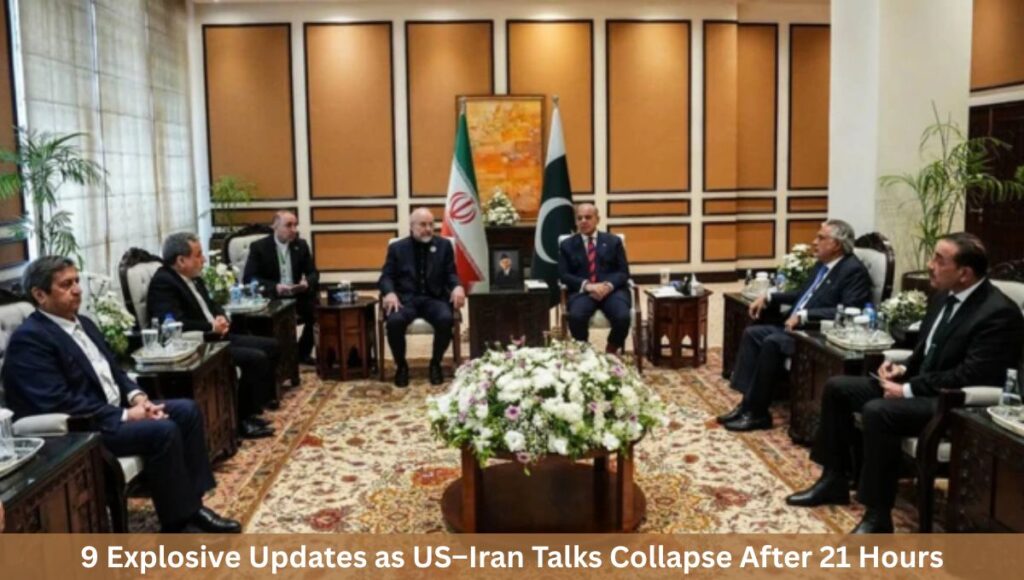
9 Explosive Updates as US–Iran Talks Collapse After 21 Hours
Marathon Talks Yield No Breakthrough
The negotiations, held in Pakistan’s capital, stretched across multiple rounds and formats, reflecting the urgency and complexity of the crisis.
The United States delegation, led by Vice President JD Vance, remained in constant communication with Washington throughout the process.
According to Vance, discussions with the US President occurred repeatedly during the 21-hour period, highlighting the high stakes involved.
The talks were described as “substantive,” but ultimately unsuccessful in bridging the core differences between the two nations.
While both sides engaged actively, the outcome underscored the widening gap between their strategic priorities.
Core Issue: Iran’s Nuclear Program
At the heart of the deadlock lies a fundamental disagreement over Iran’s nuclear ambitions.
The United States demanded a clear, long-term commitment from Iran that it would not pursue nuclear weapons or develop the capabilities to produce them rapidly.
This condition was described as a non-negotiable “red line.”
However, Iran did not provide the level of assurance Washington was seeking. From the US perspective, the absence of a firm commitment made any agreement untenable.
Iran, on the other hand, has consistently maintained that its nuclear program is for peaceful purposes and has resisted calls to completely abandon enrichment activities.
This fundamental mismatch in expectations proved impossible to reconcile during the talks.
Iran Blames “Unreasonable Demands”
Iranian officials and state media were quick to respond, attributing the collapse of talks to what they described as excessive and unrealistic demands from the United States.
According to Iranian sources, their delegation engaged in intensive negotiations and even proposed forward-looking solutions.
However, they argued that Washington’s conditions—particularly around nuclear restrictions and regional control—were too stringent.
Iran also emphasized that trust remains a major obstacle.
Officials indicated that any long-term agreement would require the United States to demonstrate credibility and consistency in its commitments.
Strait of Hormuz: A Strategic Flashpoint
Beyond nuclear issues, the Strait of Hormuz emerged as another critical sticking point.
This narrow waterway is one of the most vital shipping routes in the world, handling nearly 20% of global energy supplies.
Control over this passage carries immense economic and geopolitical significance.
Iran has reportedly demanded:
- Control over the strait
- The right to impose transit fees
- Recognition of its strategic authority in the region
The United States, however, insists on unrestricted international access to ensure the free flow of global trade.
This clash of interests turned the Strait of Hormuz into a major barrier to reaching a deal.
Trump’s Blockade Warning Raises Stakes
Following the collapse of talks, the situation escalated further with a dramatic announcement from the US leadership.
A proposed naval blockade of the Strait of Hormuz signaled a shift from diplomacy to potential military enforcement.
The plan includes:
- Interdicting vessels that pay tolls to Iran
- Ensuring unrestricted passage for global shipping
- Removing naval mines allegedly deployed in the strait
Such measures, if implemented, could significantly increase tensions and risk direct confrontation.
The warning also reflects a broader strategy to apply maximum pressure on Iran after diplomatic efforts failed.
Fragile Ceasefire at Risk
The failed negotiations have cast serious doubt over the future of the existing ceasefire.
The temporary truce, agreed just days earlier, was intended to create space for diplomacy. However, without a formal agreement, the risk of renewed hostilities remains high.
Both sides have continued to blame each other, and there are growing concerns that the ceasefire may collapse entirely if tensions escalate further.
Regional dynamics, including ongoing military actions involving allied groups, add another layer of complexity to the situation.
Regional Conflict Continues to Simmer
Even as talks were underway, conflict in the broader region did not fully subside.
Military activity involving Iran-backed groups and US allies has continued, particularly in areas like Lebanon.
This underscores the interconnected nature of the conflict and the difficulty of isolating negotiations to a single front.
Iran has insisted that any comprehensive agreement must address broader regional issues, including ceasefires involving its allies.
The United States, however, has largely focused on nuclear and maritime concerns, leading to a disconnect in negotiation priorities.
Economic Implications: Oil Markets on Edge
The uncertainty surrounding the Strait of Hormuz has significant implications for global energy markets.
Even the threat of disruption can:
- Drive up oil prices
- Increase shipping insurance costs
- Disrupt supply chains worldwide
While some tankers have resumed movement following the ceasefire, hundreds remain stranded, waiting for clarity.
Markets are now reacting cautiously, with volatility expected to continue as the situation evolves.
Inside the “Final Offer”
Before concluding the talks, the United States presented what it described as its “final and best offer.”
Although details were not fully disclosed, it reportedly included:
- Strict limits on Iran’s nuclear capabilities
- Guarantees for long-term compliance
- Provisions related to regional stability and maritime security
Iran did not accept the proposal, but the US has indicated that the offer remains on the table. This leaves open the possibility—however uncertain—of future negotiations.
Diplomatic Window Still Open?
Despite the breakdown, neither side has completely shut the door on diplomacy.
US officials have suggested that Iran can still reconsider the proposal, while Iranian representatives have indicated that negotiations may continue under the right conditions.
However, the tone from both sides suggests limited optimism in the short term.
Trust deficits, strategic disagreements, and escalating rhetoric all pose significant barriers to renewed dialogue.
Pakistan’s Role as Mediator
Pakistan played a crucial role in facilitating the talks, providing a neutral platform for both sides to engage.
Its leadership has emphasized the importance of maintaining the ceasefire and continuing diplomatic efforts.
While the immediate outcome was disappointing, the mediation effort itself highlights the importance of third-party involvement in complex geopolitical conflicts.
Future talks, if they occur, may once again rely on similar intermediaries.
What Happens Next?
The collapse of the Islamabad talks marks a critical moment in the ongoing conflict.
Several scenarios could unfold:
1. Renewed Negotiations
Diplomatic efforts could resume, especially if both sides face mounting international pressure.
2. Prolonged Stalemate
The conflict may enter a phase of strategic deadlock, with neither side willing to compromise.
3. Military Escalation
Actions such as a naval blockade could trigger direct confrontations, escalating the conflict further.
4. Economic Fallout
Continued uncertainty may disrupt global markets, particularly in energy and shipping sectors.
Global Implications
The failure of the talks extends beyond the US and Iran.
It has broader implications for:
- Global energy security
- International trade routes
- Regional stability in the Middle East
- Diplomatic credibility of major powers
Countries around the world are closely monitoring developments, as any escalation could have far-reaching consequences.
Conclusion: A Critical Turning Point
The 21-hour US–Iran peace talks were a high-stakes attempt to de-escalate a rapidly intensifying conflict. Instead, they exposed the depth of division between the two sides.
With no agreement reached, attention now shifts to what comes next—whether diplomacy can be revived or whether the situation will spiral into a more dangerous phase.
The coming days will be crucial in determining whether the fragile ceasefire holds or collapses under the weight of unresolved tensions.
For now, the world watches as one of the most critical geopolitical flashpoints remains on edge.
Also Read: 7 Critical Breakthroughs in US–Iran Ceasefire Talks That Could Prevent a Major War
Also Read: Why US-Iran Peace Talks Collapsed After 21 Hours Of Negotiations In Islamabad
Related Posts:
- 3 Explosive Conditions Iran Sets to End War with US…

- 7 Powerful Facts About Ayatollah Ali Khamenei’s…

- 9 Explosive Claims as Trump Says US Winning Iran War

- 5 Major Takeaways from the US Supreme Court's…

- Afghanistan–Pakistan War 2025: Inside the 48-Hour Ceasefire

- 7 Heartbreaking Facts About Venezuela's Earthquake Disaster