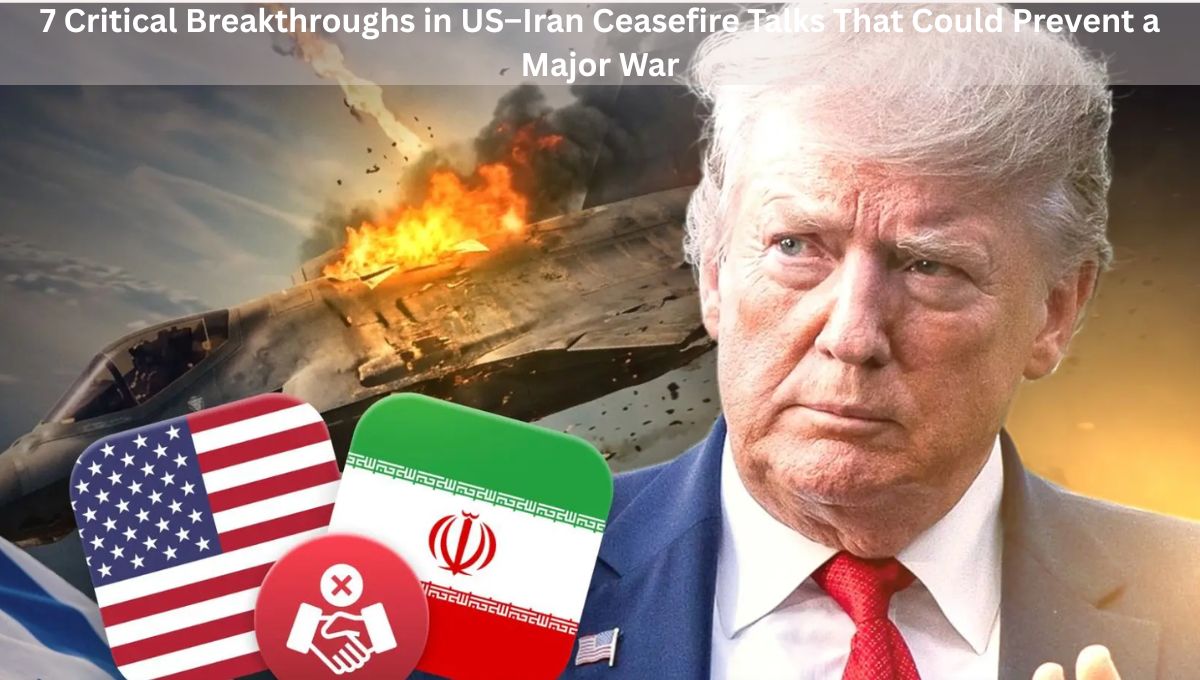
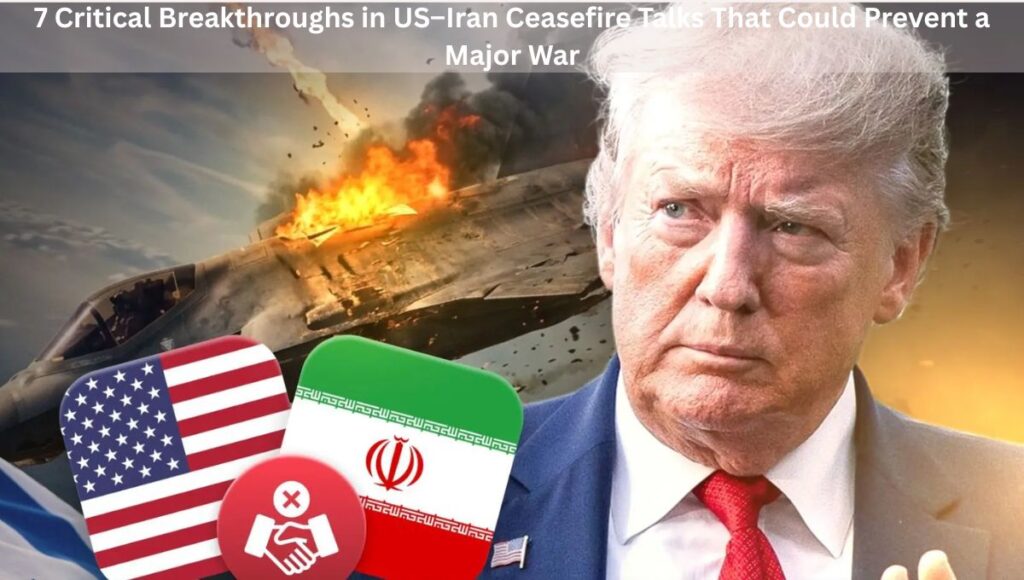
7 Critical Breakthroughs in US–Iran Ceasefire Talks That Could Prevent a Major War amid Strait of Hormuz tensions. The ongoing conflict between the United States and Iran has reached a decisive moment, with both sides reviewing a proposed two-step ceasefire framework aimed at halting hostilities and preventing a wider regional war.
As tensions escalate and deadlines loom, diplomatic channels are working overtime to secure even a temporary pause in fighting. At the center of the crisis lies the Strait of Hormuz—a strategic chokepoint through which nearly 20% of the world’s oil supply flows.
Iran’s refusal to reopen the strait as part of a temporary ceasefire has become a major sticking point, complicating negotiations and raising the stakes for global energy markets.
7 Critical Breakthroughs in US–Iran Ceasefire Talks That Could Prevent a Major War
The Two-Step Ceasefire Plan Explained
Phase One: Immediate Ceasefire
The proposed plan outlines an immediate ceasefire as the first step.
This would temporarily halt ongoing military operations, including airstrikes and missile attacks, which have already caused significant casualties and infrastructure damage.
A 45-day truce is being widely discussed as the likely duration of this initial phase.
During this period:
- Military actions would pause
- Diplomatic negotiations would intensify
- Confidence-building measures would be introduced
However, Iran has made it clear that it will not make major concessions—especially regarding the Strait of Hormuz—without guarantees of a lasting peace.
Phase Two: Comprehensive Agreement
The second phase aims to establish a permanent resolution to the conflict.
This would involve:
- Long-term security guarantees
- Agreements on nuclear activity
- Sanctions relief
- Restoration of economic ties
The success of this phase depends heavily on trust—something currently in short supply between the two nations.
Why the Strait of Hormuz Is the Key Battleground
A Global Energy Lifeline
The Strait of Hormuz is one of the most critical maritime routes in the world.
Any disruption here has immediate global consequences, including:
- Sharp increases in oil prices
- Supply chain disruptions
- Economic instability in energy-dependent nations
Iran’s decision to effectively close or restrict access to the strait has already triggered volatility in global markets.
Iran’s Strategic Leverage
Iran views control over the strait as a powerful bargaining tool.
By refusing to reopen it during a temporary ceasefire, Tehran is signaling that:
- It will not give up leverage without long-term guarantees
- Temporary agreements are insufficient
- Strategic assets will only be negotiated in final settlements
This stance has complicated efforts by mediators seeking quick de-escalation.
Deadline Diplomacy and Rising Pressure
Escalating Threats
The urgency surrounding the negotiations has intensified due to a strict deadline set by the United States.
The warning is clear:
failure to reach an agreement could lead to expanded military strikes targeting critical infrastructure.
These potential targets include:
- Energy facilities
- Transport networks
- Power plants
Such actions could dramatically escalate the conflict and potentially violate international norms regarding civilian infrastructure.
Extension of Negotiation Window
While the initial deadline has been extended slightly, the message remains firm—time is running out.
Diplomatic sources indicate that the next 48 hours are crucial in determining whether:
- A temporary ceasefire can be achieved
- Military escalation becomes inevitable
The Role of Mediators: A Delicate Balancing Act
Pakistan’s Central Role
Pakistan has emerged as a key intermediary in the negotiations, facilitating communication between the two sides.
The proposed agreement—informally referred to as the “Islamabad Accord”—is being coordinated through backchannel diplomacy.
Key aspects of mediation include:
- Continuous communication between officials
- Drafting of ceasefire frameworks
- Ensuring both sides remain engaged
Other Regional Players
In addition to Pakistan, other countries are contributing to mediation efforts:
- Egypt
- Turkey
These nations are working to:
- Bridge trust gaps
- Propose compromise solutions
- Prevent a broader regional conflict
Major Sticking Points in the Negotiations
1. Strait of Hormuz Access
Iran refuses to reopen the strait during a temporary ceasefire.
2. Nuclear Program
Disagreements persist over uranium enrichment and nuclear capabilities.
3. Sanctions Relief
Iran demands immediate economic relief as part of any deal.
4. Security Guarantees
Tehran seeks assurances that it will not face renewed attacks after a ceasefire.
Iran’s Position: Deep Skepticism and Strategic Patience
Iran’s leadership has expressed strong reservations about temporary agreements.
Officials fear repeating past scenarios where:
- Ceasefires were short-lived
- Hostilities resumed unexpectedly
- Agreements lacked enforcement mechanisms
As a result, Iran is insisting on:
- Binding commitments
- Long-term guarantees
- Comprehensive solutions
The US Position: Urgency and Pressure
The United States is pushing for rapid de-escalation but has paired diplomacy with strong warnings.
This dual approach aims to:
- Force negotiations forward
- Prevent prolonged conflict
- Maintain strategic dominance
However, this pressure strategy carries risks, including:
- Hardening Iran’s stance
- Escalating military responses
- Undermining diplomatic trust
Impact on Global Oil Markets
Rising Prices and Volatility
The conflict has already caused oil prices to surge, reflecting fears of supply disruptions.
Key impacts include:
- Increased fuel costs worldwide
- Inflationary pressures
- Market instability
Potential Worst-Case Scenario
If negotiations fail and conflict escalates:
- Oil supply routes could be severely disrupted
- Prices could spike dramatically
- Global economic recovery could be threatened
Military Escalation Risks
Prepared Strike Plans
Reports indicate that contingency plans for large-scale military operations are ready.
These could involve:
- Coordinated airstrikes
- Targeting of energy infrastructure
- Expanded regional conflict
Potential Retaliation
Iran has warned that any attack on its infrastructure would result in:
- Strikes on regional energy facilities
- Disruption of water and power systems
- Broader regional instability
Humanitarian and Legal Concerns
Civilian Impact
The conflict has already resulted in thousands of casualties.
Further escalation could:
- Increase civilian deaths
- Destroy critical infrastructure
- Trigger humanitarian crises
International Law Issues
Targeting civilian infrastructure could raise serious legal concerns under international law, including:
- Violations of war conventions
- Potential classification as war crimes
What Happens Next: A Critical 48-Hour Window
The coming days are pivotal.
Several scenarios are possible:
1. Partial Agreement Reached
A temporary ceasefire is implemented, buying time for negotiations.
2. Talks Collapse
Military escalation intensifies, leading to wider conflict.
3. Extended Negotiations
Deadline is pushed further, maintaining a fragile status quo.
Conclusion: A Turning Point for Global Stability
The current US–Iran negotiations represent one of the most critical diplomatic efforts in recent years.
With global energy security, regional stability, and thousands of lives at stake, the outcome of these talks will have far-reaching consequences.
While a two-step ceasefire plan offers a potential pathway to peace, deep mistrust and strategic disagreements continue to hinder progress.
The refusal to reopen the Strait of Hormuz during a temporary truce underscores the complexity of the situation.
Ultimately, the success or failure of these negotiations will determine whether the region moves toward de-escalation—or slides into a much larger and more dangerous conflict.
Also Read: 10 Explosive Updates on US–Iran Ceasefire Talks and Hormuz Crisis
Also Read: 45-day US-Israel-Iran ‘ceasefire’ in the works: What we know so far
Related Posts:
- 3 Explosive Conditions Iran Sets to End War with US…
- 9 Explosive Claims as Trump Says US Winning Iran War

- 10 Powerful Revelations from the Trump–Putin Call on…

- 10 Explosive Signals: Trump Rates Iran War “15/10”…
- 7 Powerful Facts About Ayatollah Ali Khamenei’s…
- 10 Explosive Warnings as Donald Trump Calls Iran…