7 Stunning Reasons Saudi Arabia’s Desert Saw Snow After 30 Years – landscapes turn white. Saudi Arabia, a country globally associated with blistering heat, endless sand dunes, and arid landscapes, has witnessed a rare and startling weather phenomenon — snowfall in its northern desert regions after nearly three decades.
Large parts of northern and central Saudi Arabia were hit by a powerful winter system that brought snow, heavy rain, hailstorms, fog, and freezing temperatures, transforming familiar desert terrain into an unexpected winter spectacle. Images of camels standing amid snow-covered sand dunes and residents skiing on desert slopes quickly went viral, leaving many stunned and curious.
The rare Saudi Arabia snowfall has reignited discussions about changing weather patterns, atmospheric anomalies, and the growing influence of climate change on regions traditionally unprepared for such extremes.
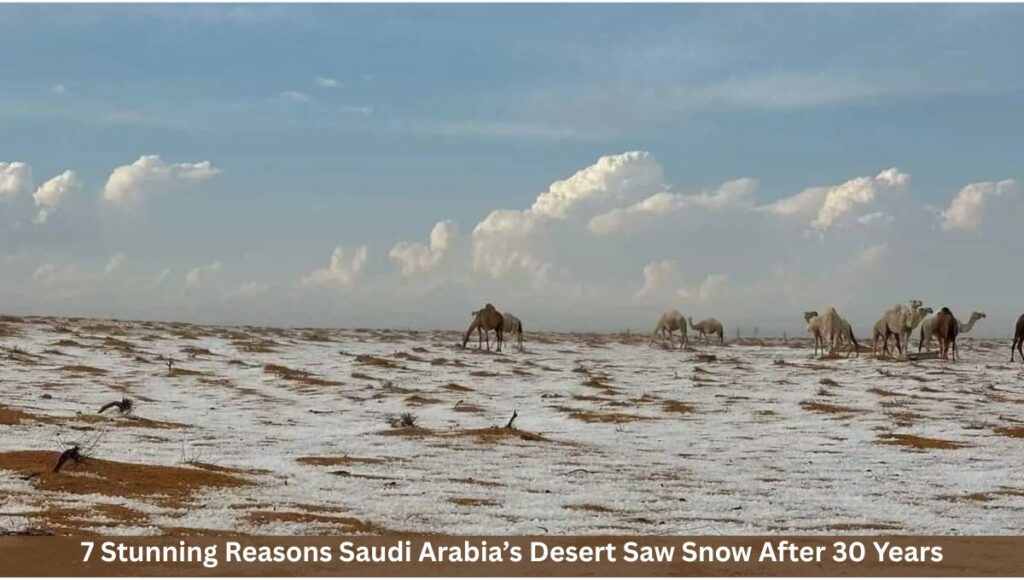
7 Stunning Reasons Saudi Arabia’s Desert Saw Snow After 30 Years
Where Did It Snow in Saudi Arabia?
Snowfall Reported Across Northern Regions
The snowfall was most prominent across northern and northwestern Saudi Arabia, particularly in elevated and mountainous areas.
Key Areas Affected
- Tabuk Province
- Jabal Al-Lawz
- Al Ula
- Hail Region
- Al-Jawf
- Turaif and Arar
- Parts of Qassim
- Northern Riyadh outskirts
- Al-Majmaah and Al-Ghat
In many of these areas, snow settled on open ground, hills, and mountain ranges, creating scenes rarely witnessed in the kingdom.
Tabuk and Jabal Al-Lawz Blanketed in Snow
High Altitude Meets Freezing Air
One of the most dramatic transformations occurred in Tabuk Province, particularly around Jabal Al-Lawz, a mountain near the Jordanian border rising to approximately 2,549–2,600 metres.
Temperatures here plunged to as low as -4°C, allowing snowfall to accumulate across rocky slopes and surrounding desert areas. Light rain accompanied the snow, adding to the wintry conditions.
Jabal Al-Lawz is considered one of the most reliable locations for snowfall in Saudi Arabia due to its altitude, but even here, such widespread accumulation remains rare.
Hail Region and Al Ula See Rare Flurries
Parts of the Hail region, including areas around Hail city and the Aja and Salma mountain ranges, also experienced snowfall during the cold wave.
Similarly, Al Ula, known for its archaeological heritage and desert tourism, recorded unusually cold conditions and snow in surrounding elevated terrain, stunning visitors and residents alike.
Temperatures Dip Below Freezing
According to reports from the National Centre for Meteorology (NCM), temperatures dropped sharply across affected regions.
Lowest Temperatures Recorded
- Turaif: Down to -12°C (coldest town in Saudi Arabia)
- Tabuk, Qurayyat, Dawadmi, Taif: Around 2°C
- Sakaka and Hail: Around 3°C
- High-altitude areas: Sub-zero conditions
Such temperatures created ideal conditions for snow to settle and persist, particularly in mountainous zones.
Why Is It Snowing in Saudi Arabia?
Cold Air Mass Meets Rain-Bearing Clouds
Meteorologists say the snowfall was caused by a powerful cold air mass pushing southward from northern regions, interacting with moist, rain-bearing cloud systems over the Arabian Peninsula.
Hussein Al-Qahtani, spokesperson for the National Centre for Meteorology, explained that the combination of:
- Low-pressure systems
- Cold northern winds
- Elevated terrain
- Atmospheric instability
created favourable conditions for snowfall in regions that rarely experience it.
Deep Low-Pressure System Behind the Cold Wave
According to regional weather experts, a deep low-pressure system sweeping across parts of the Middle East played a central role.
This system triggered:
- Heavy rainfall
- Hailstorms
- Fog
- Strong winds
- Sharp temperature drops
Such systems are not unprecedented but are becoming more intense and unpredictable, raising concerns among climate scientists.
Is Climate Change Playing a Role?
While snowfall in northern Saudi Arabia does occur periodically, experts say the frequency and intensity of unusual weather events are increasing.
Recent years have seen:
- Unexpected winter rain in the UAE
- Flash floods in dry Middle Eastern regions
- Record-breaking heatwaves in South Asia
- Unusual snowfall in North Africa and Europe
These events suggest that climate change is amplifying weather variability, making rare phenomena more noticeable and disruptive.
Saudi Arabia’s History With Snowfall
Rare, But Not Unprecedented
Despite the shock, snowfall in Saudi Arabia is not entirely unheard of.
Notable past events include:
- Snow in the Trojena Mountains in February last year
- First-ever snowfall in parts of Al-Jawf in recent years
- Periodic winter flurries in Turaif and Arar
However, widespread snowfall across multiple regions after nearly 30 years makes this event particularly significant.
Social Media Flooded With Snow Videos
As snow fell across desert landscapes, residents quickly took to social media.
Viral Moments Included
- Camels standing in snow-covered deserts
- Families dancing and celebrating
- Skiing and sledging on sandy slopes
- Children throwing snowballs
- Fog-covered mountains and icy roads
Local TV channels described the snowfall as historic, while residents expressed both excitement and concern.
Authorities Issue Safety Warnings
The National Centre for Meteorology and local authorities urged residents to exercise caution.
Safety Advisories Included
- Avoid driving on icy or foggy roads
- Stay away from valleys prone to flash flooding
- Monitor official weather alerts
- Use extreme caution in mountainous areas
In Riyadh, authorities shifted schools to remote learning as a precaution during severe weather.
Heavy Rainfall Accompanies Snow
Alongside snowfall, widespread rainfall was recorded across the kingdom.
Rainfall-Affected Areas
- Riyadh
- Qassim
- Eastern Region
- Bir Bin Hermas
- Al-Ayinah
- Ammar
- Shaqra and suburbs
Some regions experienced moderate to heavy rainfall, raising flood concerns in low-lying areas.
Saudi Arabia’s Desert Becomes a Winter Travel Attraction
The rare snowfall has also drawn tourists eager to witness snow in the desert.
Top Snowfall Destinations
- Jabal Al-Lawz (Tabuk) – Most reliable snowfall location
- Al-Jawf Region – First historic snowfall in 2024, recurring in 2025
- Turaif and Arar – Frequent winter flurries
- Abha (Asir Province) – Snow and hail on mountain peaks
- Hail Mountains – Aja and Salma ranges turn white during cold snaps
Best Time to See Snow in Saudi Arabia
To catch snowfall, travellers should plan visits between:
- Mid-December and February
Snow is never guaranteed, but this window offers the highest probability, especially in northern high-altitude areas.
How to Reach Snowfall Regions
By Air
- Fly to Tabuk Airport or Al Ula
- Domestic connections via Riyadh or Jeddah
By Road
- Jabal Al-Lawz is about 3 hours north of Tabuk city
- Renting a car offers flexibility
- Winter roads may be icy — caution advised
Public Transport
- Buses connect major cities but not mountain peaks
- Private vehicles or tours required
Travel Tips During Snowfall
- Pack thermal clothing and waterproof boots
- Monitor NCM weather alerts closely
- Expect temperatures as low as -12°C
- Avoid off-road driving during storms
- Carry emergency supplies
Deserts Around the World That Have Seen Snow
Saudi Arabia is not alone in witnessing rare desert snowfall in recent years.
Other Notable Events
- Atacama Desert, Chile (2025)
- Katpana Cold Desert, Pakistan
- Taklamakan Desert, China
- Sahara Desert edges in Algeria and Morocco
These events underscore how deserts are not immune to extreme cold under the right atmospheric conditions.
What This Rare Snowfall Signifies
Snowfall in deserts challenges long-held perceptions about climate stability. While some experts note that such events are part of natural variability, others point to climate change intensifying extremes — making rare weather more frequent and more disruptive.
For Saudi Arabia, the snowfall is both a spectacle and a warning, highlighting the need for preparedness in a rapidly changing climate.
Conclusion: A Rare Sight With Lasting Impact
The sight of snow blanketing Saudi Arabia’s deserts after 30 years is a reminder that weather does not always follow expectations. From Tabuk’s mountains to Hail’s plains, the kingdom experienced a moment that blended wonder with concern.
As climate patterns evolve, such rare events may no longer be as uncommon as they once were — urging governments, scientists, and citizens alike to rethink how even the world’s hottest regions prepare for the cold.
Also Read: 7 Crucial Facts About the 4.3 Earthquake That Shook Saudi Arabia
Also Read: It’s snowing in Saudi Arabia. What caused the 1st snowfall in 30 years and –4°C desert cold?
Related Posts:
- 9 Devastating Impacts of America’s Historic Winter…

- 9 Alarming Impacts of a Massive U.S. Winter Storm
- 11 Powerful Impacts as Winter Storm Cripples US…

- 30 Dead in Japan’s Brutal Snow Disaster as Record…
- 5 Major Takeaways from the US Supreme Court's…

- 7 Heartbreaking Facts About Venezuela's Earthquake Disaster