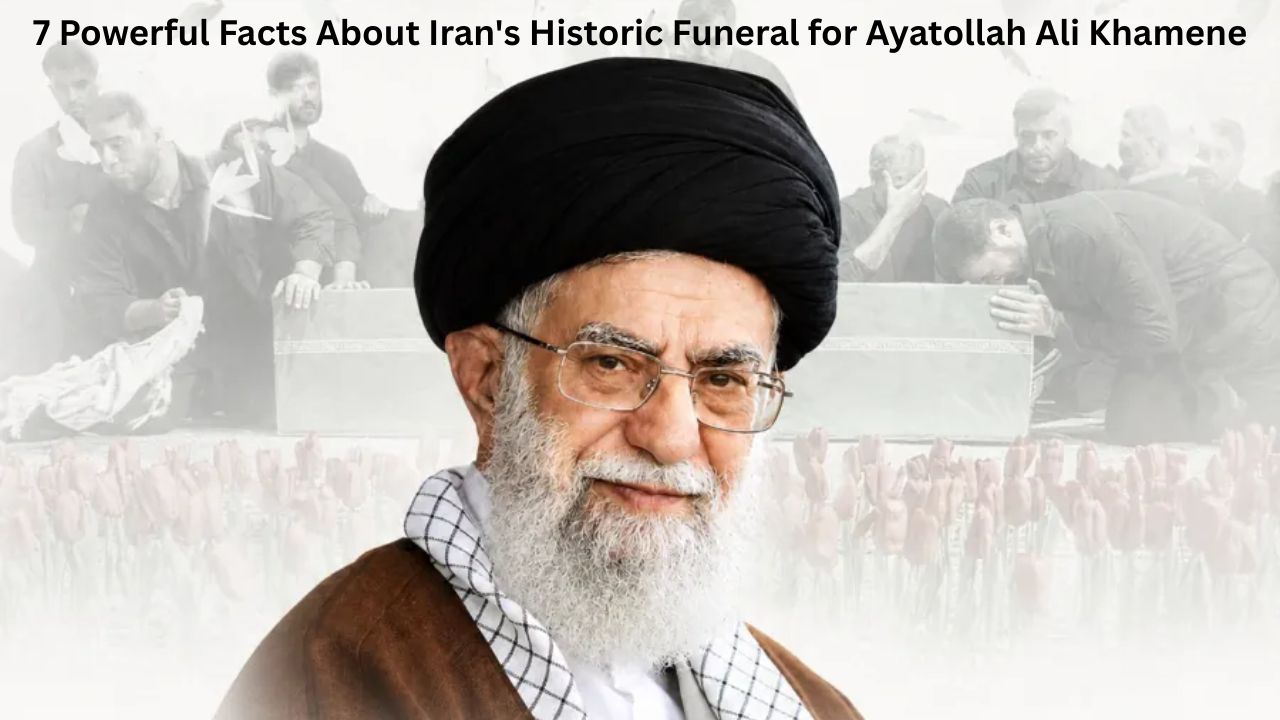
7 Powerful Facts About Iran’s Historic Funeral for Ayatollah Ali Khamenei – One of the largest state funerals in modern Iranian history. Iran has entered a defining moment in its modern history as the country begins the long-awaited state funeral for its late Supreme Leader, Ayatollah Ali Khamenei.
Thank you for reading this post, don't forget to subscribe!The ceremonies, delayed for months because of the Iran-Israel conflict and subsequent ceasefire negotiations, are expected to draw millions of mourners, senior political leaders, military commanders, and foreign delegations from across Asia, the Middle East, and beyond.
The funeral is more than a religious ceremony. It represents a critical political transition for the Islamic Republic following Khamenei’s death in February during the opening phase of the Iran-Israel conflict.
As Iran prepares for several days of nationwide mourning, authorities have tightened security amid warnings of possible external threats and heightened regional tensions. Here are the seven most important developments surrounding this historic event.
7 Powerful Facts About Iran’s Historic Funeral for Ayatollah Ali Khamenei
1. Iran Begins One of Its Largest State Funerals Since 1979
The funeral ceremonies officially begin in Tehran on July 4 and will continue through July 9, when Ayatollah Ali Khamenei will be buried in his hometown of Mashhad.
Between those dates, memorial ceremonies are scheduled in the holy city of Qom and at important Shia religious sites in Iraq before the final burial at the Imam Reza shrine in Mashhad.
The extended funeral schedule is unusual under Islamic tradition but reflects the exceptional circumstances created by months of conflict.
Iranian authorities expect millions of people to participate in processions across multiple cities, making it one of the country’s largest public gatherings in decades.
2. Extraordinary Security Measures Dominate Preparations
Security has become the defining feature of the funeral preparations.
Iranian military commanders have publicly warned the United States and Israel against launching any military action during the mourning period, promising severe retaliation against any attack.
Authorities have also announced:
- Temporary airspace restrictions over Tehran and Mashhad
- Expanded military deployment
- Enhanced intelligence operations
- Tight crowd-control measures
- Increased protection for senior Iranian officials
Officials say these measures are necessary because of continuing regional tensions despite the fragile ceasefire reached after months of fighting.
3. Mojtaba Khamenei Is Expected to Remain Out of Public View
One of the biggest questions surrounding the funeral is whether Iran’s new Supreme Leader, Mojtaba Khamenei, will appear publicly.
Multiple reports indicate that he is unlikely to attend major public ceremonies because of ongoing security concerns.
Sources close to Iran’s leadership suggest officials fear he could become the target of another assassination attempt if he appears before large crowds.
His expected absence reflects the extraordinary security environment surrounding Iran’s leadership transition following the death of his father.
4. Global Delegations Arrive in Tehran
Despite diplomatic tensions surrounding Iran, several countries are sending official delegations to the funeral.
Among the confirmed international participants are representatives from:
- China
- Russia
- India
- Several Middle Eastern countries
- Regional allies of Iran
China announced that senior lawmaker He Wei would attend the ceremony on behalf of Beijing.
Russia is sending a delegation led by Dmitry Medvedev, while India is dispatching senior government representatives, highlighting the continuing diplomatic importance of its relationship with Tehran.
The broad international attendance underscores Iran’s continuing strategic relationships despite years of sanctions and geopolitical isolation.
5. Funeral Processions Carry Deep Religious and Political Symbolism
The funeral is expected to serve not only as a farewell to Iran’s longest-serving Supreme Leader but also as a demonstration of national resilience.
Iranian state media have framed the ceremonies as a symbol of resistance and continuity following months of conflict.
Because the events coincide with Muharram, one of the holiest periods in Shia Islam, the funeral carries additional religious significance.
Many observers believe Iranian authorities hope the ceremonies will reinforce national unity during a sensitive leadership transition.
Officials have also organized extensive public transportation, volunteer services, and logistical support to accommodate millions of expected participants.
6. The Funeral Highlights Iran’s New Political Era
Ayatollah Ali Khamenei led Iran for 36 years, overseeing profound political, military, and regional changes.
His leadership shaped:
Regional Policy
Iran expanded its influence across the Middle East through alliances with regional partners while maintaining strong opposition to U.S. and Israeli policies.
Domestic Politics
Khamenei remained the country’s highest political and religious authority throughout decades marked by economic sanctions, domestic protests, and nuclear negotiations.
Leadership Transition
Following his death, Mojtaba Khamenei assumed the role of Supreme Leader, marking one of the most significant political transitions since the death of Ayatollah Ruhollah Khomeini in 1989.
The funeral therefore represents both the end of one political era and the beginning of another.
7. Regional Tensions Continue Despite the Ceasefire
Although active hostilities have declined, tensions between Iran, Israel, and the United States remain extremely high.
Iranian Foreign Minister Abbas Araqchi recently warned that Tehran would respond immediately to any perceived threat against the country’s leadership after remarks made by Israeli officials regarding Mojtaba Khamenei.
Military analysts believe the funeral period represents one of the most sensitive security moments in the Middle East this year.
While diplomats continue exploring broader negotiations aimed at reducing regional tensions, the heavy security surrounding the funeral demonstrates that mutual distrust remains significant.
Ahmad Vahidi Reappears During Funeral Preparations
Another notable development has been the reappearance of senior Iranian figure Ahmad Vahidi during preparations for the funeral.
His public appearance has attracted attention because several senior Iranian military and political figures had maintained a lower public profile during the recent conflict.
Analysts view his presence as part of Iran’s effort to project institutional continuity during the leadership transition.
Coffin Moved Through Tehran Ahead of Main Ceremonies
Iranian media reported that Ayatollah Khamenei’s coffin was transported through Tehran before the official funeral processions begin.
Images released by state media showed ceremonial preparations accompanied by heavy security, religious observances, and official tributes as authorities finalized arrangements for the nationwide mourning events.
These ceremonies are expected to continue through the week before the burial in Mashhad.
What Happens Next?
The coming days will test Iran’s ability to manage one of the largest public events in its recent history while maintaining security during an exceptionally sensitive political transition.
Observers worldwide will closely watch:
- Public turnout during the funeral processions
- The role of Iran’s new leadership
- International diplomatic engagement
- Regional security developments
- Any impact on future negotiations involving Iran, Israel, and the United States
The funeral of Ayatollah Ali Khamenei is likely to become one of the defining political events of 2026, shaping both Iran’s domestic future and its relations with the wider world.
Conclusion
The state funeral of Ayatollah Ali Khamenei is far more than a ceremonial farewell. It marks a pivotal chapter in Iran’s political history, occurring amid heightened regional tensions, a major leadership transition, and intense international scrutiny.
As millions prepare to participate in days of mourning, the ceremonies are expected to symbolize both continuity and change within the Islamic Republic.
The world’s attention will remain fixed on Tehran in the days ahead, as the funeral’s scale, security, and political messaging may influence Iran’s domestic trajectory and its geopolitical relations for years to come.
Also Read: 7 Explosive Hours That Shook Iran: Tehran Hit as Khamenei Death Sparks Regional War
Also Read: Iran prepares to bury slain supreme leader with week of mass mourning