
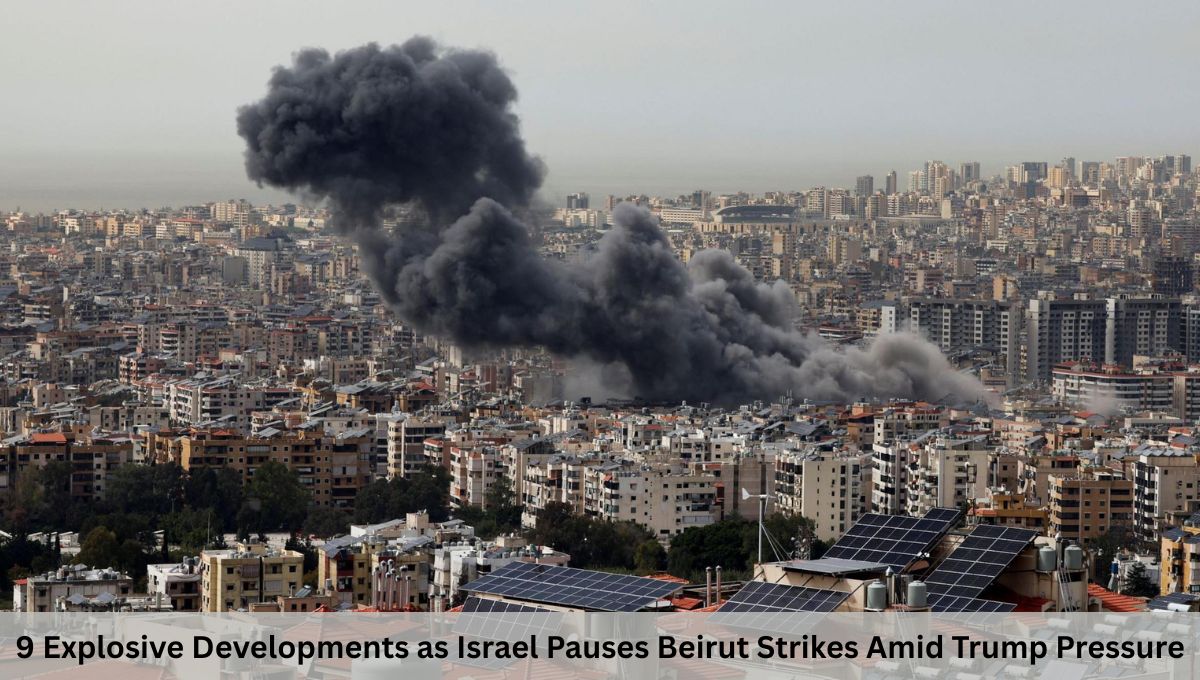
9 Explosive Developments as Israel Pauses Beirut Strikes Amid Trump Pressure and regional tensions. A sudden shift in Israel’s military posture toward Lebanon is drawing global attention. After days of intense bombardment that left hundreds dead and thousands injured, Israel appears to have scaled back its airstrikes on Beirut.
Thank you for reading this post, don't forget to subscribe!The move follows reports of direct intervention by former U.S. President Donald Trump, who allegedly urged Israeli Prime Minister Benjamin Netanyahu to “low-key” the attacks.
This development comes at a critical moment—just as a fragile ceasefire between the United States and Iran struggles to hold, and as high-stakes diplomatic talks loom in Washington.
The evolving situation has not only reshaped battlefield dynamics but also raised urgent questions about the future of regional stability in the Middle East.
9 Explosive Developments as Israel Pauses Beirut Strikes Amid Trump Pressure
Israel Scales Back Strikes on Beirut
A Noticeable Reduction in Violence
After launching one of the most intense bombing campaigns in recent history, Israel has significantly reduced its airstrikes on Beirut.
Reports from the ground indicate that despite prior evacuation warnings, no major strikes were carried out in the Lebanese capital on Friday.
This pause marks a stark contrast to earlier in the week, when Israeli forces carried out heavy air raids across southern Lebanon, Beirut suburbs, and the Bekaa Valley.
These attacks resulted in widespread destruction and civilian casualties, sparking international concern.
Casualties and Destruction
Lebanese authorities report that:
- Over 1,800 people have been killed since the escalation began
- More than 1,100 were injured in a single day of strikes
- Entire neighborhoods in Beirut and southern Lebanon have been reduced to rubble
While Israel maintains that its targets were Hezbollah operatives and infrastructure, footage and eyewitness accounts suggest that civilians—including women and children—were among the victims.
Trump’s Reported Intervention
A Strategic Phone Call
The turning point appears to have come after a direct conversation between Donald Trump and Benjamin Netanyahu.
According to reports, Trump urged Netanyahu to reduce the intensity of military operations in Lebanon.
Trump reportedly stated:
“We have to be sort of a little more low-key.”
This intervention highlights Washington’s concern that continued escalation could derail broader diplomatic efforts in the region.
A ‘Tense’ Exchange
Sources suggest that the conversation between the two leaders was tense.
Netanyahu was reportedly warned that failure to pursue diplomatic engagement could lead the United States to act independently in pushing a ceasefire framework.
This pressure appears to have influenced Israel’s subsequent decision to:
- Scale down strikes
- Agree to explore direct talks with Lebanon
- Align more closely with U.S. diplomatic efforts
Fragile US–Iran Ceasefire Under Threat
A Delicate Balance
The pause in Israeli strikes comes amid a fragile ceasefire agreement between the United States and Iran.
However, disagreements over whether Lebanon is included in this ceasefire have complicated matters.
Iran has argued that:
- Lebanon is an “inseparable part” of the ceasefire
- Continued Israeli attacks violate the agreement
The United States and Israel, however, deny this interpretation.
Risk of Collapse
Iran has warned that ongoing strikes in Lebanon could render peace talks meaningless.
The situation is further complicated by Iran’s strategic moves, including disruptions in the Strait of Hormuz—one of the world’s most critical oil transit routes.
Any breakdown in the ceasefire could trigger:
- A broader regional war
- Major disruptions in global oil supply
- Increased geopolitical instability
Israel and Lebanon Agree to Talks
A Historic Shift
In a significant diplomatic development, Israel has agreed to hold direct talks with Lebanon—something it had previously resisted.
Prime Minister Netanyahu has instructed his cabinet to:
- Initiate negotiations “as soon as possible”
- Focus on disarming Hezbollah
- Explore the possibility of long-term peace arrangements
Planned Washington Meeting
Officials from both countries are expected to meet in Washington next week under U.S. mediation.
The talks are anticipated to include:
- Ceasefire discussions
- Framework for future negotiations
- Security arrangements in southern Lebanon
However, both sides remain divided on key issues, particularly whether a ceasefire should precede negotiations.
Lebanon’s Position: Ceasefire First
Demand for Immediate Halt
Lebanon has made it clear that it will not engage in meaningful negotiations without a ceasefire in place.
Officials argue that continued bombing undermines trust and makes diplomacy impossible.
Internal Challenges
Lebanon faces significant internal challenges, including:
- Political divisions
- Economic instability
- The powerful influence of Hezbollah
Disarming Hezbollah—a key Israeli demand—remains a deeply sensitive issue that could risk internal conflict within Lebanon.
Hezbollah Continues Retaliation
Ongoing Cross-Border Attacks
Despite the reduction in Israeli airstrikes, Hezbollah continues to launch rockets into Israel and engage Israeli troops in southern Lebanon.
The group has stated that:
- It will not stop until Israeli forces withdraw
- Resistance will continue “until the last breath”
A Longstanding Conflict
The Israel-Hezbollah conflict is rooted in decades of hostility, with periodic escalations followed by uneasy truces. The current conflict is one of the most intense in recent years.
Humanitarian Crisis Deepens
Mass Displacement
The conflict has forced hundreds of thousands of Lebanese residents to flee their homes, particularly in southern regions.
Infrastructure Damage
Key infrastructure has been severely damaged, including:
- Hospitals
- Government buildings
- Transportation networks
The humanitarian situation is rapidly deteriorating, with limited access to medical care and essential services.
Global Implications
Oil Markets Under Pressure
The conflict has already impacted global oil markets, particularly due to tensions around the Strait of Hormuz.
Any escalation could lead to:
- Sharp increases in oil prices
- Disruptions in global supply chains
- Economic instability worldwide
Diplomatic Stakes
The outcome of upcoming talks could have far-reaching consequences:
- A successful ceasefire could stabilize the region
- Failure could trigger a wider war involving multiple nations
Uncertainty Around Upcoming Talks
Conflicting Agendas
While the United States aims to broker a ceasefire, Israel has indicated it will not discuss a truce with Hezbollah directly.
Instead, it seeks broader negotiations focused on:
- Security guarantees
- Disarmament of militant groups
Lebanon, meanwhile, insists on an immediate ceasefire as a prerequisite.
Low Expectations
Analysts warn that the talks may face significant hurdles due to:
- Deep mistrust between parties
- Diverging objectives
- Ongoing violence on the ground
Conclusion
Israel’s apparent pause in airstrikes on Beirut marks a critical moment in an increasingly complex conflict.
While the reduction in violence offers a glimmer of hope, the situation remains highly volatile.
With U.S.-led talks set to begin in Washington, the coming days will be crucial in determining whether diplomacy can succeed where military force has failed.
The stakes are enormous—not just for Israel and Lebanon, but for the entire Middle East and the global community.
Whether this pause evolves into a lasting ceasefire or merely a temporary lull before further escalation remains uncertain.
For now, the world watches closely as diplomacy and conflict intersect in one of the most fragile geopolitical landscapes today.
Also Read: 10 Shocking Developments After Hezbollah Aide Killed in Beirut Strikes That Could Collapse Ceasefire
Related Posts:
- Dramatic Moments Behind Trump’s Gaza Peace Push and…

- 5 Powerful Highlights as Trump Lands Second Nobel…

- Trump’s 20-Point Gaza Peace Plan Gains Urgent Global…

- 11 Explosive Warnings as Trump Vows to ‘Knock the…

- 11 Explosive Revelations From Ted Cruz’s Leaked…

- Trump’s 2025 Gaza Peace Plan Signing and Historic…
