
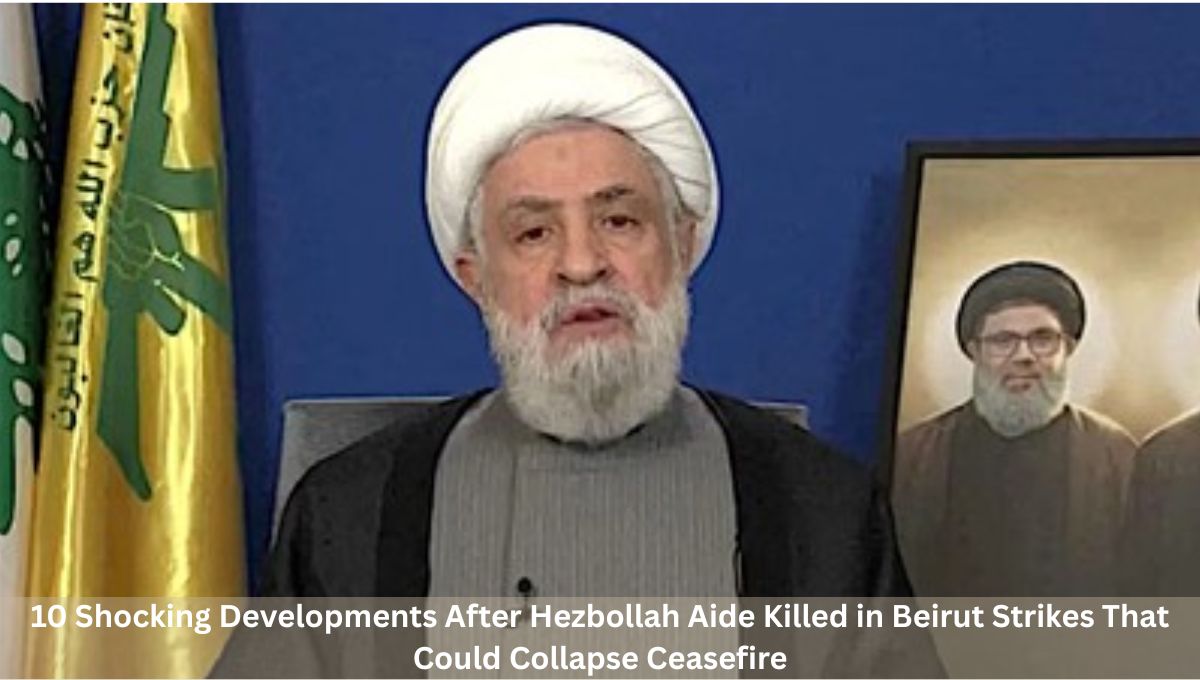
10 Shocking Developments After Hezbollah Aide Killed in Beirut Strikes That Could Collapse Ceasefire, raising global concern. The killing of a senior aide to Hezbollah’s leadership in Beirut has intensified an already volatile situation in the Middle East, raising serious doubts about the survival of the fragile ceasefire between the United States and Iran.
In a targeted operation, Israel confirmed it had eliminated Ali Yusuf Harshi, a close adviser and personal secretary to Hezbollah’s chief Naim Qassem, during a wave of airstrikes that devastated parts of Beirut.
This development has not only escalated the Israel–Hezbollah conflict but also exposed deep divisions over the scope of the US–Iran ceasefire—particularly whether it includes Lebanon.
10 Shocking Developments After Hezbollah Aide Killed in Beirut Strikes That Could Collapse Ceasefire
Who Was the Target?
A Key Figure Inside Hezbollah’s Leadership
According to Israeli military statements, Ali Yusuf Harshi was:
- A personal secretary and nephew of Naim Qassem
- A trusted adviser within Hezbollah’s leadership circle
- Responsible for managing and securing the chief’s office
His killing represents a precision strike on Hezbollah’s command structure, signaling Israel’s intent to weaken the group’s operational leadership.
Wave of Israeli Strikes: The Deadliest Day in Weeks
Massive Assault Across Lebanon
The strike that killed Harshi was part of a broader and highly coordinated Israeli offensive:
- Over 100 targets hit within minutes
- Strikes across Beirut, southern Lebanon, and the Bekaa Valley
- Residential neighborhoods among the impacted zones
Lebanese authorities reported:
- More than 250 deaths in a single day
- Over 1,100 injuries
- Widespread destruction in densely populated areas
Humanitarian Crisis Deepens
Hospitals across Beirut were overwhelmed, with emergency services struggling to cope.
Aid agencies described the scale of destruction as “horrific,” while the United Nations warned of catastrophic humanitarian consequences.
Hezbollah’s Response: Rockets and Retaliation
Following the strikes, Hezbollah responded swiftly:
- Rocket barrages launched toward northern Israel
- Targeted areas near the border, including Manara
The group justified its actions as a response to what it called Israel’s “violation” of the ceasefire agreement.
Hezbollah has emphasized its “right” to retaliate, signaling that further escalation remains likely.
Is Lebanon Part of the Ceasefire? A Dangerous Divide
Conflicting Interpretations
At the heart of the crisis lies a critical disagreement:
Iran and Pakistan’s Position:
- The ceasefire applies to all fronts, including Lebanon
United States and Israel’s Position:
- The ceasefire applies only to US–Iran hostilities
- Lebanon is considered a separate conflict zone
Donald Trump reinforced this stance, calling Lebanon “a separate skirmish,” while JD Vance stated that including Lebanon was a “misunderstanding.”
Why Lebanon Matters So Much to Iran
Hezbollah: A Strategic Ally
Hezbollah is not just another militant group—it is:
- Iran’s most powerful regional proxy
- A central pillar of its “axis of resistance”
This network includes allied groups across the Middle East aligned against Israel.
Strategic Implications for Tehran
Excluding Lebanon from the ceasefire creates serious risks for Iran:
- Weakens its regional influence
- Undermines credibility among allies
- Forces difficult choices between diplomacy and retaliation
Why Israel Continues Striking Lebanon
Military Objectives
Israel has made its position clear:
- Operations in Lebanon will continue
- The goal is to neutralize Hezbollah’s threat
- Plans include creating a buffer zone in southern Lebanon
Prime Minister Benjamin Netanyahu stated that the ceasefire “does not bind Israel in Lebanon.”
A Ceasefire Under Threat
Immediate Risks
The latest violence has:
- Undermined confidence in the ceasefire
- Raised fears of a broader regional war
- Complicated upcoming diplomatic talks
Negotiations are expected to continue, but the situation remains fragile.
Expert Warnings
Analysts warn that Lebanon could become the “Achilles’ heel” of the ceasefire:
- Continued strikes may force Iran to respond
- Escalation could quickly spiral beyond control
Global Reactions: Growing Alarm
International Condemnation
Several countries have condemned the attacks:
- Calls for immediate de-escalation
- Demands to include Lebanon in ceasefire terms
The United Nations described the situation as a “grave risk” to regional stability.
Humanitarian Concerns
- Over 1.2 million people displaced
- Critical shortages in medical supplies
- Emergency calls for international aid
Economic Fallout: Energy and Markets at Risk
Oil Prices Surge
The conflict has already:
- Driven oil prices toward record highs
- Disrupted global energy supply chains
- Increased costs for consumers worldwide
Shipping and Trade Disruptions
With tensions rising:
- Shipping routes remain uncertain
- Insurance costs have surged
- Global trade faces renewed risks
Voices from the Ground: Fear and Destruction
Residents in Beirut described scenes of chaos:
- Buildings reduced to rubble
- Families searching for missing loved ones
- Streets filled with smoke and debris
One survivor described the experience as:
“A nightmare… everything destroyed.”
What Happens Next?
Short-Term Outlook
- Continued Israeli strikes likely
- Hezbollah retaliation expected
- Diplomatic tensions escalating
Long-Term Risks
- Collapse of the US–Iran ceasefire
- Expansion of the conflict across the region
- Greater involvement of global powers
Conclusion: A Region on the Brink
The killing of a key Hezbollah aide in Beirut has become more than just another battlefield development—it is a flashpoint that could reshape the entire conflict.
As Israel continues its operations and Iran weighs its response, the fragile ceasefire hangs in the balance.
Whether diplomacy can prevail—or whether the region slides into a broader war—will depend on how these next critical days unfold.
Also Read: 9 Explosive Warnings as Hezbollah Backs Iran Against Trump Threats
Also Read: Why Lebanon Was Excluded From Ceasefire Plan
Related Posts:
- 3 Explosive Conditions Iran Sets to End War with US…

- 9 Explosive Warnings as Hezbollah Backs Iran Against…
- 9 Explosive Claims as Trump Says US Winning Iran War

- 7 Powerful Facts About Ayatollah Ali Khamenei’s…

- 5 Major Takeaways from the US Supreme Court's…

- Trump’s 20-Point Gaza Peace Plan Gains Urgent Global…
