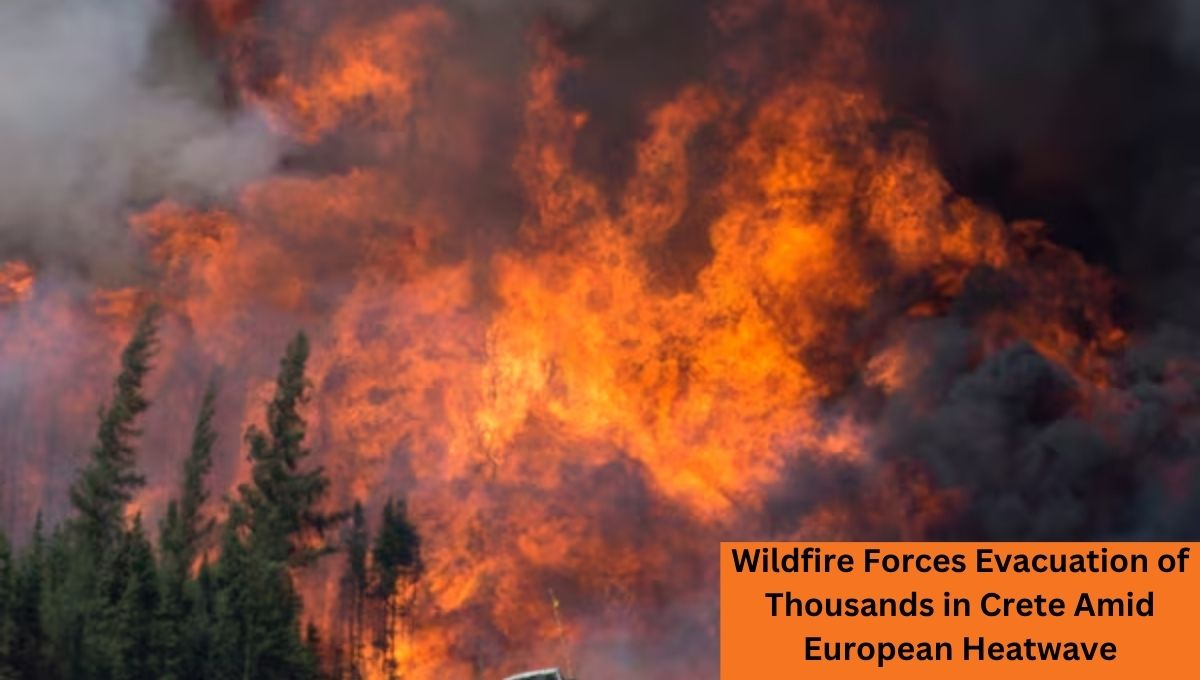
A massive Wildfire Forces Evacuation of Thousands in Crete Amid European Heatwave. The Greek Island of Crete is battling a devastating wildfire that has already displaced more than 5,000 people, mostly tourists, as the country endures an extreme summer heatwave. The fire broke out on Wednesday afternoon near the southeastern town of Ierapetra and has spread rapidly due to gale-force winds and soaring temperatures.
Greek authorities have declared a state of emergency in the Ierapetra region as emergency crews struggle to contain the blaze amid dangerous weather conditions.
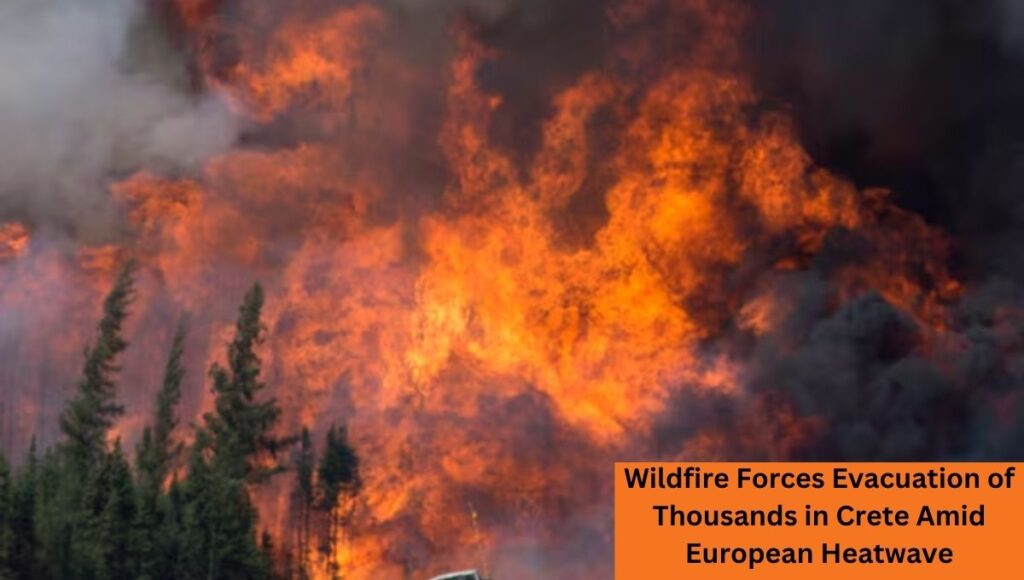
Wildfire Forces Evacuation of Thousands in Crete Amid European Heatwave
Wildfire Rages Across Multiple Fronts
According to the Greek Fire Service, the fire has now split into three active fronts Achlia, Ferma, and Skinokapsala. Over 230 firefighters, supported by 46 fire engines, 10 helicopters, and 13 specialized foot teams, are on the ground.
Drone surveillance units have also been deployed to track fire movement.
The strong winds, reaching up to 9 on the Beaufort scale (50 mph or 80 km/h), have made firefighting efforts extremely difficult. Fire officials say the flames are creating new outbreaks, complicating containment.
“We are entering the third and most difficult month of the fire season,” said Chief Vasilios Vathrakoyannis, spokesperson for the Greek Fire Department.
“July’s combination of high temperatures and strong winds increases the danger and rapid spread of wildfires.”
Evacuations Underway: Tourists and Residents Flee
Authorities have issued emergency alerts via the 112 system, ordering evacuations in Achlia, Ferma, Agia Fotia, Galini, and later Koutsounari.
Many evacuees were taken to a sports hall in Ierapetra, while others were relocated to hotels in Crete’s northern region or evacuated by boat from isolated beaches.
“It was very scary,” said Mikkel Sallin, a 26-year-old tourist from Denmark. “We are just glad to stay here right now and feel safe.”
Local reports say homes, greenhouses, villas, and hotels have been destroyed. Power outages and hazardous air quality are affecting residents and emergency crews. Several people have been hospitalized with respiratory issues.
Impact on Crete’s Tourism Industry
Tourism, a key sector for Crete’s economy, has been severely disrupted. George Tzarakis, head of the Ierapetra and Southeast Crete Hoteliers’ Association, confirmed that approximately 5,000 tourists were evacuated.
“This fire comes at the height of tourist season and will likely impact future bookings,” Tzarakis told a local station.
Hotels and rental properties have reported significant damage, with bookings canceled or postponed. The main road near Agia Fotia has been shut, and all non-essential travel in affected areas is discouraged.
New Fire Threatens Athens Suburbs
As the blaze in Crete rages on, a new wildfire broke out Thursday afternoon in Pikermi, a suburb of Athens near the international airport and the port city of Rafina.
More than 100 firefighters were deployed, and three settlements were evacuated as thick smoke blanketed the area. The main avenue linking Pikermi to central Athens has been closed.
Europe on Fire: Heatwave Grips Continent
The Crete wildfire is part of a wider pattern of destruction across Southern Europe this week. In Spain, two people died from a wildfire in Catalonia.
France and Italy have also reported heat-related deaths. In Turkey, massive fires in Izmir, Manisa, and Hatay provinces have forced tens of thousands to flee.
Italy issued red alerts for 18 cities as temperatures climbed to 38°C (100.4°F). Authorities warned of temporary blackouts due to air conditioning overload, while Switzerland shut down two nuclear reactors due to rising water temperatures.
Wildfire Hotspot: Greece’s Growing Vulnerability
Greece lies within what scientists call a “wildfire hotspot” in the Mediterranean, with hot, dry summers creating ideal conditions for wildfires.
According to WWF Greece and the Athens National Observatory, the country lost 45,000 hectares (111,200 acres) to fire in 2022, and a record-breaking 175,000 hectares (432,400 acres) in 2023.
Scientists say climate change is making wildfires more intense and frequent, with heatwaves arriving earlier, increasing temperatures by as much as 10°C (50°F) in some regions.
Warming sea temperatures are also contributing to the formation of heat domes, which trap hot air over large areas.
“The Mediterranean is warming faster than almost anywhere else on Earth,” said Professor Elena Papadopoulos, a climate scientist. “We’re seeing a preview of the new normal.”
State Response and Ongoing Challenges
All hospitals in Crete are on high alert, and the Coast Guard has joined evacuation efforts along the island’s southeastern coast.
The Greek Civil Protection Ministry has coordinated a multi-agency response involving police, emergency medical services, and local volunteers.
Still, fire officials warn that high temperatures and wind conditions are likely to persist into the weekend, with a high risk of new wildfires on Friday and beyond.
The Fire Department’s daily bulletin continues to list Crete and southern Greece among the regions at extreme fire risk.
Conclusion: Climate Crisis Fuels Destruction Across Southern Europe
The wildfire in Crete underscores the increasing vulnerability of Mediterranean regions to climate-induced disasters. With thousands displaced, homes destroyed, and tourism upended, the crisis is a stark reminder of the mounting risks posed by climate change.
As firefighters continue to battle blazes from Crete to Catalonia, and heatwaves strain infrastructure from Athens to Rome, experts say the only long-term solution is climate mitigation and investment in fire prevention and preparedness.
For now, Greece faces its hottest and most dangerous month of the year with no relief in sight.
Also Read: Wildfire Near Marseille Injures Over 100, Shuts Down Airport and Trains
Also Read: Is it safe to travel to Crete? Latest advice after mass evacuations due to wildfires
Related Posts:
- Wildfire Near Marseille Injures Over 100, Shuts Down…
- Wildfire Chaos: 265,000+ Flee as France and Spain…
- 7 Alarming Facts About Super Typhoon Fung-wong
- 7 Critical Signals Behind Trump’s Claim of a Ukraine…

- 7 Critical Reasons Kharg Island Is Iran’s Oil “Crown…

- 9 Alarming Impacts of a Massive U.S. Winter Storm