A significant reduction in reciprocal tariffs in a recent US-China Trade Deal: Tariffs Slashed by 115% in Historic 90-Day Agreement to Ease Tensions. In a surprising turn of events, the United States and China have agreed to cutting combined duties by 115% for a period of 90 days offering a much-needed breather in the long-running US-China trade war. The deal, finalized during weekend trade talks in Geneva, aims to de-escalate tensions between the world’s two largest economies and pave the way for more comprehensive negotiations.
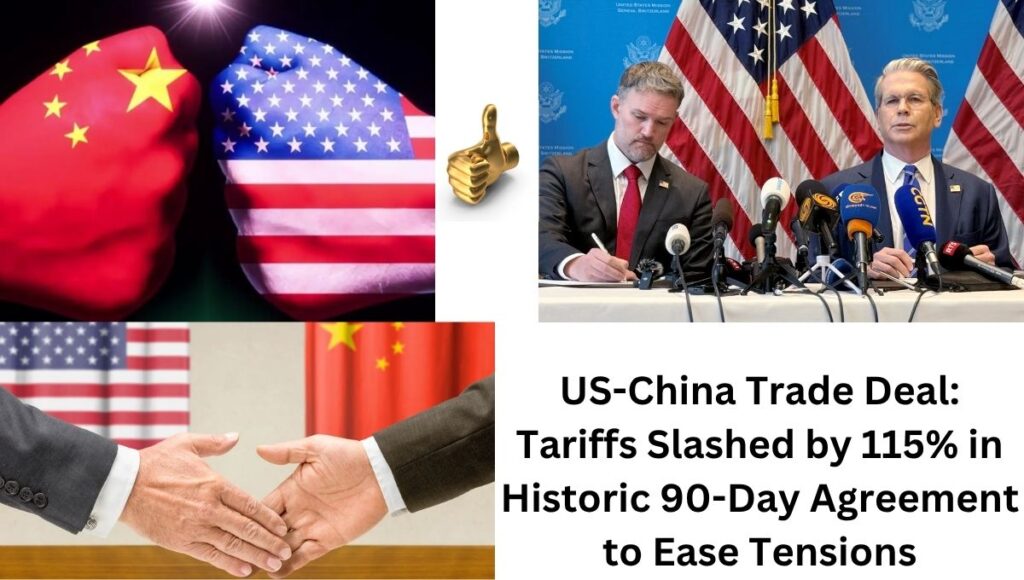
US-China Trade Deal: Tariffs Slashed by 115% in Historic 90-Day Agreement to Ease Tensions
Tariffs Slashed: What the Deal Means
As per the joint statement released in Geneva, US tariffs on most Chinese goods will fall from 145% to 30%, while China will reduce its tariffs on US imports from 125% to 10%. The temporary reduction is set to take effect by May 14, creating what officials described as a 90-day “cooling period” for further talks.
The tariff rollback includes levies related to fentanyl-linked products, a key concern for Washington. US Treasury Secretary Scott Bessent remarked, “We had a very robust and productive discussion on steps forward on fentanyl. We are in agreement that neither side wants to decouple.”
A Mechanism for Future Dialogue
The two-day talks marked the first high-level in-person negotiations since President Donald Trump’s second term began. The leaders agreed to establish a formal mechanism to maintain dialogue on economic and trade relations, suggesting an intent to avoid the breakdowns that plagued earlier rounds of talks.
Trade Representative Jamieson Greer emphasized the need for balanced trade: “The deal we struck with our Chinese partners will help reduce the US’s $1.2 trillion trade deficit. We are confident this is a step toward resolving what the President has declared a national emergency.”
Market Reactions: Stocks Surge Across Asia
The news triggered an immediate positive response from global financial markets. Hong Kong’s Hang Seng Index rose by 3%, while Shanghai Composite gained nearly 1%. Stock markets in Japan and Taiwan also recorded notable upticks.
In the US, companies heavily reliant on imports from China saw a spike in share prices, reflecting optimism among investors. In contrast to previous flare-ups, this time, the market seems to believe both sides may be serious about a sustainable deal.
Trump’s “Reset” and the Shadow of History
President Trump hailed the agreement as a “total reset with China,” claiming relations are now “very good.” However, history urges caution. In 2018, a similar pause in tariffs collapsed within weeks, leading to 18 months of heightened trade conflict that only partially resolved with the “Phase One” trade deal in January 2020.
That deal ultimately fell short of expectations, with China failing to meet its US purchase commitments, and the US trade deficit with China ballooning during the pandemic.
A Temporary Relief for Exporters and Importers
Chinese Commerce Minister Wang Wentao assured local businesses that Beijing would support exporters impacted by the tariff war. “We will spare no effort in helping export companies resolve difficulties,” Wang stated, adding that China’s response to “unjust high tariffs” has earned international respect.
On the US side, importers are now rushing to take advantage of the 90-day window. Peter Sand, Chief Analyst at Xeneta, described it as a “window of opportunity” for businesses to benefit from lower tariff rates. However, he warned of possible shipping congestion and increased logistics costs due to the sudden spike in demand.
The Bigger Picture: Tariffs Still High
Despite the rollback, tariffs remain significantly above pre-trade war levels, a fact not lost on policymakers and analysts alike. Adriana Kugler, a Federal Reserve board member, acknowledged the improvement but noted that economic strain will continue.
“I still expect an increase in prices and a slowdown in the economy, though not to the same extent as before,” she said.
This reflects a broader sentiment that while the deal is a step forward, much remains unresolved. The US objective to close its trade deficit clashes with China’s demand for full tariff removal, a fundamental gap that could derail future progress.
What’s Next for the US-China Trade Relationship?
The next three months will be crucial. While both parties have struck an encouraging tone, there is still no clear roadmap for a long-term trade agreement. The history of breakdowns and unmet promises looms large over the deal.
Still, the temporary truce opens a critical diplomatic window, one that could stabilize not only US-China relations but also the global economy, which has been rattled by protectionism and retaliatory tariffs in recent years.
Conclusion
The US-China trade deal marks the most hopeful development in bilateral relations since the onset of the current tariff war. With tariffs slashed by 115%, both nations have signaled a willingness to step back from the brink and re-engage diplomatically.
Whether this fragile peace will hold depends on what happens during the 90-day negotiation window—and whether the two giants can align their conflicting economic visions.
Also Read: Trump Announces Breakthrough US-China Trade Deal Amid Rare Earth and Tariff Tensions
Also Read: What’s in China-US trade deal? Tariff cuts and key details