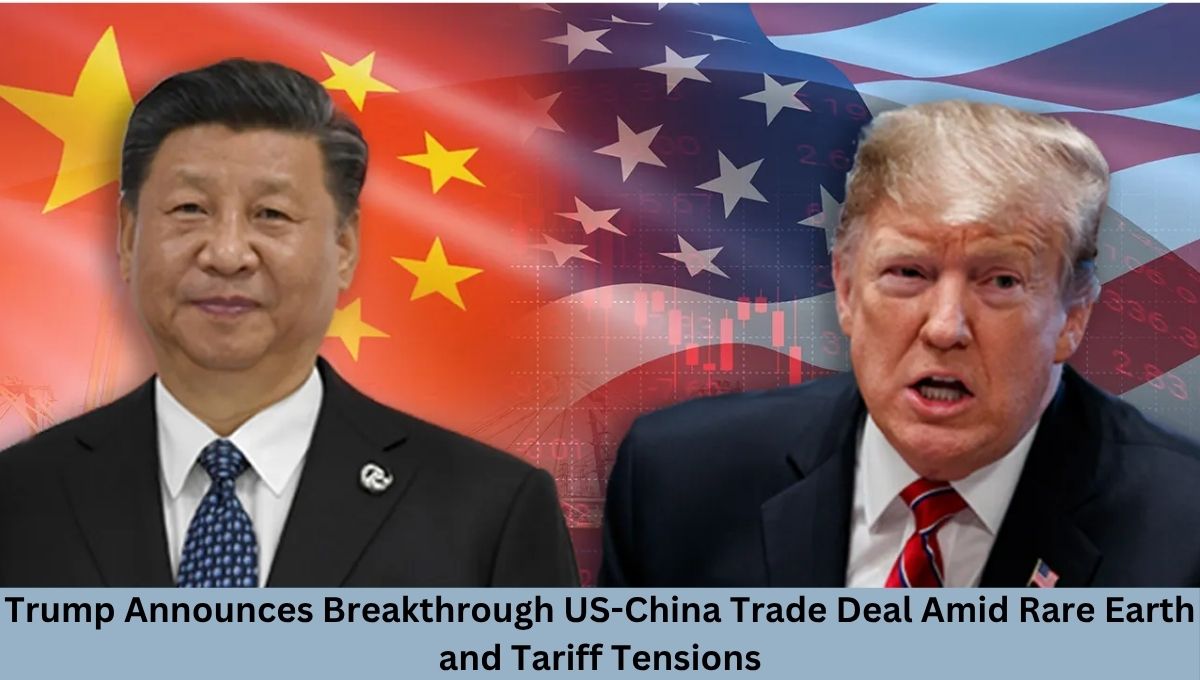
A trade deal years in the making: Trump Announces Breakthrough US-China Trade Deal Amid Rare Earth and Tariff Tensions. After years of tit-for-tat tariffs, disrupted supply chains, and growing distrust, the United States and China have struck a new US-China trade deal.
The announcement came directly from former President Donald Trump, who posted the details on his Truth Social platform, confirming that the deal is “done” pending final sign-off by Chinese President Xi Jinping. This long-awaited agreement is being hailed by some as a critical breakthrough that could reset relations between the world’s two largest economies.
Key highlights of the deal include the immediate resumption of rare earth mineral exports from China, revised tariffs on Chinese goods, and a surprising nod to diplomacy through the reinstatement of Chinese student visas.
Trump Announces Breakthrough US-China Trade Deal Amid Rare Earth and Tariff Tensions
Rare Earths: A Strategic Victory for the US
At the core of the agreement lies China’s commitment to provide the US with an “upfront” and “full” supply of rare earth minerals and magnets. These critical materials are essential for a wide range of industries including semiconductors, electric vehicles, and defense technologies.
Currently, China dominates global production and processing of these resources, controlling nearly 60% of supply and over 90% of refining. Trump emphasized this gain in his post, stating, “Full magnets, and any necessary rare earths, will be supplied, up front, by China.”
This move addresses longstanding US fears over strategic mineral dependence and offers American industries some badly needed relief after months of supply bottlenecks.
Chinese Student Visas Reinstated
In a diplomatic concession that caught many by surprise, the US will now allow Chinese students to study in American colleges and universities a reversal from the previous hardline stance.
“Chinese students using our colleges and universities (which has always been good with me!),” Trump wrote, making it clear that this gesture was part of the new trade framework.
This reinstatement benefits both sides: Chinese families seeking top-tier education and US universities that heavily rely on international tuition.
New Tariff Framework: Still Tough, But Softer
The US-China trade deal also revamps the tariff structure that had previously sparked waves of economic anxiety. According to Trump and Commerce Secretary Howard Lutnick, the new US tariff rate on Chinese goods will be 55%, down from the punishing 145% in place until recently. This revised figure consists of:
- A 10% baseline tariff
- A 25% continuation of tariffs from Trump’s first term
- A 20% penalty linked to China’s alleged role in fentanyl trafficking
Meanwhile, China has agreed to reduce its tariffs on US goods from 125% to just 10%, aligning with an earlier Geneva agreement. While business leaders are calling the US’s 55% rate still burdensome, it marks a significant easing from previous levels.
Small Businesses Sound the Alarm
Not everyone is celebrating. Many small and medium-sized businesses in the US argue that the 55% tariff remains unsustainable. Cassie Abel, founder of Wild Rye, an outdoor apparel brand, labeled the revised rate “devastating.”
She pointed to ongoing shipping delays and container shortages, saying they make it nearly impossible to operate within the 90-day tariff reprieve window, which expires on July 8.
Retail giant Walmart, which sources around 60% of its goods from China, also expressed concern. CEO Doug McMillon warned that the company would be forced to raise prices, stating they couldn’t absorb the added cost without impacting their already thin profit margins.
The Main Street Alliance, an advocacy group for entrepreneurs, went as far as to call the deal “a death sentence” for small business owners dependent on Chinese imports.
Technology Export Controls Remain Intact
Despite the major win on rare earth minerals, the US has not offered China any relief on technology export restrictions. Treasury Secretary Scott Bessent clarified that advanced AI chips, aerospace technologies, and other sensitive items remain off-limits to Beijing.
“There was no chip-for-minerals swap,” Bessent emphasized during Congressional testimony, reinforcing the administration’s stance on national security and technological containment.
London Talks Put ‘Meat on the Bones’ of Geneva Deal
The breakthrough comes after marathon talks held in London, following a previously stalled agreement in Geneva. Commerce Secretary Lutnick described the new framework as “putting meat on the bones” of the vague Geneva commitments.
Chinese Vice Commerce Minister Li Chenggang echoed this sentiment, confirming that the new terms will undergo internal review in both countries before formal ratification.
These London negotiations were triggered by fresh disputes over delayed rare earth exports and concerns about non-tariff barriers, student visas, and tech controls.
Market Reaction: Cautiously Optimistic
The global markets responded with mild optimism. Japan’s Nikkei and Hong Kong’s Hang Seng rose 0.6% and 0.8%, respectively, while the FTSE 100 in London saw a modest 0.1% gain.
However, US markets remained largely flat, with the S&P 500 dipping 0.3% and the Nasdaq falling 0.5%. Analysts pointed to uncertainty about implementation and lingering concerns over inflation and global trade stability.
Analysts Still Skeptical
While the announcement is historic, many economists and analysts remain cautious. Dan Ives of Wedbush Securities said the deal “is far from finalized” and expects more negotiations and industry-specific exemptions in the coming months.
Meanwhile, Josh Lipsky of the Atlantic Council noted, “They’re back to square one, but that’s much better than square zero.” The World Bank recently downgraded its 2025 global growth forecast, citing trade tensions and tariff uncertainty as major headwinds.
Trump’s Next Moves and Global Implications
Trump has hinted that more bilateral trade deals may be on the horizon. Speaking on Thursday, he said letters detailing new tariff frameworks will be sent by July 9. Secretary Bessent confirmed that countries actively negotiating will receive extensions and flexibility, while those who don’t may face renewed tariffs.
Conclusion: Fragile Truce or Real Turning Point?
The Trump-Xi trade deal is undeniably a significant moment in US-China relations. With strategic wins on rare earth minerals and a softer diplomatic tone via student visa reinstatement, the deal signals the possibility of rebuilding trust.
However, deeper issues intellectual property theft, industrial espionage, and tech restrictions remain unresolved. Whether this agreement marks the beginning of lasting stability or just a temporary pause in the trade war will become clearer in the months to come.
Also Read: US-China Trade Deal: Tariffs Slashed by 115% in Historic 90-Day Agreement to Ease Tensions
Also Read: China, UK trade deals with Trump pile pressure on EU
Related Posts:
- 11 Explosive Revelations From Ted Cruz’s Leaked…

- 5 Powerful Highlights as Trump Lands Second Nobel…

- Can the EU and NATO Impose Tariffs on India and…

- Trump’s Breakthrough Gaza Ceasefire Deal 2025: Key Insights

- Dramatic Moments Behind Trump’s Gaza Peace Push and…

- 5 Key Breakthroughs as Trump and Xi Seal Major…