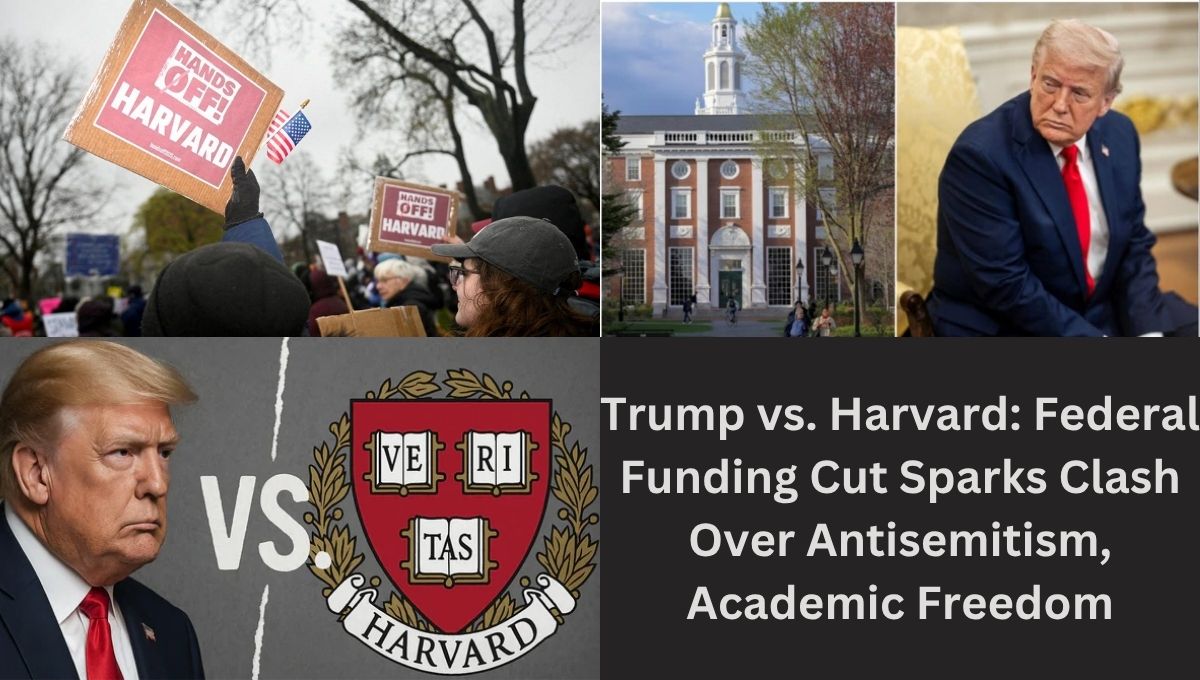
A historic showdown unfolds, Trump vs. Harvard: Federal Funding Cut Sparks Clash Over Antisemitism, Academic Freedom. The long-simmering conflict between President Donald Trump and Harvard University has erupted into a full-scale political and legal war, with sweeping implications for academic freedom, federal education funding, and the fate of international students in the United States.
At the center of the clash is a scathing internal report on antisemitism at Harvard and President Trump’s aggressive response, which includes slashing billions in federal research funding, threatening the school’s tax-exempt status, and revoking its ability to enroll foreign students.
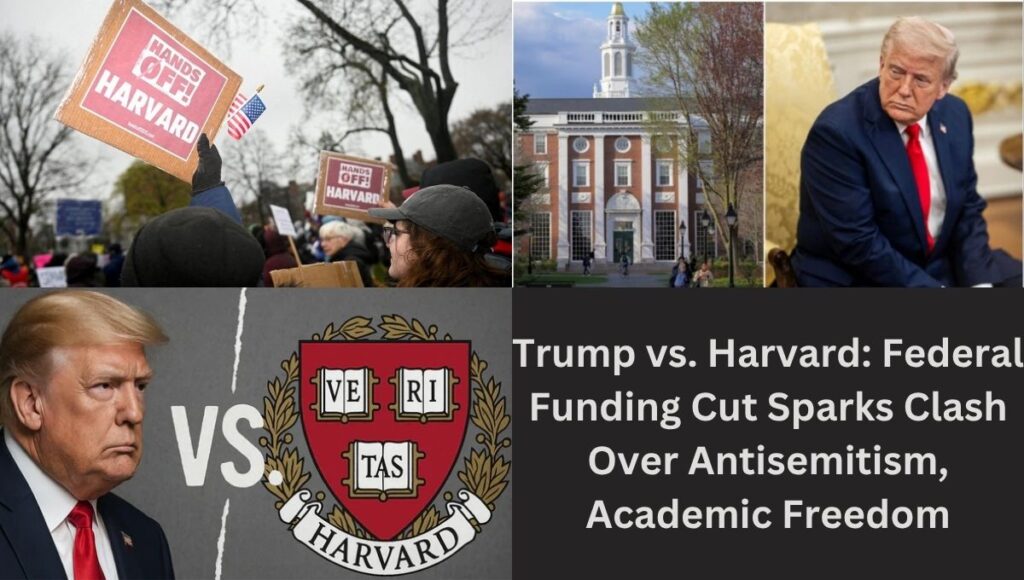
Trump vs. Harvard: Federal Funding Cut Sparks Clash Over Antisemitism, Academic Freedom
Antisemitism Report Ignites Federal Retaliation
On April 29, Harvard released a report from its internal antisemitism task force detailing a deeply troubling environment for Jewish and Israeli students. The findings described widespread bias, marginalization, and a campus culture that often-pressured students to distance themselves from Israel.
One Jewish graduate student even compared their treatment to how conservative students were sidelined in earlier decades. The task force cited academic bias, especially in Harvard’s Divinity School and School of Public Health, where anti-Zionist rhetoric and a lack of balanced discourse were highlighted.
Class cancellations for pro-Gaza protests and classroom promotion of activist agendas further fueled criticism. These findings became political fodder for President Trump, who accused Harvard of allowing antisemitism to flourish unchecked.
Federal Funding Freeze Paralyzes Research
On May 27, the Trump administration ordered all federal agencies to cancel existing contracts with Harvard, totaling nearly $100 million.
This followed the freezing of over $2.65 billion in federal grants, primarily affecting Harvard’s School of Public Health and its renowned Sinclair Lab at Harvard Medical School.
Dr. David Sinclair, a leading aging researcher, warned that these cuts threaten critical projects on Alzheimer’s, cancer, and immune disorders, many of which rely on international scholars now facing visa uncertainties.
Harvard President Alan Garber responded with urgency, warning on NPR that “this isn’t just about Harvard it’s about America’s leadership in science and innovation.”
SEVP Revocation Puts International Students at Risk
In a dramatic escalation, the Department of Homeland Security revoked Harvard’s SEVP (Student and Exchange Visitor Program) certification on May 22, effectively banning the school from enrolling foreign students.
This move sent shockwaves through the university’s global community. Nearly 800 Indian students, along with thousands of others from across the world, were suddenly left in limbo just a week before graduation.
Homeland Security also demanded access to personal data of all international students, citing national security concerns. Harvard quickly filed a lawsuit, and a federal judge issued a temporary restraining order blocking the SEVP action. A pivotal court hearing is scheduled for May 29.
Tax-Exempt Status Under Threat
President Trump further intensified pressure on Harvard by directing the IRS to consider revoking the university’s nonprofit, tax-exempt status.
While legal experts question the executive branch’s authority to influence the IRS in this manner, the threat could cost Harvard hundreds of millions of dollars.
In a strong rebuttal, Harvard declared, “There is no legal basis to rescind Harvard’s tax-exempt status,” accusing the administration of overreach and politically motivated retaliation.
Indian-American Leaders at Harvard Under Spotlight
As the battle intensifies, attention has turned to the Indian-American scholars who hold key positions at Harvard, particularly in the Business School.
Figures such as Srikant Datar, Tarun Khanna, Mihir Desai, and Rakesh Khurana have become symbolic of the school’s global leadership and are now caught in the crossfire.
These academics, many with ties to IIM and IIT institutions in India, are helping to navigate Harvard through one of the most turbulent periods in its modern history.
Backlash and Protests Rock Campus
The Trump-Harvard clash has triggered widespread outrage among students, faculty, and alumni. Demonstrations broke out on campus following the federal funding cuts, with many accusing the administration of weaponizing antisemitism for political gain.
Jacob Miller, former president of Harvard Hillel, called the crackdown “absurd,” adding that “these policies are more about silencing universities than addressing hate.”
Alumni group Crimson Courage organized a virtual rally to defend the university, while political leaders like New York Lt. Gov. Antonio Delgado and Massachusetts Gov. Maura Healey warned of the broader economic and academic consequences.
Harvard’s Lawsuits Signal Ongoing Legal War
Harvard has filed multiple lawsuits against the Trump administration, challenging both the funding cuts and the SEVP revocation. The university’s legal team is also preparing to contest any IRS attempts to alter its tax status.
With court hearings scheduled throughout June, legal experts believe these cases could set precedent for the limits of presidential power over higher education and nonprofit institutions.
What’s at Stake: A Battle Beyond the Ivy Walls
This escalating feud is about more than just Harvard. It reflects a deeper national debate over free inquiry, campus politics, immigration policy, and the role of elite institutions in shaping American society.
Supporters of the Trump administration argue that Harvard has failed to police bias and antisemitism on its campus. Critics contend that the federal government is overreaching, using political tools to punish dissenting academic voices.
Regardless of which side prevails in court, the Trump-Harvard confrontation is a defining moment for the future of U.S. higher education and for the global scholars and students whose lives hang in the balance.
Conclusion: The Future of Academic Freedom in America
As summer begins, Harvard, the nation’s oldest and wealthiest university, stands at a crossroads. The Trump administration’s aggressive measures from funding freezes and student visa restrictions to threats against tax-exempt status represent an unprecedented federal assault on a private academic institution.
The coming weeks will determine whether Harvard can withstand the storm or whether this historic clash will permanently reshape the relationship between the federal government and American universities.
One thing is clear: the outcome of this battle will reverberate far beyond Cambridge, Massachusetts, shaping policies and precedents that affect the very core of American academic freedom.
Also Read: Judge Temporarily Blocks Trump Administration’s Ban on Harvard’s International Students
Also Read: Federal funding freeze leaves grad students, postdocs scrambling for labs, support