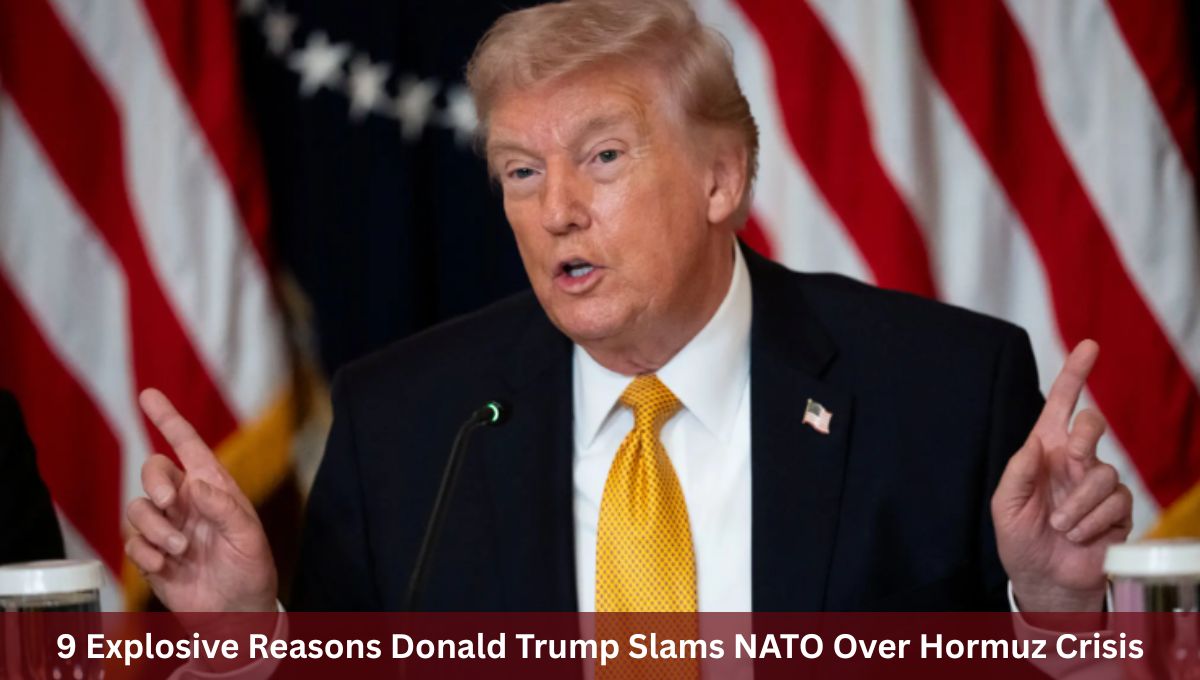
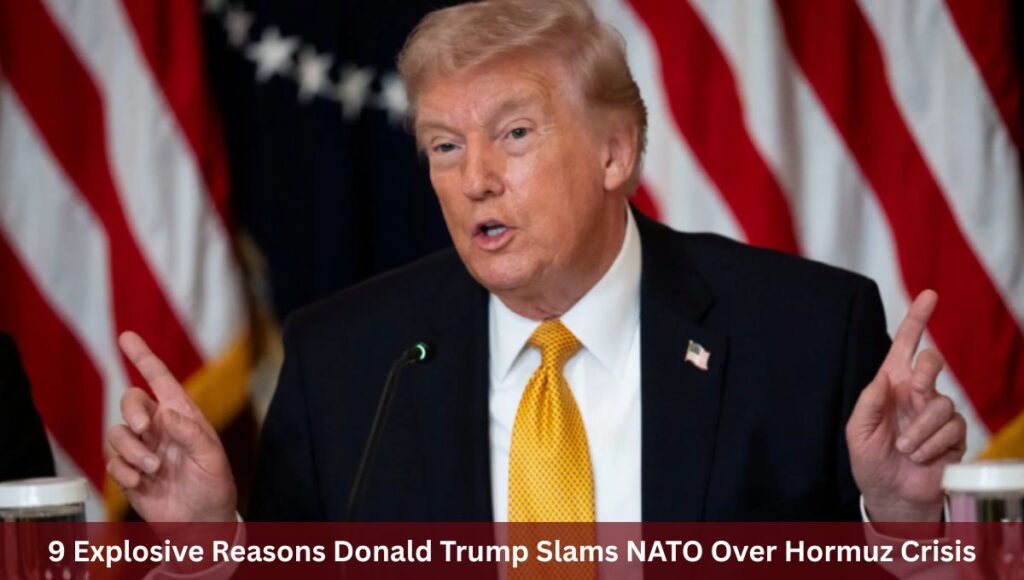
9 Explosive Reasons Donald Trump Slams NATO Over Hormuz Crisis, exposing deep global divisions. The geopolitical crisis in the Middle East has taken a dramatic turn as Donald Trump openly criticized NATO allies for refusing to support a U.S.-led mission to secure the strategically vital Strait of Hormuz.
Thank you for reading this post, don't forget to subscribe!Calling the refusal a “very foolish mistake,” Trump’s remarks highlight a deepening divide between the United States and its traditional allies. The dispute comes amid an escalating Iran war that has already disrupted global oil supply chains, triggered military exchanges across the Gulf, and raised fears of a broader regional conflict.
At stake is not just military cooperation—but the stability of global energy markets, international alliances, and the future of multilateral security frameworks.
9 Explosive Reasons Donald Trump Slams NATO Over Hormuz Crisis
Trump’s Frustration: “We Don’t Need Any Help”
Speaking at the White House, Trump expressed both frustration and defiance.
“They don’t want to help us, which is amazing… We don’t need any help.”
Despite urging NATO countries to deploy naval forces to secure shipping lanes in the Strait of Hormuz, Trump simultaneously insisted that the U.S. could handle the situation alone.
He further added:
- “Everyone agrees with us, but they don’t want to help.”
- “We will protect them, but they will do nothing for us.”
These statements reflect a recurring theme in Trump’s foreign policy—questioning the value of alliances and burden-sharing.
Why the Strait of Hormuz Matters
A Critical Global Energy Artery
The Strait of Hormuz is one of the most important maritime routes in the world.
- Nearly 20% of global oil supply passes through it
- It connects the Persian Gulf to international markets
- Major economies depend on its uninterrupted flow
Current Crisis
Iran’s military actions—including drones, missiles, and naval mines—have effectively disrupted shipping in the region.
As a result:
- Oil tankers are stranded
- Shipping routes are unsafe
- Global energy prices have surged
This has transformed the Strait into the central flashpoint of the Iran war.
NATO’s Refusal: “Not Our War”
Several NATO members have clearly distanced themselves from the conflict.
Key Countries Rejecting Participation
- France
- Germany
- United Kingdom
- Poland
- Spain
- Canada
Leaders across Europe emphasized that:
- NATO is a defensive alliance, not an offensive force
- The Iran war was not initiated collectively
- Participation could escalate the conflict further
French President Emmanuel Macron stated clearly:
“We will not participate in operations to unblock the Strait of Hormuz.”
Why Allies Are Refusing to Join
1. Lack of Consultation
Many countries were reportedly not consulted before the U.S. and Israel launched strikes on Iran.
2. Legal Concerns
Some nations believe the war may fall outside international legal frameworks.
3. Risk of Escalation
Sending warships could:
- Provoke further Iranian retaliation
- Expand the conflict into a full-scale regional war
4. Domestic Political Pressure
Leaders face public opposition to involvement in another Middle Eastern war.
Expanding Conflict: Attacks Across the Region
Gulf Under Fire
Iran has expanded its military operations beyond Israel.
Targets include:
- UAE’s Fujairah
- Kuwait’s Ali al-Salem Air Base
- Iraq’s Erbil region
Missile interceptions have been reported across the Gulf, highlighting the widening scope of the conflict.
US Embassy in Baghdad Attacked
The situation intensified further when the U.S. embassy in Baghdad came under rocket and drone attacks.
Key details:
- Multiple explosions near Baghdad International Airport
- Air defense systems activated
- No confirmed casualties
These attacks underline how Iraq is increasingly being drawn into the conflict.
Israel-Iran Escalation Continues
Targeting Iranian Leadership
Israel claims to have killed:
- Gholamreza Soleimani
- Ali Larijani
Iran has not officially confirmed these deaths, but the developments have intensified tensions.
IRGC Response
The Islamic Revolutionary Guard Corps stated it launched missile strikes on:
- Tel Aviv
- Beit Shemesh
- Jerusalem
These attacks mark a significant escalation in direct confrontation.
Joe Kent Resignation Adds Fuel to Crisis
The resignation of Joe Kent has added a political dimension to the conflict.
Kent stated:
“Iran posed no imminent threat to our nation.”
He also alleged that:
- The war was influenced by Israeli pressure
- Intelligence may have been misrepresented
Trump dismissed Kent as:
- “Very weak on security”
This internal disagreement highlights divisions within the U.S. government itself.
Oil Prices Surge Amid Global Panic
Market Reaction
The disruption in the Strait of Hormuz has led to:
- Oil prices exceeding $100 per barrel
- Increased fuel costs globally
- Inflation concerns in multiple economies
Trump’s Response
Trump downplayed the impact:
“It’s a temporary issue… prices are gonna drop like a rock.”
However, analysts warn the crisis could have long-term economic consequences.
Global Powers Step Back
Europe’s Unified Distance
European leaders have largely adopted a cautious stance, emphasizing diplomacy over military action.
Asia’s Strategic Silence
Countries like:
- Japan
- South Korea
- China
have avoided direct involvement, calling for de-escalation instead.
Middle Eastern Allies Step In
While NATO hesitates, regional players have shown some willingness to assist.
Countries like:
- United Arab Emirates
- Saudi Arabia
- Qatar
are reportedly in discussions to support maritime security efforts.
Humanitarian Crisis Deepens
Lebanon Casualties Rise
- Over 900 people killed
- Thousands injured
Airstrikes and cross-border fighting continue to devastate civilian populations.
Regional Impact
The war has:
- Displaced thousands
- Damaged infrastructure
- Increased humanitarian aid needs
Trump vs NATO: A Long-Standing Tension
Trump’s criticism of NATO is not new.
He has repeatedly argued that:
- The U.S. bears an unfair share of defense costs
- Allies rely too heavily on American protection
This crisis has brought those tensions into sharp focus.
Strategic Implications for NATO
The alliance now faces key questions:
- Should NATO expand beyond defensive roles?
- How should it respond to member-led conflicts?
- Can unity be maintained under pressure?
The answers could shape NATO’s future.
What Happens Next?
Military Outlook
- Continued U.S. strikes on Iranian coastal defenses
- Possible coalition with regional allies
- Ongoing missile exchanges
Diplomatic Possibilities
- Calls for ceasefire negotiations
- Pressure from global powers
- Potential UN involvement
Global Stakes: Why This Crisis Matters
Energy Security
Disruptions in the Strait of Hormuz affect:
- Oil prices
- Global inflation
- Economic stability
Geopolitical Balance
The conflict is reshaping alliances and power dynamics worldwide.
Risk of Wider War
With multiple countries involved, escalation remains a serious concern.
Conclusion: A Defining Moment for Global Alliances
The clash between Donald Trump and NATO over the Strait of Hormuz is more than a diplomatic dispute—it is a defining moment in global geopolitics.
As the Iran war intensifies, the lack of unified international support raises critical questions about the future of alliances, the balance of power, and the ability of the global community to respond to crises.
Whether this divide leads to long-term strategic shifts or temporary friction will depend on how the conflict unfolds in the coming weeks.
Also Read: 10 Explosive Reasons Trump Says “We Don’t Need Oil” Amid Hormuz Crisis
Also Read: Can the Strait of Hormuz be reopened? NATO weighs options amid crisis