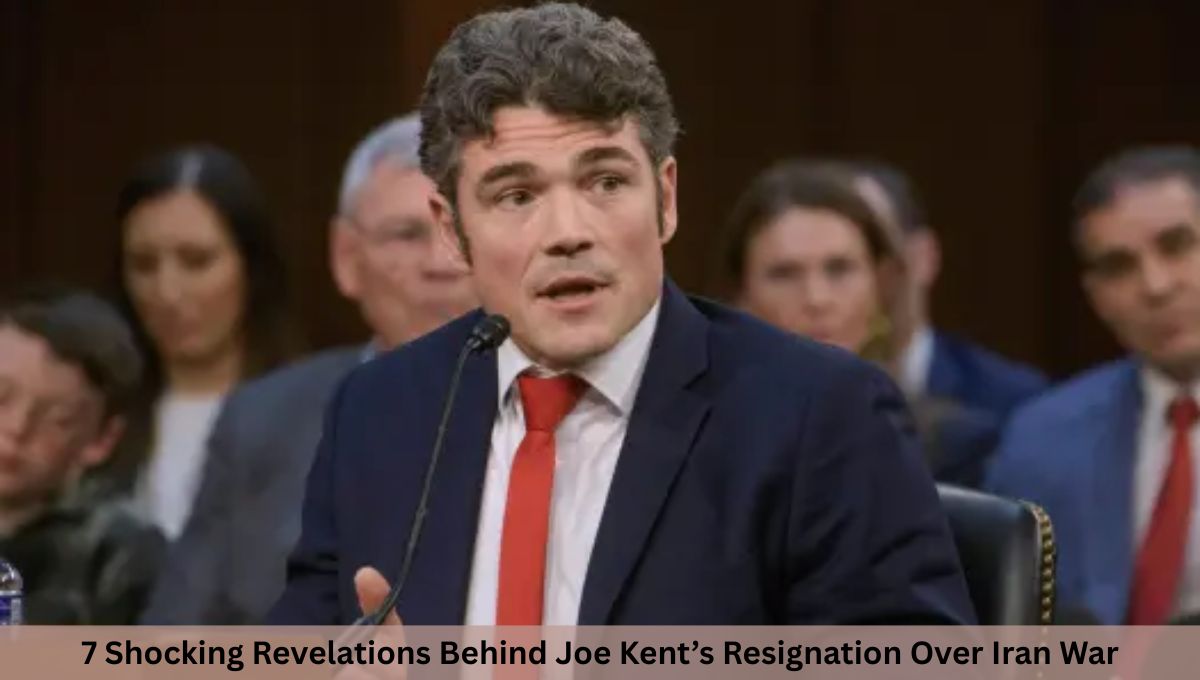
7 Shocking Revelations Behind Joe Kent’s Resignation Over Iran War that shook Washington. In a stunning development that has reverberated across global political and security circles, Joe Kent, the Director of the U.S. National Counterterrorism Center, resigned in protest against the ongoing Iran war.
His departure marks the first high-level resignation within the administration of Donald Trump directly linked to the escalating conflict.
Kent’s resignation is not merely a bureaucratic exit—it is a pointed political statement. In his letter, he declared he could not “in good conscience” support a war he believes was initiated without a legitimate threat to the United States.
His claims have ignited fierce debate over intelligence assessments, foreign policy decisions, and the influence of allies on U.S. strategy.
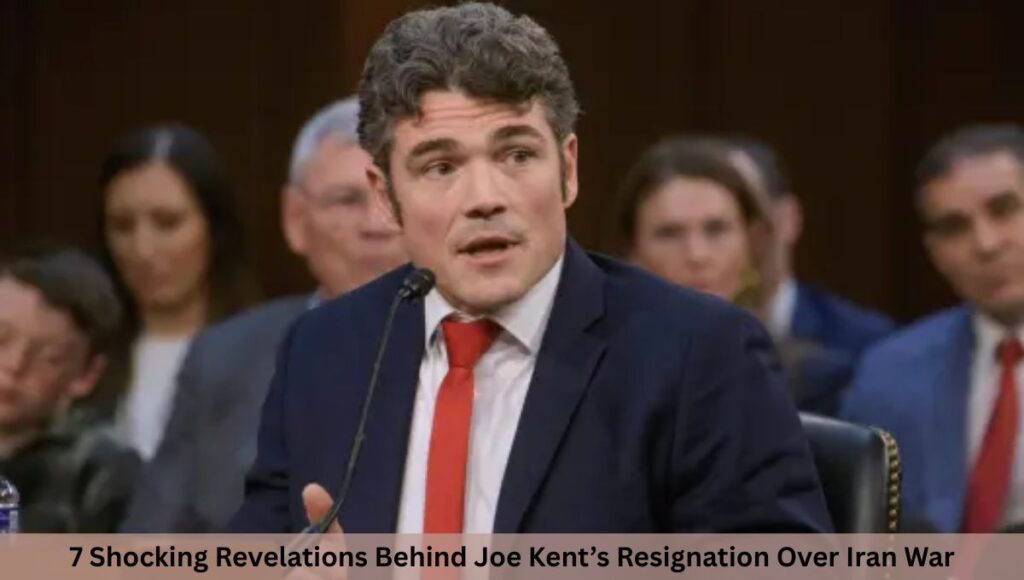
7 Shocking Revelations Behind Joe Kent’s Resignation Over Iran War
What Triggered the Resignation?
“No Imminent Threat” Claim
At the core of Kent’s resignation is a stark assertion:
Iran did not pose an immediate danger to the United States.
He wrote:
“Iran posed no imminent threat to our nation.”
This directly contradicts the official justification provided by the Trump administration, which has consistently argued that military action was necessary to prevent an impending Iranian attack.
Allegations of External Pressure
Kent went further, alleging that the war was not purely a U.S. strategic decision.
He claimed that:
- Israeli officials exerted pressure on Washington
- U.S. media amplified pro-war narratives
- A coordinated “misinformation campaign” shaped public perception
These claims have intensified scrutiny of the relationship between the U.S. and Israel, particularly in the context of military decision-making.
Inside the Resignation Letter: Key Takeaways
Kent’s letter reads as both a critique and a warning. Several themes stand out:
1. Moral Opposition to War
Kent emphasized ethical concerns, stating he could not support sending American troops into what he described as an unnecessary conflict.
2. Echoes of Past Wars
He drew parallels with the Iraq War, suggesting a pattern of flawed intelligence and political pressure.
3. Strategic Miscalculation
Kent warned that the war could:
- Drain U.S. resources
- Cost American lives
- Destabilize global markets
Who Is Joe Kent?
Military and Intelligence Background
Joe Kent is not a typical bureaucrat. His career includes:
- 11 combat deployments as a U.S. Army Special Forces soldier
- Service as a CIA paramilitary officer
- Leadership of the National Counterterrorism Center
Personal Tragedy
Kent’s perspective is shaped by personal loss. His first wife, Shannon Kent, was killed in a 2019 suicide bombing in Syria.
This experience deeply influenced his views on prolonged military engagements.
Political Career
He later entered politics, running twice for Congress as a Republican, though unsuccessfully.
His alignment with the “America First” ideology made him a natural fit for Trump’s administration.
Trump’s Response: Sharp and Dismissive
President Donald Trump reacted quickly—and bluntly.
He described Kent as:
- “Weak on security”
- “Not smart” in assessing threats
Trump maintained that Iran posed a “tremendous threat” and defended his decision to initiate military action.
Divided Reactions Across the Political Spectrum
Kent’s resignation has exposed deep fractures within U.S. politics.
Supporters Say: A Principled Stand
Some analysts and politicians argue:
- Kent acted on conscience
- His claims raise legitimate concerns about intelligence
- The resignation highlights internal dissent
Critics Say: Misguided and Dangerous
Others counter that:
- Kent lacked access to full intelligence briefings
- His statements undermine national security
- His claims about Israel are inflammatory
The Role of Intelligence: A Growing Controversy
Conflicting Narratives
The administration insists it had “strong and compelling evidence” of an imminent Iranian threat.
However:
- Some intelligence officials reportedly disagreed
- Congressional briefings suggested no immediate attack plan
This contradiction raises serious questions about how intelligence is interpreted—and potentially politicized.
Impact on the Iran War
The resignation comes at a critical moment in the conflict involving:
- Iran
- United States
- Israel
Military Situation
The war has already resulted in:
- Thousands of casualties across multiple countries
- Strikes on strategic infrastructure
- Escalating missile exchanges
Global Economic Fallout
The conflict has disrupted:
- Oil supply through the Strait of Hormuz
- Global energy markets
- Airline operations and trade routes
A Divided Republican Base
Kent’s resignation has revealed fractures within Trump’s own support base.
Anti-War Conservatives
Some prominent voices argue:
- The U.S. should avoid “endless wars”
- The Iran conflict contradicts “America First” principles
Pro-War Faction
Others maintain:
- Iran remains a major security threat
- Military action is necessary for deterrence
Comparisons to Historical Precedents
Kent’s move has been compared to past high-profile resignations.
Iraq War Lessons
The parallels to the Iraq War are significant:
- Questions over intelligence accuracy
- Public skepticism about motives
- Long-term geopolitical consequences
Accusations of Bias and Controversy
Kent’s remarks about Israeli influence have drawn criticism.
Some lawmakers accused him of:
- Promoting conspiracy theories
- Using language that echoes antisemitic tropes
This aspect of the controversy has further polarized reactions to his resignation.
Could This Affect U.S. Policy?
Short-Term Impact
Most analysts believe:
- The war strategy will remain unchanged
- Kent’s departure alone won’t shift policy
Long-Term Implications
However, the resignation could:
- Encourage more internal dissent
- Influence public opinion
- Impact upcoming elections
Global Perspective: Why This Matters
For international audiences, Kent’s resignation highlights broader issues:
1. Stability in the Middle East
The conflict risks drawing in multiple countries, escalating into a regional war.
2. Energy Security
Disruptions in oil supply affect global inflation and economic stability.
3. Trust in Intelligence
Disagreements within the U.S. intelligence community raise concerns worldwide.
What Comes Next?
Several key questions remain unanswered:
- Will more officials resign?
- Can diplomatic efforts reduce tensions?
- How long will the conflict last?
The answers will shape not only U.S. policy but also global geopolitical dynamics.
Conclusion: A Defining Moment
The resignation of Joe Kent is more than a political incident—it is a reflection of deep divisions over war, intelligence, and national interest.
Whether his claims are validated or dismissed, one fact is clear:
the Iran war has entered a new phase—not just on the battlefield, but within the corridors of power in Washington.
As the conflict continues, Kent’s departure may be remembered as an early signal of broader dissent—or simply a lone voice in a deeply contested war.
Also Read: 7 Shocking Revelations About Trump’s Iran War Warning That Change Everything
Also Read: Top US counterterrorism official resigns over Iran war, urging Trump to ‘reverse course’
Related Posts:
- 3 Explosive Conditions Iran Sets to End War with US…

- 10 Powerful Revelations from the Trump–Putin Call on…

- 10 Explosive Signals Trump Says Iran War Could End…
- 7 Explosive Questions as Masoud Pezeshkian…

- 10 Explosive Signals: Trump Rates Iran War “15/10”…
- 12 Explosive Claims as Donald Trump Says Iran War…