

7 Explosive Facts Behind the Portland Immigration Shooting that left two wounded. Tensions surrounding immigration enforcement in the United States escalated sharply after federal immigration agents shot and wounded two people in Portland, Oregon, during what the Department of Homeland Security (DHS) described as a targeted vehicle stop.
The incident, which unfolded on Thursday afternoon, has triggered an FBI-led investigation, widespread political condemnation, renewed street protests, and urgent calls from city and state leaders to suspend Immigration and Customs Enforcement (ICE) operations in Oregon’s largest city.
The Portland shooting occurred just one day after an ICE officer fatally shot a woman in Minneapolis, intensifying scrutiny of the Trump administration’s immigration crackdown and raising serious questions about the use of force by federal agents in civilian areas.
What follows is a detailed, fact-based breakdown of what happened, what is being claimed, what remains disputed, and why this incident matters nationally.
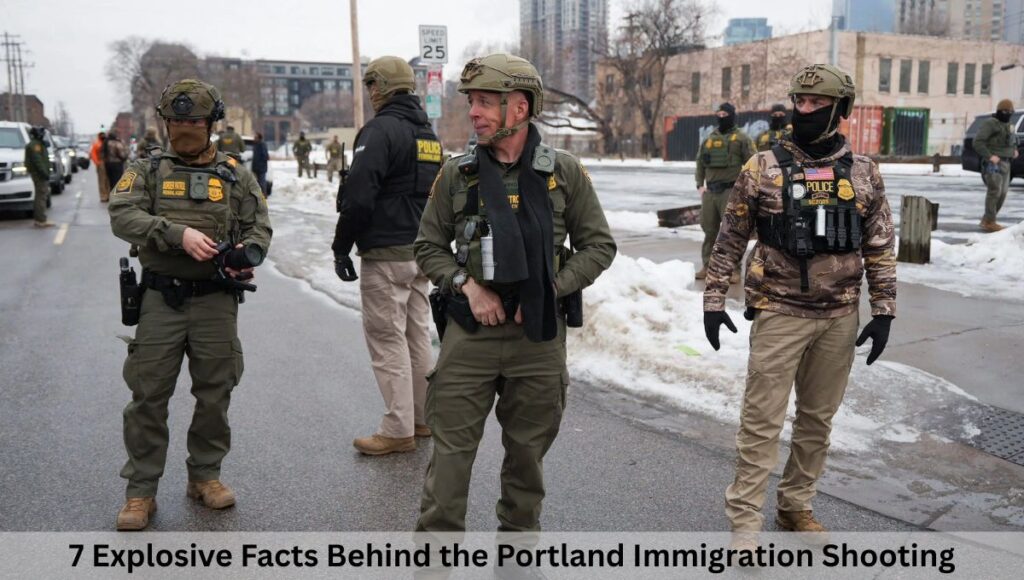
7 Explosive Facts Behind the Portland Immigration Shooting
1. What Happened in Portland: A Timeline of the Shooting
The Initial Incident
According to the Department of Homeland Security, U.S. Customs and Border Protection (CBP) agents were conducting a targeted vehicle stop in east Portland at approximately 2:19 p.m. local time.
DHS claims that:
- Agents identified themselves to the occupants of a vehicle
- The driver allegedly attempted to run over federal agents using the vehicle
- An agent, fearing for his life, fired what DHS described as a “defensive shot”
The vehicle then fled the scene.
Police Response
Minutes later, Portland Police Bureau officers received a call from a man reporting that he had been shot and needed help near Northeast 146th Avenue and East Burnside Street, several miles from the alleged stop.
Officers arrived to find:
- A man and a woman with gunshot wounds
- Bleeding severe enough to require a tourniquet
- Both victims transported to hospital
- Their conditions not immediately known
Portland police confirmed:
- Their officers were not involved in the shooting
- The injuries resulted from a federal agent-involved shooting
2. DHS Claims Self-Defence and Gang Affiliation
Federal Account
In a public statement posted on social media, DHS alleged that:
- The passenger was a Venezuelan national illegally present in the US
- The individual was affiliated with the transnational Tren de Aragua gang
- The passenger had allegedly been involved in a recent Portland shooting
- The driver was also believed to be a gang member
DHS stated:
“When agents identified themselves, the driver weaponized his vehicle and attempted to run over law enforcement agents. Fearing for his life and safety, an agent fired a defensive shot.”
No Independent Corroboration
As of now:
- No independent evidence has publicly confirmed the gang affiliation claims
- No body-camera footage has been released
- The FBI has not endorsed DHS’s narrative
Civil liberties groups and local officials have cautioned against accepting federal claims before the investigation concludes.
3. FBI Leads Investigation as Trust Fractures
Federal Jurisdiction
The FBI’s Portland office confirmed it is leading the investigation into what it described as an “agent-involved shooting” involving CBP personnel.
However:
- The FBI initially posted details on social media, then deleted the post
- Local authorities say they have limited access to federal evidence
- Similar jurisdictional disputes arose during the Minneapolis shooting
Growing Distrust
Portland Mayor Keith Wilson publicly questioned the federal narrative:
“There was a time we could take them at their word. That time has long passed.”
Oregon Governor Tina Kotek echoed those concerns, calling for:
- A fully independent investigation
- Full cooperation with state and local authorities
4. Political Backlash and Calls to End ICE Operations
City Leadership Responds
Portland’s mayor and city council issued a joint statement demanding:
- An immediate halt to ICE operations in Portland
- Accountability for federal agents
- Protection of constitutional rights
They warned:
“Portland is not a training ground for militarized agents.”
State Officials React
Democratic State Senator Kayse Jama, who lives near the shooting site, told federal agents:
“You are not welcome. You need to get out of Oregon.”
U.S. Senator Jeff Merkley urged calm, warning protesters:
“Trump wants to generate riots. Don’t take the bait.”
5. The Minneapolis Shooting Looms Large
The Portland incident cannot be viewed in isolation.
What Happened in Minnesota
Just one day earlier:
- An ICE agent fatally shot 37-year-old Renee Nicole Good in Minneapolis
- Federal officials claimed she attempted to run over agents
- Video evidence later cast doubt on that account
Minnesota officials accused DHS of:
- Misrepresenting events
- Blocking state investigators from accessing evidence
The parallels between the two shootings have fueled fears of:
- A pattern of excessive force
- Politicised narratives following deadly encounters
6. Protests, Anger, and the Risk of Escalation
Street Protests
Following the Portland shooting:
- Protesters gathered outside ICE facilities
- Police ordered dispersal using loudspeakers
- Several individuals were detained
Officials repeatedly urged restraint amid fears of unrest.
Federal Militarisation Debate
Critics argue that:
- Deploying heavily armed federal agents into cities
- Conducting enforcement near hospitals and residential areas
- Framing incidents through inflammatory rhetoric
…has eroded public trust and heightened risk to civilians.
7. Why This Incident Matters Nationally
Civil Liberties at Stake
The Portland shooting highlights unresolved questions:
- When is deadly force justified during immigration enforcement?
- Who independently verifies federal claims?
- What safeguards exist for bystanders?
Political Implications
The incident deepens:
- Federal-state tensions
- Democratic resistance to Trump’s immigration policies
- National debate over “sanctuary cities”
What Happens Next
Key developments to watch:
- Release of surveillance or body-camera footage
- FBI findings and prosecutorial decisions
- Whether ICE operations continue in Portland
- Potential court challenges by city or state officials
Conclusion
The shooting of two people by federal immigration agents in Portland has become far more than a local law-enforcement incident. It now stands at the intersection of immigration policy, civil rights, federal authority, and public trust.
With investigations ongoing and narratives sharply contested, one fact remains clear: how this case is handled may shape the future of immigration enforcement in America’s cities.
For now, Portland waits — tense, divided, and demanding answers.
Also Read: 7 Critical Impacts of the US Immigration Pause on Green Cards and Citizenship
Also Read: After Minneapolis, shooting in Portland: What is ICE, and how powerful has it become under Trump?
Related Posts:
- 5 Major Takeaways from the US Supreme Court's…
- Trump Deploys 300 National Guard Troops to Chicago…
- 7 Heartbreaking Facts About Venezuela's Earthquake Disaster
- 7 Explosive Claims in Minneapolis ICE Shooting That…
- 7 Powerful Facts About Ayatollah Ali Khamenei’s…
- Afghanistan–Pakistan War 2025: Inside the 48-Hour Ceasefire
