

In a devastating Pahalgam Terror Attack: Global Leaders Condemn Killing of 26 Tourists, India Vows Strong Response. Theterrorist attack on tourists in Pahalgam, India, on April 22, 2025, has triggered a wave of international condemnation and diplomatic activity. In the Baisaran meadow of Pahalgam, Jammu and Kashmir, the attack, which targeted tourists is being viewed as one of the most brutal acts of terror in recent times.
India has squarely blamed Pakistan for supporting cross-border terrorism, a charge that Islamabad has denied.
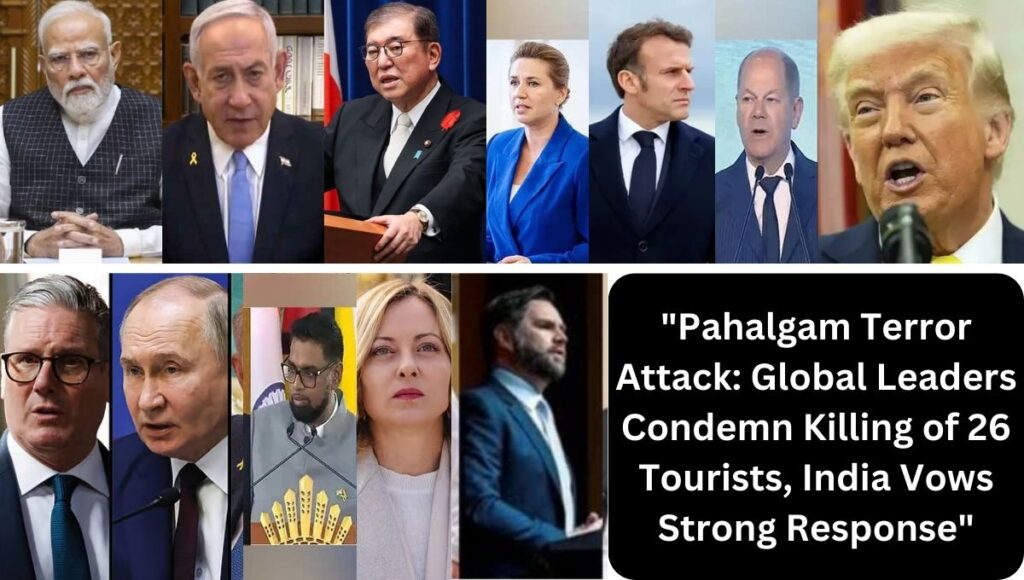
Pahalgam Terror Attack: Global Leaders Condemn Killing of 26 Tourists, India Vows Strong Response
Jaishankar Engages Global Counterparts in Diplomatic Outreach
The external Affairs Minister S. Jaishankar, in the aftermath of the attack, has launched an intense diplomatic campaign. He held telephonic conversations with his counterparts on April 29, from seven non-permanent members of the United Nations Security Council (UNSC), Algeria, Greece, Guyana, Panama, Slovenia, Sierra Leone, and Somalia.
Jaishankar briefed them on India’s “zero tolerance” policy toward terrorism and thanked these nations for their support. Specifically, he highlighted the cross-border nature of the attack and the need for a united global front against terrorism in all its forms.
Jaishankar posted on X, “Discussed the Pahalgam terrorist attack and the need to combat terrorism in all forms and manifestations,” following his call with Guyanese Foreign Minister Hugh Hilton Todd.
Support from Greece, Algeria, and Other Nations
During a conversation with George Gerapetritis, the Greek Foreign Minister, Jaishankar welcomed Greece’s “firm opposition to cross-border terrorism.” Similar sentiments were echoed by the foreign ministers of Algeria, Panama, and Slovenia, who expressed solidarity and condemned the terror strike.
These engagements follow a statement from the UNSC condemning the attack in “the strongest terms.” However, under pressure from Pakistan and China, the statement was reportedly diluted drawing criticism from Indian officials.
India Takes Strong Countermeasures Against Pakistan
India’s response has been both diplomatic and strategic. Chaired by Prime Minister Narendra Modi, at a Cabinet Committee on Security (CCS) meeting, key decisions were made, including:
- Suspending the Indus Waters Treaty of 1960 until Pakistan ends support for terrorism.
- Declaring Pakistani High Commission official’s persona non grata and expelling them from India.
- Revoking all visas issued to Pakistani nationals, effective April 27.
- Cancelling SAARC Visa Exemption Scheme benefits for Pakistani officials.
PM Modi emphasized that the masterminds behind the Pahalgam attack will be punished in a manner “beyond their imagination.” Speaking in Bihar, he declared, “The willpower of 140 crore Indians will now break the backbone of the perpetrators of terror.”
UK Calls for Calm Amid Diaspora Tensions
Meanwhile, the United Kingdom within its borders has urged restraint and dialogue between Indian and Pakistani communities. In the British Parliament, the issue was raised, where Foreign Office Minister Hamish Falconer called the April 22 attack “devastating” and condemned any efforts to stoke tensions on British streets.
Falconer told MPs, “We are friends to both India and Pakistan and do not want to see an uncontrolled escalation in tensions.”
In London, incidents of provocative gestures and vandalism outside the Indian and Pakistani High Commissions have sparked concern. The UK government, under the Vienna Convention has promised full protection to both embassies and reiterated its neutral stance on Kashmir, urging a resolution that considers the wishes of the Kashmiri people.
World Leaders Stand in Solidarity with India
A significant number of global leaders have personally reached out to Prime Minister Modi to express condolences and support. These include:
- U.S. Vice President J.D. Vance
- French President Emmanuel Macron
- Israeli PM Benjamin Netanyahu
- UAE President Mohamed Bin Zayed
- Japanese PM Shigeru Ishiba
- Sri Lankan President Anura Kumara Dissanayake
- Australian PM Anthony Albanese
- Nepalese PM K.P. Sharma Oli
- Dutch PM Dick Schoof
- Iranian President Masoud Pezeshkian
The chorus of international condemnation underscores India’s growing global influence and the worldwide consensus against terrorism.
India Vows to Pursue Terrorists “to the Ends of the Earth”
PM Modi, in a high-level meeting with defence and security officials, authorized complete operational freedom to the armed forces to determine the time, mode, and targets of India’s response. Sources indicate that covert and overt measures are being considered.
Modi affirmed, “We will identify, track, and punish every terrorist, their handlers, and their backers. Terrorism will not go unpunished.”
Conclusion: A Global Wake-Up Call Against Terrorism
To confront the persistent threat of terrorism, the Pahalgam attack has emerged as a rallying point for the international community. India’s decisive domestic measures, swift diplomatic outreach, and the support of world powers highlight a collective determination to bring perpetrators to justice and uphold global peace and security.
Also Read: ‘Act of war’: What happened in Kashmir attack that killed 26 tourists?
Related Posts:
- 7 Alarming Facts About Super Typhoon Fung-wong
- Trump’s 20-Point Gaza Peace Plan Gains Urgent Global…

- Putin’s Shocking Risks Ahead of Trump–Hungary Summit 2025

- US Strike on Venezuelan Boat Kills 6 in Fifth…

- China Hosts SCO Summit 2025 and Military Parade as…

- Macron Reappoints Lecornu as PM 2025 – Triggers…
