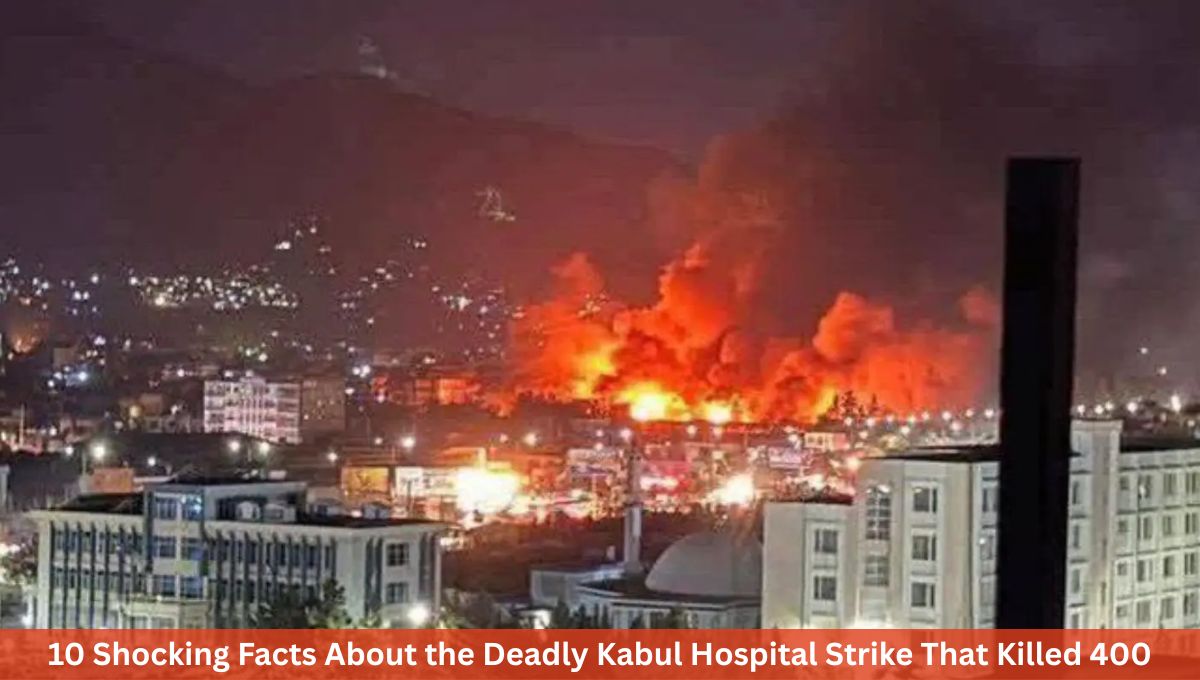
10 Shocking Facts About the Deadly Kabul Hospital Strike That Killed 400 and shocked the world. In one of the deadliest incidents in recent South Asian conflict history, Afghanistan has accused Pakistan of launching an airstrike on a hospital in Kabul, killing at least 400 people and injuring around 250 others.
The alleged attack, which reportedly targeted a drug rehabilitation facility, has triggered widespread condemnation, conflicting narratives, and growing fears of an escalating regional war.
While the Taliban administration has described the strike as a “crime against humanity,” Pakistan has firmly denied targeting any civilian infrastructure, insisting that its military operations were precise and aimed only at militant facilities.
This article breaks down the incident, the competing claims, geopolitical implications, and global reactions.
10 Shocking Facts About the Deadly Kabul Hospital Strike That Killed 400
What Happened in Kabul?
Timeline of the Attack
According to Afghan officials, the airstrike occurred around 9 PM local time on March 16, 2026. The target was reportedly a large, 2,000-bed drug rehabilitation hospital in Kabul.
Hamdullah Fitrat, Afghanistan’s deputy government spokesperson, confirmed that:
- The hospital suffered massive structural destruction
- Fires engulfed large sections of the building
- Rescue teams struggled overnight to retrieve bodies
Initial reports suggested over 200 deaths, but the toll quickly rose to 400 as rescue operations continued.
Conflicting Narratives: Afghanistan vs Pakistan
Afghanistan’s Claims
Afghan authorities allege that:
- The strike directly hit a civilian medical facility
- Most victims were patients undergoing treatment
- The attack violated international humanitarian law
Zabihullah Mujahid strongly condemned the incident, stating:
“Targeting hospitals and civilian sites is a crime against humanity.”
Afghanistan has framed the attack as part of a broader pattern of aggression and airspace violations.
Pakistan’s Response
Pakistan has categorically denied the allegations.
Officials, including Information Minister Attaullah Tarar, stated that:
- The strikes were precision operations
- Targets included military installations and ammunition depots
- No civilian infrastructure was hit
Pakistan maintains that the facilities targeted were being used by militants linked to cross-border attacks.
The Bigger Picture: Escalating Conflict
From Skirmishes to “Open War”
The Kabul strike is not an isolated event. It comes amid escalating tensions between Pakistan and Afghanistan.
Key developments include:
- Weeks of cross-border shelling
- Retaliatory airstrikes from both sides
- Civilian casualties on both ends
Pakistan’s Defence Minister has already described the situation as an “open war.”
Root Causes of the Conflict
The tensions stem from long-standing disputes, including:
- Pakistan’s accusations that Afghanistan harbors militant groups
- Afghan denial of supporting cross-border terrorism
- Frequent border violations and retaliatory strikes
The conflict intensified in late February after a series of tit-for-tat attacks.
Eyewitness Accounts and Ground Reality
Local witnesses described chaos and devastation:
- Jets were reportedly heard circling before explosions
- Fires broke out immediately after impact
- Emergency responders struggled to control the blaze
Footage circulating on social media showed:
- Collapsed structures
- Firefighters battling flames
- Civilians searching for missing relatives
Human Cost: Victims and Survivors
The hospital primarily treated individuals battling drug addiction—making the victims particularly vulnerable.
Reported impacts include:
- Hundreds of patients killed or injured
- Families left searching for loved ones
- Medical infrastructure severely crippled
This raises serious concerns about the protection of civilian and humanitarian facilities in conflict zones.
Global Reactions and Condemnation
International Concerns
Global organizations and observers have called for:
- Immediate de-escalation
- Independent investigation
- Accountability for any violations of international law
The United Nations has emphasized the importance of protecting civilians and medical facilities.
Voices from the Sports World
Afghanistan cricket star Rashid Khan expressed outrage, calling the attack a war crime if confirmed.
He stated that targeting:
- Hospitals
- Educational institutions
- Civilian homes
…is unacceptable under any circumstances.
Other cricketers, including Mohammad Nabi, also condemned the incident, highlighting the emotional toll on families.
Legal and Ethical Questions
Is This a War Crime?
Under international humanitarian law:
- Hospitals are protected sites
- Targeting civilians is strictly prohibited
If the Afghan claims are verified, the incident could constitute:
- A war crime
- A violation of the Geneva Conventions
However, verification remains challenging due to conflicting accounts.
The Role of Misinformation and Propaganda
Both sides have accused each other of spreading false narratives:
- Afghanistan claims Pakistan is targeting civilians
- Pakistan calls Afghan accusations “baseless propaganda”
In modern conflicts, information warfare plays a crucial role, making independent verification critical.
Impact on Regional Stability
Rising Risk of Wider Conflict
The escalation threatens to destabilize the broader South Asian region.
Potential risks include:
- Increased militant activity
- Refugee crises
- Economic disruptions
Global Implications
The conflict also intersects with larger geopolitical tensions, including:
- Counterterrorism efforts
- Regional alliances
- International security concerns
Calls for Ceasefire and Diplomacy
Despite rising tensions, global actors are urging restraint.
Efforts include:
- Mediation attempts by regional powers
- UN appeals for ceasefire
- Diplomatic pressure on both nations
However, analysts warn that there are currently “no off-ramps in sight.”
What Happens Next?
Possible Scenarios
- Escalation – More strikes and retaliatory attacks
- Stalemate – Continued low-intensity conflict
- Diplomatic Breakthrough – Ceasefire and negotiations
At present, escalation appears the most likely outcome.
Conclusion: A Crisis That Demands Attention
The alleged Kabul hospital strike marks a dangerous turning point in Afghanistan-Pakistan relations.
With hundreds dead, conflicting narratives, and rising geopolitical tensions, the situation demands urgent international attention.
Whether this incident will lead to accountability or further escalation remains uncertain.
What is clear, however, is that the human cost is already immense—and growing.
Also Read: 8 Shocking Developments in the Pakistan–Afghanistan Conflict After Deadly Kabul Airstrikes
Also Read: Why deadly Afghanistan hospital strike is an ironic moment for Pakistan
Related Posts:
- Pakistan–Afghanistan Border Conflict 2025: Ceasefire…

- Pakistan’s Bold Airstrikes in Kabul: Af-Pak Crisis…

- Afghanistan–Pakistan War 2025: Inside the 48-Hour Ceasefire

- 7 Shocking Details: 13-Year-Old Executes Man Before…

- ICC Issues Arrest Warrants for Taliban Leaders Over…
- 8 Shocking Developments in the Pakistan–Afghanistan…