
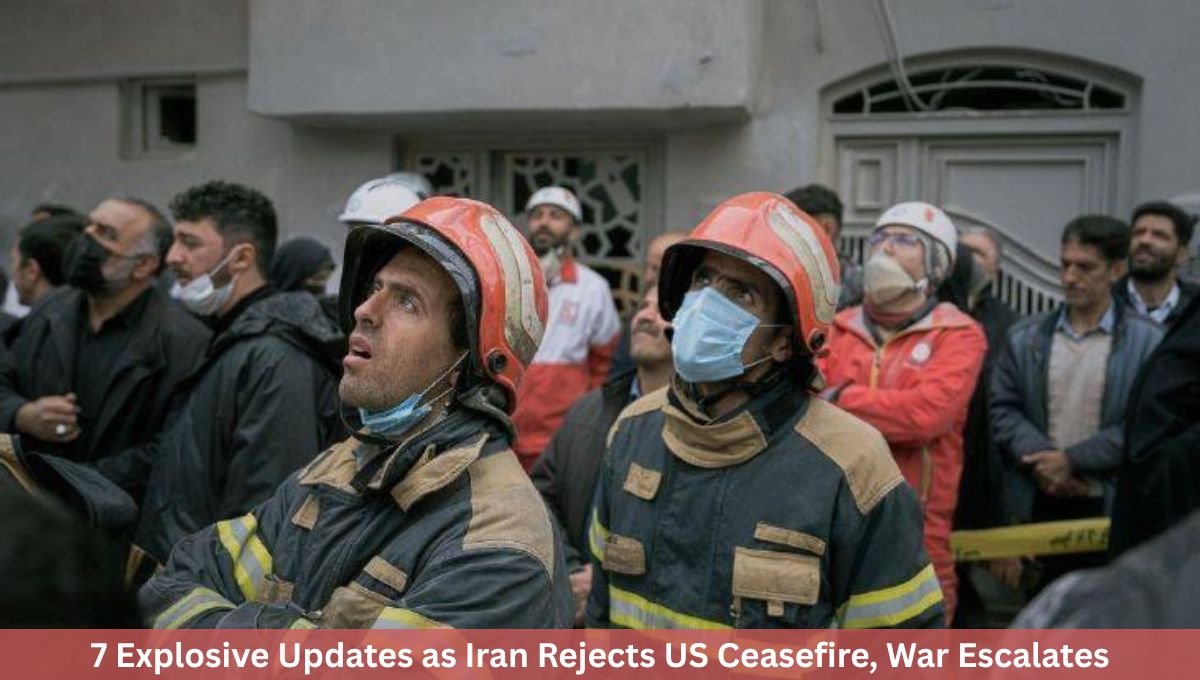
7 Explosive Updates as Iran Rejects US Ceasefire, War Escalates, talks collapse. The Middle East crisis has taken another dangerous turn as Iran has reportedly rejected a United States proposal for a 48-hour ceasefire, signaling a hardening of positions and raising fears of prolonged conflict.
Thank you for reading this post, don't forget to subscribe!The refusal comes at a time when hostilities are intensifying across the region, military incidents are increasing in frequency, and diplomatic efforts appear to be collapsing.
With no immediate path to de-escalation, the conflict is entering what analysts describe as a more volatile and unpredictable phase.
Adding to the tension, Iran has reportedly downed multiple US aircraft in recent days, further complicating the already fragile geopolitical landscape.
7 Explosive Updates as Iran Rejects US Ceasefire, War Escalates
Iran Rejects US Ceasefire Proposal
What the Proposal Entailed
According to reports, the United States had proposed a temporary 48-hour ceasefire, aimed at:
- Halting immediate hostilities
- Creating space for diplomatic negotiations
- Reducing risks of further escalation
The proposal was reportedly delivered through an intermediary country, indicating ongoing backchannel diplomacy despite public hostility.
Iran’s Firm Rejection
Iran declined the offer, sending a clear message:
- Tehran is not interested in short-term pauses
- It is instead seeking a comprehensive and guaranteed ceasefire
- US conditions were deemed “unacceptable”
Rather than responding formally, Iran’s stance was effectively communicated through continued military operations.
This signals a strategic calculation:
Iran appears unwilling to accept temporary measures that do not address long-term objectives.
War Intensifies With Fresh Military Strikes
US Aircraft Targeted
The rejection of the ceasefire coincided with a sharp escalation on the battlefield.
- Iran reportedly shot down an A-10 Warthog attack aircraft
- This incident occurred near the Strait of Hormuz
- The pilot ejected and was later confirmed safe
This marked the second US aircraft hit within the same week, following the earlier downing of an F-15 fighter jet.
A Pattern of Escalation
These incidents suggest:
- Iran retains significant air defense capabilities
- US operations are facing increasing risks
- The conflict is moving beyond controlled engagement into direct confrontation
The repeated targeting of US aircraft is likely to influence military strategies on both sides.
Strait of Hormuz — The Global Flashpoint
At the center of the crisis lies the Strait of Hormuz, one of the world’s most critical energy chokepoints.
Why It Matters
- Nearly 20% of global oil supply passes through this route
- Any disruption impacts global energy markets
- It is vital for both military logistics and economic stability
Iran’s Strategic Leverage
Iran has effectively tightened its grip over the Strait:
- Restricting or threatening shipping routes
- Targeting energy infrastructure
- Signaling it can sustain this position for years
This has created ripple effects:
- Oil prices have surged
- Shipping risks have increased
- Global markets are experiencing volatility
Diplomatic Efforts Collapse
Pakistan’s Mediation Bid Fails
One of the most significant diplomatic setbacks has been the failure of mediation efforts led by Pakistan.
- Iran refused to participate in talks hosted in Islamabad
- Planned high-level meetings were canceled
- A proposed visit by a senior US delegation was postponed
Iran’s reluctance stems from:
- Distrust of Pakistan’s neutrality
- Perception of alignment with US interests
- Preference for alternative diplomatic channels
Alternative Mediation Attempts
With the Islamabad track failing, other countries are stepping in:
- Turkey and Egypt are exploring new frameworks
- Qatar and Istanbul are being considered as venues
However, no concrete progress has been made, leaving diplomacy in limbo.
Conflicting Narratives Between US and Iran
US Position
The United States has:
- Continued military operations
- Pushed for conditional ceasefire agreements
- Linked de-escalation to reopening the Strait of Hormuz
Statements from leadership suggest a hardline approach, emphasizing pressure over compromise.
Iran’s Response
Iran has strongly rejected US claims, particularly:
- Allegations that it sought a ceasefire
- Statements about political changes within Iran
Officials have labeled such claims as:
- “False and baseless”
- Misleading attempts to shape global perception
This widening narrative gap is further complicating diplomatic resolution.
Internal Dynamics Shaping Iran’s Strategy
Role of Military Establishment
Reports suggest that elements within Iran’s military structure, particularly the Islamic Revolutionary Guard Corps (IRGC), may favor a prolonged conflict.
Possible motivations include:
- Strengthening regional influence
- Demonstrating military resilience
- Countering US and allied pressure
Strategic Patience
Iran’s approach indicates:
- Willingness to endure long-term conflict
- Focus on strategic leverage rather than quick resolution
- Preference for negotiating from a position of strength
This reduces the likelihood of short-term peace agreements.
The Human and Military Stakes
Rising Casualties and Risks
The conflict has already resulted in:
- Thousands of casualties across the region
- Damage to infrastructure
- Increased risks for military personnel
The downing of aircraft highlights:
- The vulnerability of even advanced military assets
- The dangers faced by pilots operating in hostile environments
Psychological Impact
Beyond physical damage, the conflict is affecting:
- Public sentiment in affected countries
- Confidence in military strategies
- Global perceptions of regional stability
Global Implications
Economic Shockwaves
The crisis is having a direct impact on the global economy:
- Oil price volatility
- Supply chain disruptions
- Increased costs of goods and transportation
Regional Instability
Neighboring countries are facing:
- Security threats
- Economic pressure
- Risk of being drawn into the conflict
Diplomatic Fallout
The breakdown in talks has:
- Reduced trust between nations
- Limited options for peaceful resolution
- Increased reliance on military strategies
What Happens Next? Key Scenarios
1. Continued Escalation
- More military strikes
- Increased casualties
- Broader regional involvement
2. Renewed Diplomacy
- Alternative mediation efforts succeed
- New negotiation frameworks emerge
- Temporary de-escalation
3. Strategic Stalemate
- Neither side gains decisive advantage
- Prolonged conflict continues
- Economic and humanitarian costs rise
4. Major Turning Point
- A significant event shifts momentum
- Either escalation or breakthrough becomes inevitable
Why Iran Rejected the Ceasefire — A Deeper Analysis
Iran’s rejection of the ceasefire is not merely a tactical decision—it reflects broader strategic priorities:
- Avoiding temporary pauses that benefit adversaries
- Maintaining pressure on US and allied forces
- Leveraging battlefield momentum
From Tehran’s perspective, a short ceasefire may:
- Allow opponents to regroup
- Reduce its current strategic advantage
- Delay rather than resolve the conflict
The Bigger Picture — A Conflict Redefining the Region
This war is reshaping the geopolitical landscape:
- Power dynamics in the Middle East are shifting
- Alliances are being tested
- New strategic realities are emerging
The combination of military escalation and diplomatic failure suggests that the conflict is entering a more entrenched phase.
Conclusion: A Crisis Far From Over
Iran’s rejection of the US ceasefire proposal marks a critical moment in the ongoing conflict. Combined with escalating military actions and stalled diplomacy, it paints a picture of a war that is far from reaching a resolution.
With tensions centered around the Strait of Hormuz, global economic implications mounting, and diplomatic channels narrowing, the stakes have never been higher.
For now, the world watches as the Middle East continues to edge toward deeper instability—where every decision carries the risk of widening the conflict even further.
Also Read: 7 Explosive Reasons Trump Shifted from Threatening Iran to Pushing Peace Talks — Part 1
Also Read: Iran Refuses To Meet US Officials In Pak, Ceasefire Efforts Hit Wall: Report
Related Posts:
- 3 Explosive Conditions Iran Sets to End War with US…

- 9 Explosive Claims as Trump Says US Winning Iran War

- 10 Explosive Warnings as Donald Trump Calls Iran…
- 7 Powerful Facts About Ayatollah Ali Khamenei’s…

- 10 Explosive Signals: Trump Rates Iran War “15/10”…
- 10 Explosive Strikes: Israel Bombs Tehran Oil Depots…
