6 Shocking Developments as Iranian Projectile Debris Hits Dubai Tech Hub — A wake-up call for Gulf security. The ongoing conflict between the United States, Israel, and Iran has taken a troubling turn, with its effects now visibly spilling into the Gulf’s economic and technological hubs.
In a dramatic development, debris from an intercepted Iranian projectile struck a prominent commercial building in Dubai, raising fresh concerns about regional security and the evolving nature of modern warfare.
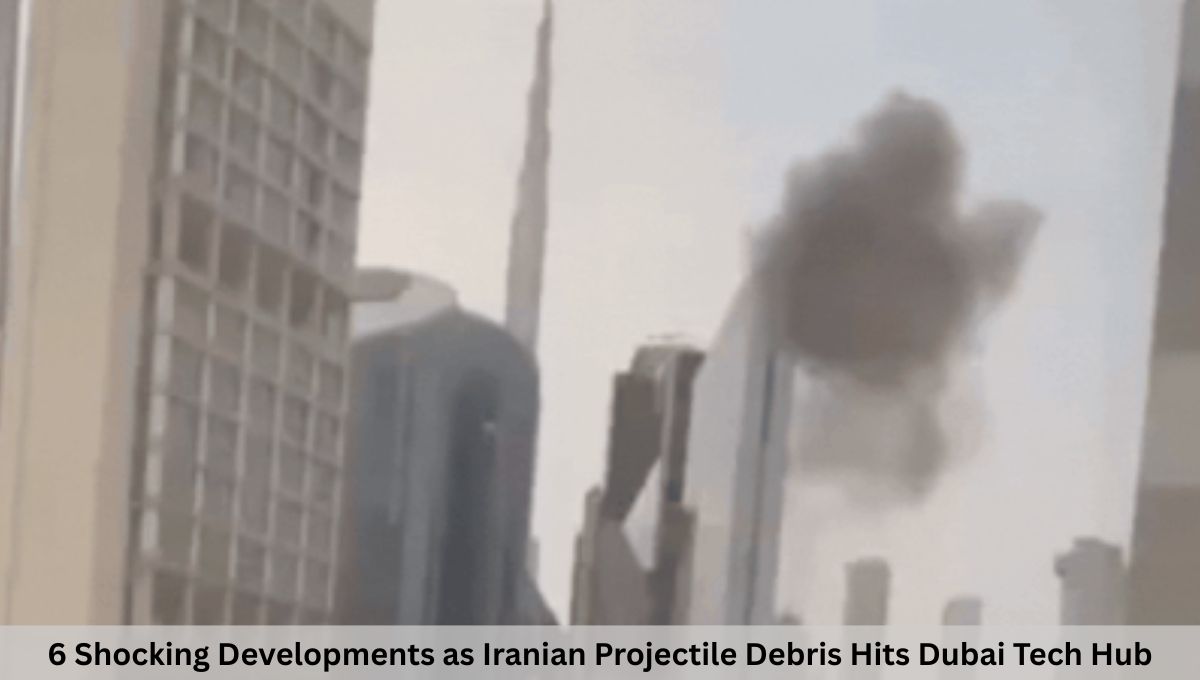
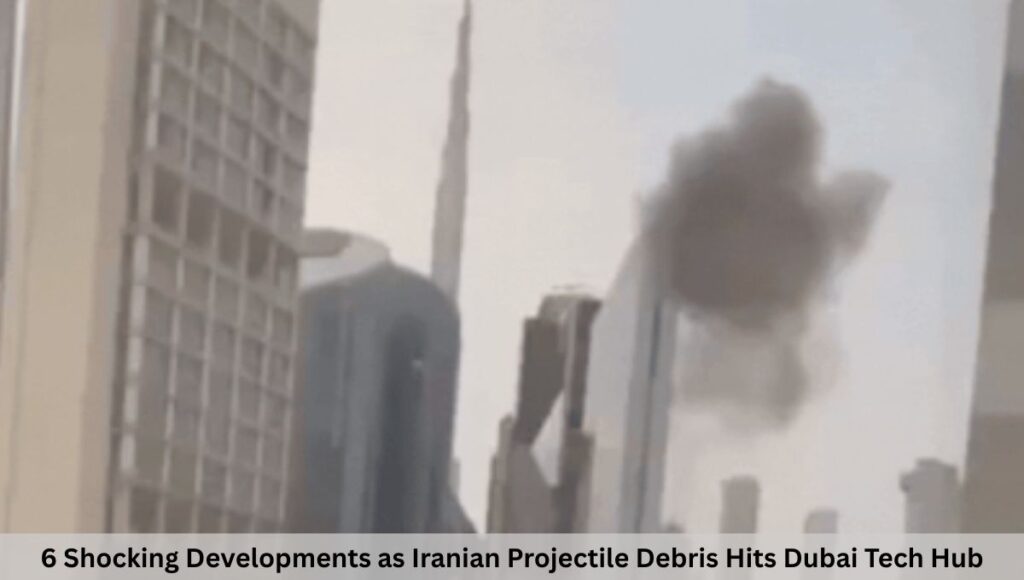
Authorities in Dubai confirmed that fragments from an aerial interception fell on the facade of a building housing offices of Oracle in Dubai Internet City.
While the incident caused no injuries or structural damage, it underscores how even successful defensive actions can carry unintended risks.
6 Shocking Developments as Iranian Projectile Debris Hits Dubai Tech Hub
What Happened: Aerial Interception Leads to Falling Debris
According to official statements, UAE air defence systems successfully intercepted an incoming aerial threat early Saturday morning.
However, debris from the intercepted projectile descended onto the Oracle building located in Dubai Internet City, a major technology and business zone.
Authorities described the incident as “minor,” noting:
- No casualties were reported
- No fire or structural damage occurred
- Emergency teams responded swiftly and secured the area
A similar incident was also reported in the nearby Dubai Marina area, where debris struck the facade of a residential building.
UAE’s Response: Swift and Controlled
Officials emphasized that the situation was quickly brought under control. The UAE Ministry of Defence reiterated its readiness to respond to threats and safeguard national security.
The statement reflects a broader strategy:
- Rapid interception of incoming threats
- Immediate containment of debris-related incidents
- Public safety advisories to avoid approaching fallen fragments
Authorities also urged residents to report any suspicious debris and avoid taking photographs or approaching impact sites.
A Pattern Emerging: UAE Under Sustained Threat
The incident is not isolated. Since the conflict began on February 28, the United Arab Emirates has faced repeated aerial threats.
Interception Statistics:
- 475 ballistic missiles intercepted
- 23 cruise missiles neutralized
- 2,085 drones shot down
On April 3 alone:
- 18 ballistic missiles intercepted
- 4 cruise missiles intercepted
- 47 drones neutralized
These figures highlight the scale of the threat and the intensity of ongoing hostilities.
Why Dubai Is Now in the Crosshairs
Dubai’s emergence as a target is linked to its strategic and economic significance.
Key Factors:
- Presence of major global technology firms
- Proximity to critical US military infrastructure
- Role as a financial and logistics hub
Iran’s Islamic Revolutionary Guard Corps (IRGC) has reportedly expanded its targeting doctrine to include not just military assets but also economic and technological infrastructure.
Tech Companies as “Legitimate Targets”
In a significant escalation, Iran’s IRGC has identified multiple global tech companies as potential targets.
Alongside Oracle, companies such as:
- Microsoft
- Apple
- Nvidia
- Intel
- IBM
- Tesla
have reportedly been listed.
This marks a shift in modern conflict strategy—where data centers, cloud infrastructure, and digital ecosystems are treated as strategic assets.
Security analysts warn that this could redefine future warfare:
Tech infrastructure is no longer peripheral—it is central to geopolitical conflict.
Previous Claims and “Fake News” Clarification
Earlier in the week, Iranian media claimed that an Oracle facility in Dubai had been directly targeted. UAE authorities swiftly dismissed these reports as false.
The Dubai Media Office clarified:
- No direct strike occurred
- The recent incident was caused solely by intercepted debris
- Claims of a targeted attack were “fake news”
This distinction is critical, as it separates intentional strikes from collateral effects of defensive actions.
Broader Impact: Gulf Region Under Pressure
The fallout from the conflict is being felt across the Gulf:
Abu Dhabi Incident:
- Attack on Habshan gas facility
- 1 fatality reported
- 4 people injured
- Significant infrastructure damage
Other regional developments include:
- Missile interceptions over Bahrain
- Explosions reported in Damascus due to intercept operations
- Drone debris damaging residential areas
Human Cost of the Conflict
While Dubai’s incident caused no injuries, the broader conflict has resulted in casualties across the region.
Reported fatalities include:
- UAE military personnel
- A Moroccan civilian contractor
- Civilians from Pakistan, Nepal, Bangladesh, Palestine, and India
These figures underscore the widening humanitarian impact of the conflict.
Civilian Life Disrupted
The rising threat level has begun to affect daily life in the UAE.
Key Changes:
- Churches have suspended in-person services
- Religious gatherings moved online
- Public safety advisories issued across cities
For example:
- St Mary’s Catholic Church shifted services online
- Multiple parishes canceled gatherings during Holy Week
These measures reflect growing caution amid uncertainty.
Economic and Business Implications
Dubai Internet City, where the incident occurred, is a critical hub for global businesses.
Even minor disruptions can have significant implications:
Potential Risks:
- Investor confidence erosion
- Insurance costs rising
- Increased security spending
- Business continuity concerns
The earlier strike on Amazon Web Services data centers in the region, which caused service outages, highlights the vulnerability of digital infrastructure.
The Strategic Importance of the Gulf
The Gulf region remains central to global energy and trade flows. Disruptions here have worldwide consequences.
Key concerns include:
- Oil supply chain disruptions
- Shipping risks in the Strait of Hormuz
- Impact on global markets
As tensions rise, even indirect incidents like falling debris can trigger market volatility.
Military Context: A Wider War
The Dubai incident is part of a broader escalation:
- Continued US and Israeli strikes on Iranian targets
- Iranian retaliatory missile and drone campaigns
- Expansion of conflict into multiple countries
Iran has also intensified operations through allied groups, targeting US bases and regional infrastructure.
A Shift in Warfare Dynamics
This conflict is redefining modern warfare in several ways:
1. Hybrid Targets
Civilian infrastructure, especially tech hubs, is now a strategic target.
2. Drone Warfare
Mass drone deployments are overwhelming traditional defence systems.
3. Economic Warfare
Targeting businesses and supply chains to weaken opponents indirectly.
Public Safety Measures in Dubai
Authorities have issued clear guidelines for residents:
- Do not approach or touch debris
- Report locations immediately
- Follow official updates
Emergency services remain on high alert, ensuring rapid response capabilities.
Global Implications: Why This Matters
For global audiences, the Dubai incident signals a critical shift:
- Conflict zones are expanding beyond traditional battlefields
- Economic hubs are increasingly vulnerable
- Even defensive actions can pose risks to civilians
Countries worldwide are now reassessing:
- Air defence systems
- Infrastructure resilience
- Emergency preparedness
What Comes Next?
The situation remains volatile, with no immediate resolution in sight.
Key Questions:
- Will tech infrastructure face direct attacks?
- Can Gulf nations sustain prolonged defence operations?
- How will global markets respond to continued instability?
Much will depend on diplomatic efforts and the trajectory of the US-Iran conflict.
Conclusion: A Warning Signal for the Future
The incident at Dubai’s Oracle building may have been minor in physical impact, but its strategic implications are profound.
It highlights how interconnected and vulnerable modern cities have become in the face of evolving warfare tactics.
As the conflict continues, the line between military and civilian spaces is increasingly blurred.
For global cities like Dubai, maintaining security while preserving economic stability will be a delicate balancing act.
The message is clear:
in today’s world, even intercepted threats can have real-world consequences—and no major hub is entirely immune.
Also Read: 9 Explosive Revelations: Iran Still Holds Massive Missile & Drone Power Despite US Strikes
Also Read: Oracle building hit in Dubai: Missile debris sparks panic — What really happened?