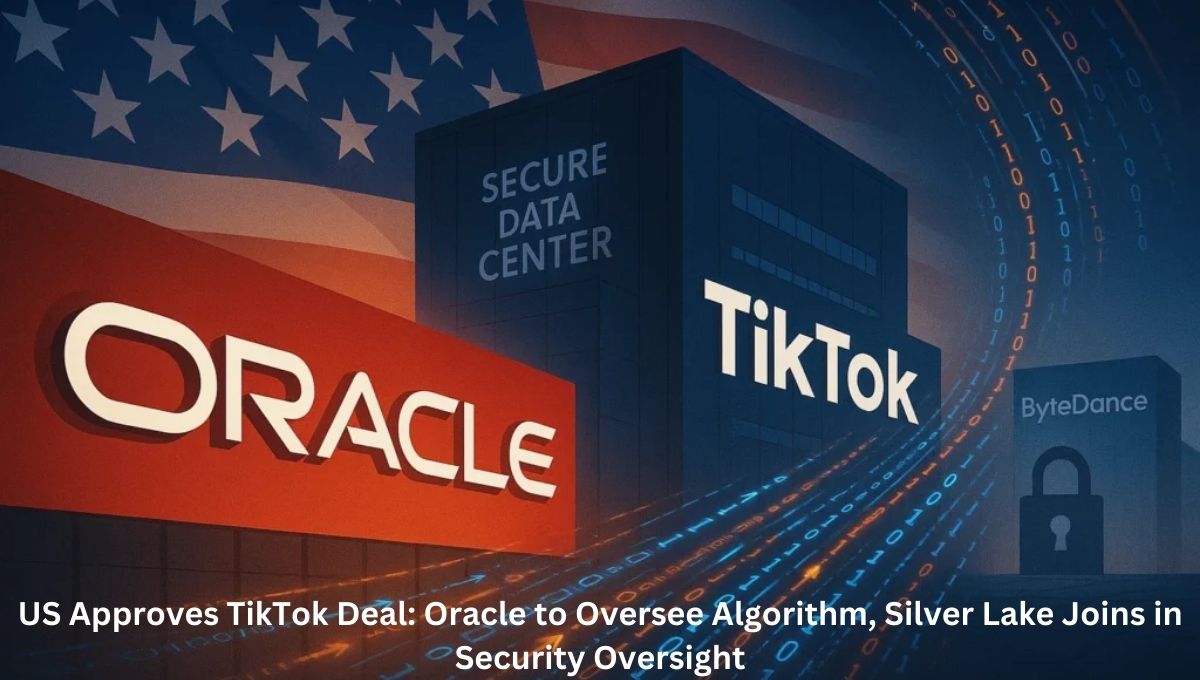
Placing Oracle and Silver Lake at the center, US Approves TikTok Deal: Oracle to Oversee Algorithm, Silver Lake Joins in Security Oversight. TikTok, the viral short-video platform with more than 170 million users in the United States, has found itself at the center of one of the most contentious technology disputes between Washington and Beijing.
After years of political and legal battles, the Trump administration has announced a framework agreement that paves the way for TikTok’s US operations to be managed by Oracle and Silver Lake Partners, with new investors including high-profile business leaders such as Rupert Murdoch and Michael Dell.
The decision comes amid ongoing concerns about TikTok’s algorithm and user data, which US lawmakers fear could be weaponized by China’s ruling Communist Party through ByteDance, TikTok’s Beijing-based parent company.
This article breaks down the details of the TikTok deal, its national security implications, the role of Oracle and Silver Lake, and how the arrangement could reshape both US–China relations and the future of global digital platforms.
US Approves TikTok Deal: Oracle to Oversee Algorithm, Silver Lake Joins in Security Oversight
Why the US Pushed for a TikTok Sale
TikTok’s meteoric rise in the US over the past five years has been matched by equally intense scrutiny. Critics in Washington have long argued that the platform’s recommendation algorithm—the secret sauce behind TikTok’s popularity—could be influenced by Beijing to manipulate content flows, censor certain narratives, or even influence political discourse in America.
The Trump administration moved aggressively to either ban or force a sale of TikTok’s US operations. This culminated in legislation mandating that the app must either divest from ByteDance or face prohibition on US soil.
At the heart of the debate was a question of national security versus free market access. TikTok insisted it operated independently from Beijing, but the US government remained unconvinced.
The Framework Agreement: Key Details
On Monday, senior White House officials revealed that Oracle and Silver Lake would take leading roles in the new TikTok structure. Here’s what the deal involves:
- Oracle’s Role: Oracle will oversee and manage TikTok’s algorithm and data security for US users. This includes monitoring, retraining, and securing the recommendation system on American soil.
- Silver Lake’s Role: The investment firm Silver Lake will join the consortium managing TikTok US, bringing financial backing and governance oversight.
- US Investors: The deal involves high-profile investors including Michael Dell (Dell Technologies) and Rupert Murdoch (Fox Corporation), who may join the board.
- ByteDance’s Stake: ByteDance will retain less than 20% ownership, with no role in the security committee and limited board representation.
- Algorithm Copy: The US joint venture will receive a licensed copy of TikTok’s algorithm, retrain it using US-based data, and separate it entirely from ByteDance’s Chinese infrastructure.
- Regulatory Approvals: The deal requires Chinese export control approval and clearance under US law before becoming final.
Oracle at the Heart of TikTok’s US Future
Founded in 1977, Oracle is one of America’s most established technology firms, best known for its database software and cloud infrastructure services. In recent years, it has expanded into artificial intelligence, cybersecurity, and data center infrastructure.
Oracle’s co-founder Larry Ellison, worth nearly $390 billion, has close ties with Trump and Israel, making his involvement both strategic and politically symbolic. Ellison has previously backed US national security initiatives and has committed Oracle’s infrastructure to global partners, including Israel during the Gaza conflict.
This background makes Oracle a trusted choice in Washington for handling sensitive issues like data privacy and algorithmic oversight.
Silver Lake’s Expanding Influence
Silver Lake Partners, a leading private equity firm, will serve as a co-investor and governance partner. With investments in companies ranging from Manchester City football club owners (City Football Group) to major technology firms, Silver Lake brings both financial clout and tech-industry expertise.
Its involvement signals a long-term bet on TikTok’s future value in the American market, despite the uncertainty surrounding algorithmic retraining and user retention.
What Happens to TikTok’s Algorithm?
One of the most hotly debated aspects of the deal is the fate of TikTok’s recommendation system.
- The US joint venture will receive a copy of the algorithm code from ByteDance.
- Oracle will audit, retrain, and secure the system using only American user data.
- Continuous monitoring will ensure that ByteDance has no influence over the recommendation process for US users.
- Analysts warn that subtle shifts in user experience may emerge as the retrained algorithm adapts to local data.
Jasmine Enberg of eMarketer cautioned that “material or even perceived changes” could prompt user dissatisfaction or creator flight, potentially impacting TikTok’s cultural influence.
China’s Position: TikTok as a Bargaining Chip
China’s stance on TikTok has shifted dramatically. Initially condemning Washington’s push for a sale as “robbers’ logic,” Beijing has since recognized the platform’s value as a negotiating tool in broader US–China relations.
Under Chinese law, export restrictions introduced in 2020 prevent companies from transferring sensitive technologies like TikTok’s algorithm without government approval. This means the fate of the deal hinges on Beijing’s willingness to make concessions.
Analysts suggest that China may use TikTok’s algorithm as leverage in negotiations over:
- Trade tariffs
- Technology restrictions
- Taiwan policy
- Broader geopolitical concessions
Dexter Roberts of the Atlantic Council told Al Jazeera:
“If China is now willing to hand over control of the algorithm, it’s because they sense they can get a lot more out of the Trump administration than they originally thought.”
Trump’s Push for a Quick Resolution
For President Donald Trump, the TikTok deal serves multiple objectives:
- National Security Optics: Positioning the administration as tough on China.
- Economic Strategy: Attracting patriotic American investors to control a global platform.
- Diplomatic Agenda: Using the deal as leverage ahead of his planned face-to-face meeting with Chinese President Xi Jinping.
White House Press Secretary Karoline Leavitt confirmed that Trump is expected to sign an executive order this week declaring the deal compliant with US law. This order will also extend the ban-or-sale deadline by 120 days, allowing regulatory approvals to conclude.
Timeline of the TikTok Deal
- 2020: US first threatens TikTok ban, citing national security risks.
- 2023: Republicans accuse TikTok of promoting pro-Palestinian content.
- 2023–2024: ByteDance begins storing US data with Oracle under Project Texas.
- September 2025: Trump announces progress on TikTok sale after a call with Xi Jinping.
- This Week: Trump expected to sign executive order approving the deal.
- December 16, 2025: Extended deadline for the sale to formally close.
Risks and Unanswered Questions
Despite optimism, several uncertainties remain:
- Chinese Approval: Will Beijing authorize the export of TikTok’s algorithm under its 2020 controls?
- Algorithm Scope: Will the US truly get the full system, or just a “shell” version for American users?
- User Experience: Will retraining lead to degraded recommendations or cut US users off from global content?
- Investor Stability: Can Oracle and Silver Lake maintain creator and advertiser trust amid shifts in governance?
- Geopolitical Fallout: Will the deal ease trade tensions, or simply open new fronts in the US–China tech rivalry?
Chunmeizi Su, a communications lecturer at the University of Sydney, expressed skepticism:
“TikTok’s algorithm is not just about TikTok; it underpins ByteDance’s entire app ecosystem. I believe they would rather shut down TikTok US than reveal its full details.”
Why This Deal Matters Globally
The TikTok arrangement marks one of the most significant moments in the ongoing tech cold war between the US and China.
- For Washington, it sets a precedent for algorithmic control of foreign platforms operating on American soil.
- For Beijing, it highlights the strategic value of information platforms in international negotiations.
- For global technology companies, it underscores the growing importance of data sovereignty and domestic control of digital infrastructure.
Jeffrey Towson, a digital strategy consultant, noted:
“Both the US and China now support ‘info-nationalism.’ Digital platforms create powerful control points, shaping what can be said, read, and watched.”
Conclusion: A Turning Point for TikTok and US-China Relations
The TikTok deal represents more than just a corporate restructuring—it symbolizes a new chapter in digital sovereignty and geopolitical competition. By placing Oracle and Silver Lake at the heart of TikTok’s US operations, Washington hopes to secure user data and algorithmic influence while also sending a message to Beijing.
Yet questions linger: Will China approve the deal? Will US users embrace a retrained algorithm? And can TikTok maintain its cultural dominance while splitting its technological core across two rival superpowers?
As Trump prepares to sign his executive order this week, the TikTok saga remains both a tech-industry milestone and a barometer of US–China relations in the 21st century.
Also Read: Donald Trump Signs Executive Order on TikTok Deal, $14B US Venture with Oracle, Dell & Murdoch
Related Posts:
- Murdoch vs. Trump: A Media Feud with Press Freedom…

- Donald Trump Signs Executive Order on TikTok Deal,…
- 5 Major Takeaways from the US Supreme Court's…

- Trump and Xi Jinping Discuss TikTok’s Future and…
- 7 Powerful Facts About Ayatollah Ali Khamenei’s…

- 7 Heartbreaking Facts About Venezuela's Earthquake Disaster