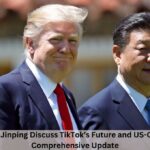
To resolve TikTok’s future and pave the way for US-controlled ownership, US-China Strike Framework TikTok Deal: Trump, Xi Near Agreement on ByteDance Sale Amid National Security Concerns. The long-running battle over TikTok’s future in the United States appears to be nearing a turning point.
On Monday, US Treasury Secretary Scott Bessent announced that Washington and Beijing had reached a “framework” deal on TikTok’s operations, with US President Donald Trump and Chinese President Xi Jinping expected to finalize the agreement in direct talks later this week.
The move could resolve years of uncertainty for the social media platform, which boasts around 170 million American users but has been at the center of heated national security debates. At the heart of the agreement is the question of ownership: who will control TikTok’s powerful US operations, and under what conditions?
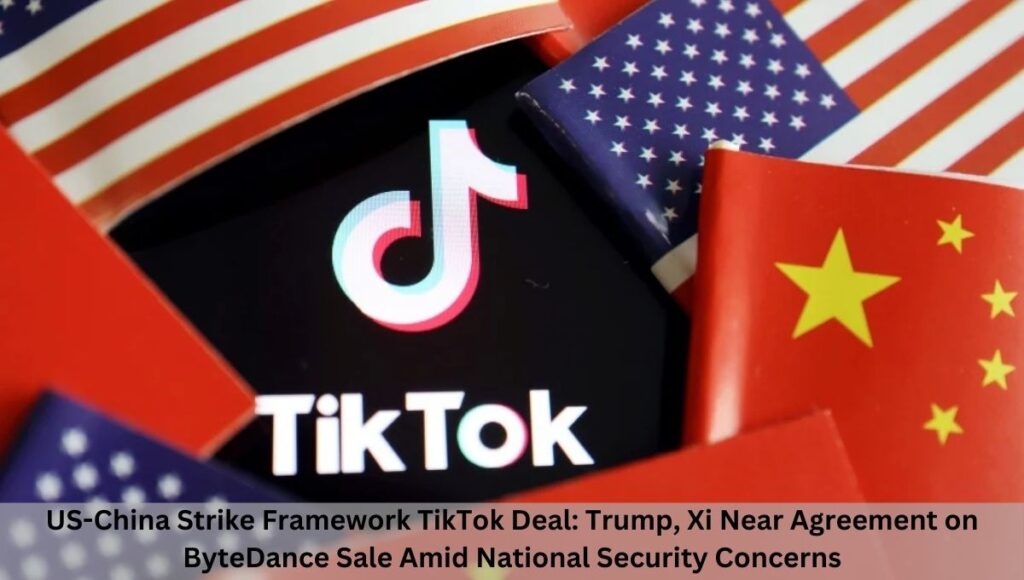
US-China Strike Framework TikTok Deal: Trump, Xi Near Agreement on ByteDance Sale Amid National Security Concerns
Why TikTok Has Been Under Threat in the US
Concerns Over ByteDance and Chinese Control
For years, lawmakers in Washington have sounded alarms over TikTok’s Chinese parent company, ByteDance. The core worry has been that Beijing could use the platform to harvest sensitive data on American citizens or manipulate its algorithm to push propaganda and influence public opinion.
Former FBI Director Christopher Wray and other security officials have warned that Chinese national security laws could compel ByteDance to hand over information if asked, a scenario that has kept US intelligence agencies wary.
The Department of Justice has also raised alarms about TikTok’s handling of user data related to sensitive topics such as abortion, religion, and gun rights.
Legislation and Looming Ban
The political and legal pressure intensified in April 2024, when then-President Joe Biden signed legislation requiring ByteDance to divest its US TikTok operations within nine months or face a nationwide ban.
That law came into effect in January 2025, briefly shutting down TikTok across the country before Trump — on his first day back in the White House — issued an executive order delaying enforcement.
Trump extended the deadline multiple times, most recently to September 17, 2025. The extensions were controversial: critics argued they undermined Congress’ intent, while Trump defended them as necessary to pursue a negotiated solution that would both protect national security and keep TikTok accessible to American users.
The Framework Agreement: What We Know
Treasury Secretary Scott Bessent revealed the breakthrough after two days of high-level trade talks with Chinese Vice Premier He Lifeng in Madrid.
“We have a framework for a TikTok deal,” Bessent said, adding that while the commercial terms are confidential, “the deal calls for TikTok to switch to US-controlled ownership.”
US Trade Representative Jamieson Greer stressed that the agreement was crafted to safeguard American national security interests while maintaining fairness in trade.
Chinese negotiator Li Chenggang confirmed that a “basic framework consensus” had been reached but cautioned Washington against simultaneously seeking concessions and suppressing Chinese companies.
The details remain sparse, but the framework is widely understood to involve a transfer of ownership from ByteDance to an American-led group. Final approval rests with Trump and Xi, who are expected to speak on Friday ahead of a planned summit in Asia.
Also Read: TikTok to stay in U.S. after Trump strikes deal with China
China’s Position on the TikTok Deal
While agreeing to the framework, Chinese officials have been careful to stress that any final deal must not come at the expense of their principles or national interests.
Li Chenggang, China’s top trade negotiator, said in Madrid:
“The outcomes of the trade and economic consultations are hard won, and the US side should not, on the one hand, ask China to accommodate its concerns, whilst at the same time continue to suppress Chinese companies.”
China has also moved to show that it retains leverage. On the same day the TikTok framework was announced, Beijing accused Nvidia of violating antitrust laws — a move seen as part of the broader power struggle over global tech dominance.
Who Could Buy TikTok’s US Operations?
Oracle and Larry Ellison: The Leading Contender
The leading candidate to acquire TikTok’s American arm is Oracle, led by co-founder Larry Ellison. Oracle already provides US cloud services for TikTok and has been involved in past negotiations.
Ellison, a Trump ally, has the financial resources and infrastructure to lead a consortium capable of handling a purchase likely worth tens of billions of dollars.
Other Potential Buyers
Several other groups have expressed interest:
- Frank McCourt & Kevin O’Leary’s Consortium: The former Los Angeles Dodgers owner and the Shark Tank investor have pitched themselves as potential buyers but face skepticism about financing. Their proposal excludes TikTok’s core recommendation algorithm, often described as the “secret sauce” of the platform.
- Microsoft: Once considered a serious bidder in 2020, Microsoft CEO Satya Nadella famously called the process “the strangest deal” he had ever encountered. While the company has not re-entered negotiations, industry insiders note that Microsoft retains the capability to pull off such a purchase.
- Walmart: Previously part of a joint bid with Oracle, Walmart’s current interest remains uncertain but could resurface if a new bidding round opens.
Also Read: US Approves TikTok Deal: Oracle to Oversee Algorithm, Silver Lake Joins in Security Oversight
What Happens Next?
The framework deal is a major breakthrough, but significant hurdles remain. Key questions include:
- Will the algorithm be included in the sale? TikTok’s recommendation engine is the cornerstone of its success. Without it, the platform may struggle to retain users.
- How will US user data be protected? Provisions may require storing and encrypting data domestically, with independent audits to prevent backdoor access by Beijing.
- What role will Beijing play in approval? China retains the right to approve or block the transfer of algorithms and intellectual property, potentially complicating final negotiations.
Trump, Xi, and the Bigger Trade Picture
The TikTok deal is not just about one app. It has become a symbol of broader US-China tensions over trade, technology, and national security.
Trump has repeatedly hinted at the political stakes, saying on Truth Social that young Americans “very much wanted to save” TikTok.
Without a TikTok deal in place, US officials warned, a Trump-Xi meeting in October would have been impossible.
The agreement now paves the way for a summit that could also address tariffs, trade disputes, and the future of US-China economic relations.
The National Security Debate
Despite the breakthrough, experts remain cautious. Sarah Kreps, director of the Tech Policy Institute at Cornell University, warned that a deal resolving ownership on paper may not eliminate core vulnerabilities.
“Until these details are clarified, the risk is that the deal resolves ownership on paper but leaves core vulnerabilities untouched,” she said.
Jim Secreto, a former national security official, stressed that data collected by TikTok could be used to train Chinese AI models with military applications.
“The data TikTok collects from Americans today could help train the models that power China’s military and intelligence capabilities tomorrow,” Secreto said.
Conclusion
The US-China TikTok framework deal represents the most significant step yet toward resolving the app’s uncertain future. With Donald Trump and Xi Jinping expected to finalize the agreement in the coming days, TikTok’s fate may soon be decided.
For millions of American users, the platform’s continued availability hangs on whether a buyer can be secured, whether national security concerns are fully addressed, and whether Beijing allows ByteDance to part with its prized asset. What is clear is that TikTok has become more than just a social media platform.
It is now a litmus test of how the world’s two largest economies manage their technological rivalry, balancing national security with the demands of global connectivity.