In a crucial phone call on 19th September 2025, Trump and Xi Jinping Discuss TikTok’s Future and US-China Trade: A Comprehensive Update. On 19 September 2025, US President Donald Trump and Chinese President Xi Jinping held a high-stakes telephone conversation focused on the future of TikTok’s US operations and broader US-China trade relations. The discussion, reported by AFP and confirmed by multiple sources, was the second high-level call between the two leaders since Trump’s White House return in January 2025.
The meeting comes after months of negotiation and uncertainty over TikTok, the Chinese-owned social media platform that became a central issue of national security and economic diplomacy in Washington. In addition, the conversation touched on ongoing trade disputes, tariffs, and technology access, making it a comprehensive attempt to stabilize bilateral relations.
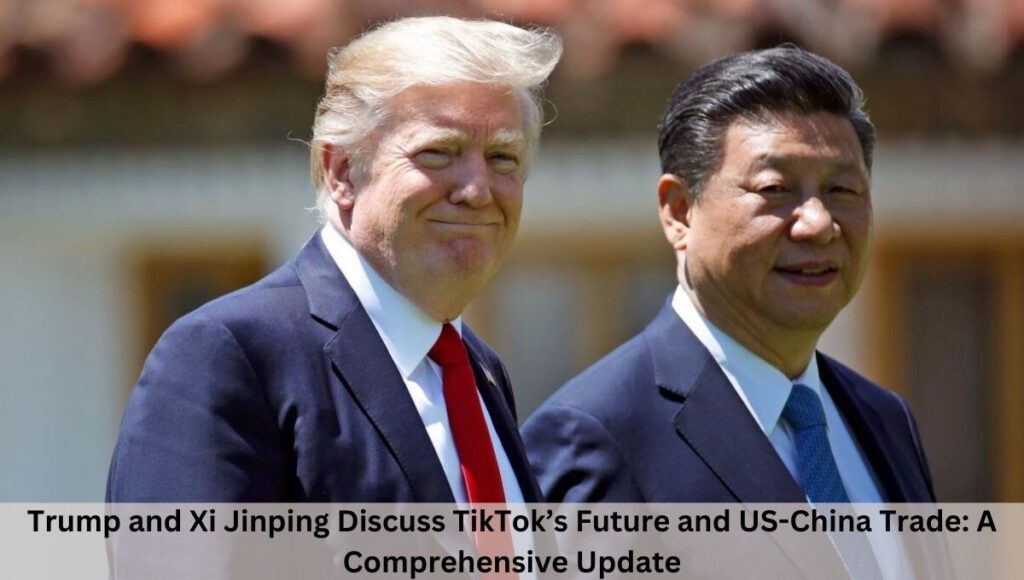
Trump and Xi Jinping Discuss TikTok’s Future and US-China Trade: A Comprehensive Update
The Context: Trump, Xi, and TikTok
TikTok’s Significance in US Politics
TikTok, owned by China’s ByteDance, has become one of the most influential social media platforms in the US, boasting over 170 million American users.
President Trump has openly credited the platform for helping him win the 2024 presidential election, particularly by engaging younger voters.
Initially, TikTok faced threats of a US ban, enforced under legislation requiring foreign companies to divest if their operations posed a national security risk.
Under President Biden, the pressure to divest increased, prompting a series of negotiations that led to Trump delaying any ban to allow for a potential deal.
Trump said before the call: “TikTok has tremendous value — and the United States has that value in its hand because we’re the ones that have to approve it.”
TikTok’s Proposed US Ownership Structure
Reports suggest that TikTok’s US operations may be acquired by a consortium of American investors, including:
- Oracle Corporation
- Andreessen Horowitz
- Silver Lake Management
The plan would reduce ByteDance’s ownership below 20%, complying with the 2024 US law, while the app continues to operate in the US. Under the agreement, ByteDance would license its algorithms to the new entity, and Oracle would maintain cloud services through Project Texas.
This framework is considered a major step in protecting US national security while allowing TikTok to remain active in America.
The Trump-Xi Call: Key Points
TikTok Approval
According to Trump, the conversation was “very productive”, and he described progress on TikTok as approved. While details remain subject to negotiation, the call represents an unprecedented moment in US-China tech diplomacy.
China’s Xinhua News Agency reported Xi emphasized that the Chinese government respects firms’ rights to negotiate based on market rules while adhering to Chinese laws and regulations.
Analysts note that this statement allows China to present the agreement as a “win-win” solution”, ensuring ByteDance retains strategic advantages.
Broader Trade Talks
The conversation also covered US-China trade relations, including:
- Tariff adjustments on imports from both countries
- Access to technology and semiconductors, particularly Nvidia chips
- Export controls and rare-earth metals
- Agricultural purchases and other economic considerations
Trump has maintained a tough stance on tariffs, recently urging Europe to sanction China over Russian oil purchases, similar to US sanctions on India. Xi, on the other hand, requested the US avoid restrictive trade measures, signaling China’s intention to protect its strategic interests.
TikTok Deal: Strategic Implications
Algorithm Control
The core of the TikTok negotiations is the algorithm, often referred to as TikTok’s “secret sauce”. It drives engagement, content recommendations, and ad targeting.
Experts suggest the US version of TikTok may operate on a “stripped-down” algorithm, which would maintain functionality while ensuring ByteDance retains control of the proprietary technology.
“A lighter, slower, more domestic version — while ByteDance keeps the crown jewels in Beijing,” noted Dr. Kokil Jaidka from the National University of Singapore.
This arrangement preserves US operational control while allowing China to retain strategic intellectual property.
Also Read: US Approves TikTok Deal: Oracle to Oversee Algorithm, Silver Lake Joins in Security Oversight
Financial Valuation
The US portion of TikTok is estimated to be worth $35–40 billion, though the exact distribution of stakes among Oracle, Andreessen Horowitz, and Silver Lake remains undisclosed. Oracle is expected to hold a smaller stake, with the remainder divided among other investors.
If the deal is finalized, it could serve as a template for future Chinese tech companies seeking entry into the US market while adhering to American regulatory requirements.
International Implications
US-China Relations
The Trump-Xi call reflects a thaw in diplomatic relations, with both sides showing readiness to negotiate longstanding issues. While the TikTok deal does not resolve all tensions, it represents a significant confidence-building measure.
Experts predict the broader trade and tech discussions may culminate at the APEC Summit in Gyeongju, South Korea, from October 30 to November 1, 2025, where the leaders could meet in person.
China’s Perspective
China benefits from the deal by:
- Retaining control over proprietary technology
- Maintaining TikTok’s global branding
- Positioning itself as a technological exporter without conceding strategic advantages
Analysts view the licensing deal as “exporting Chinese-made tech on China’s own terms”, which could strengthen Beijing’s negotiating leverage in other areas, including rare-earth exports and semiconductor supply.
US Political Considerations
In the US, TikTok remains politically sensitive. Congress, particularly Republican lawmakers like John Moolenaar, have expressed concerns over foreign influence and national security risks, emphasizing the need for full separation from ByteDance.
President Trump, however, views TikTok as both a political asset and a strategic economic tool, creating tension between security concerns and domestic political priorities.
Also Read: What Is US-China TikTok Deal And Can It Secure The App’s Future In America? | Explained
Key Takeaways
- TikTok’s US future is nearly finalized, pending regulatory approvals and final agreements on licensing and ownership.
- ByteDance retains intellectual property, while American investors take operational control.
- Trade talks continue, focusing on tariffs, semiconductors, rare-earth metals, and agricultural purchases.
- The APEC Summit could provide a platform for formalizing agreements and addressing remaining US-China tensions.
- The deal could create a blueprint for future Chinese technology firms entering the US market under controlled conditions.
Conclusion
The 19 September 2025 phone call between Trump and Xi Jinping marks a pivotal moment in US-China relations, blending tech diplomacy with high-stakes trade negotiations. TikTok’s continued presence in the US, under predominantly American ownership while licensing critical technology, represents a delicate compromise balancing security, politics, and economics.
While the details are not yet fully public, the framework for TikTok’s US operations and broader trade discussions indicates a potential turning point in the relationship between the world’s two largest economies, demonstrating how technology, diplomacy, and politics intertwine in the modern era.
As negotiations move toward the APEC Summit, all eyes remain on Washington, Beijing, and the future of one of the world’s most influential social media platforms.