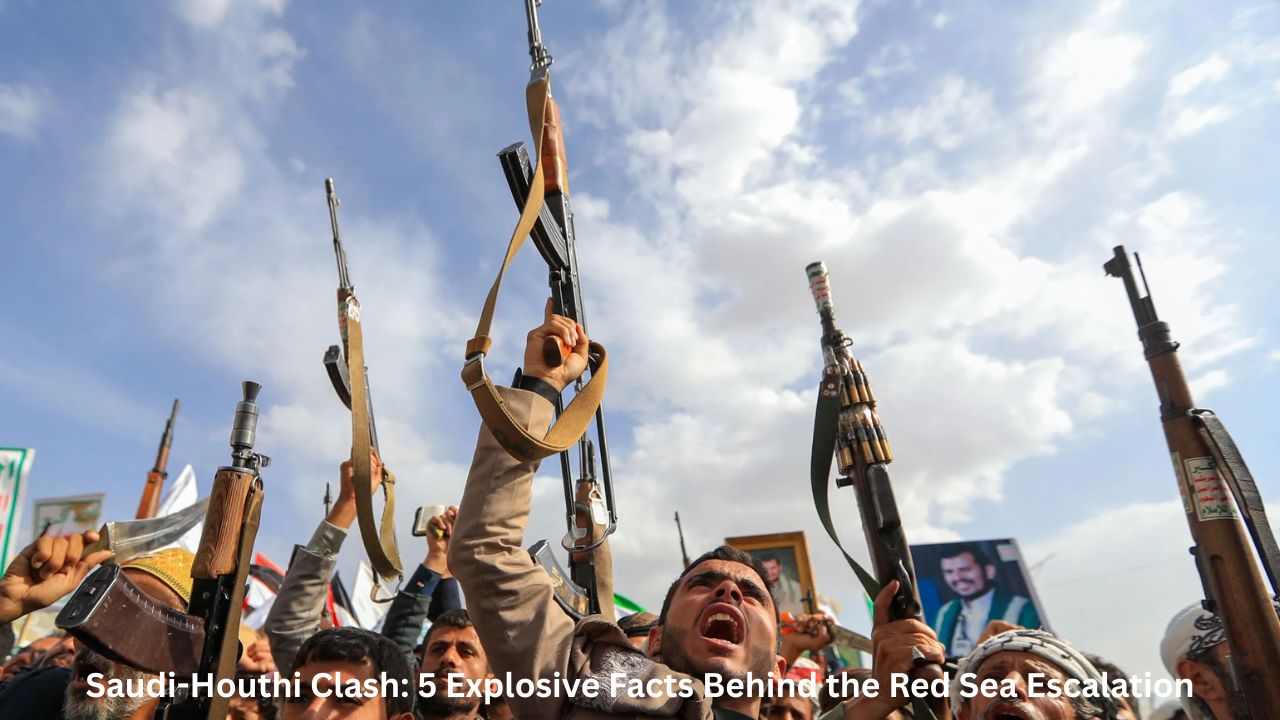
Saudi-Houthi Clash: 5 Explosive Facts Behind the Red Sea Escalation ending years of relative calm. A fragile calm that had held over Yemen for years shattered on Friday, July 24, 2026, when Saudi-led coalition forces launched airstrikes on Houthi military sites in the western Yemeni port city of Hodeidah.
The strikes came in direct response to a string of attacks on Saudi-linked shipping in the Red Sea, including a missile and drone assault on Saudi oil tankers and a formally announced Houthi naval blockade of the kingdom.
Within hours, the Iran-aligned Houthi movement vowed retaliation, warning of a new phase of “escalation for escalation.”
For a global audience, this is far more than a regional flashpoint. The Red Sea and its southern chokepoint, the Bab el-Mandeb strait, carry a significant share of the world’s container traffic and, increasingly, Saudi Arabia’s own oil exports.
Any sustained fighting here adds fresh uncertainty to shipping lanes already strained by the broader war between the United States, Israel, and Iran — and threatens to unravel one of the few genuine ceasefires the wider Middle East conflict had managed to preserve.
This report brings together on-the-ground details from Saudi, Yemeni and international coverage to explain exactly what happened, why it happened now, and what it could mean for shipping, oil markets, and regional stability in the weeks ahead.
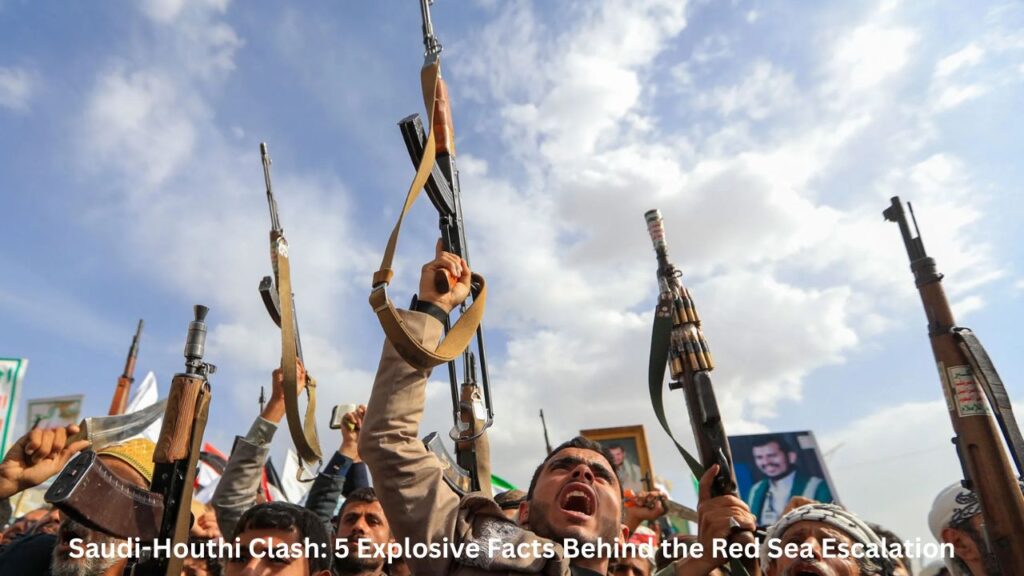
Saudi-Houthi Clash: 5 Explosive Facts Behind the Red Sea Escalation
What Happened in Hodeidah
According to the Saudi-led coalition, forces carried out what a spokesman described as a “proportionate military response operation” against military sites belonging to the Houthi movement in Hodeidah governorate on Friday.
Coalition spokesman Major General Turki al-Malki said the operation targeted legitimate military facilities and had concluded by the time of his statement.
Houthi-run media reported that the strikes hit installations belonging to the state telecommunications corporation in Hodeidah city, as well as a military camp on nearby Kamaran Island.
Local residents reported hearing explosions near the port, and Houthi television said two people were injured — a worker in Hodeidah city and a woman on Kamaran Island.
Saudi officials were careful to stress limits on the operation.
Al-Malki said Hodeidah port itself had not been targeted, and that Yemeni ports including Hodeidah, Ras Issa and Salif remained open to maritime traffic and continued receiving commercial ships.
He added that no airport had been struck either, though he accused the Houthis of blocking flight operations at Sanaa International Airport.
Why the Saudi Coalition Struck Now
The strikes did not come out of nowhere. They followed a rapid escalation over the past two weeks.
The Houthis attacked a Saudi-controlled airport on July 13, then announced a full naval blockade of Saudi Arabia, warning that any vessel failing to comply would be targeted.
This week, the group claimed missile and drone strikes on two Saudi oil tankers, with Riyadh confirming at least one of those attacks.
On Friday alone, a Saudi-owned vessel, the NCC MASA, sustained minor hull damage after being hit while sailing through the Red Sea; Saudi state media reported the ship was able to continue its journey after safety checks confirmed the crew was unharmed.
Saudi Arabia’s ambassador to Yemen, Mohamed AlJabir, placed the blame squarely on the Houthis and, by implication, on Iran.
He accused the group of turning Yemen into what he called a bargaining chip for outside powers, arguing that the militia continues attacking civilian commercial ships in the Red Sea and threatening freedom of navigation and regional security, even as Saudi Arabia says it still supports humanitarian shipments into Houthi-held ports.
The Houthis’ Response: “Escalation for Escalation”
Yemen’s Houthi-run foreign ministry wasted no time framing the strikes as the start of a new, more dangerous chapter.
In a statement issued Friday, the ministry said the attacks marked the beginning of a phase of “escalation for escalation” and held Saudi Arabia responsible for whatever follows.
The Houthis have previously justified their airport attack as retaliation for a Saudi strike on an airport under their control, and have described their naval blockade as a response to what they call a Saudi siege of Yemen — an accusation Riyadh denies.
A Truce Nearly a Decade in the Making — Now at Risk
To understand why this moment matters, it helps to look back. Saudi Arabia entered Yemen’s civil war in 2015, months after the Iran-aligned Houthi movement seized the capital, Sanaa, and forced out the internationally recognised government.
The war that followed killed hundreds of thousands of people through direct violence, hunger and disease before a truce brokered in 2022 halted most large-scale fighting, even though it was never formally converted into a lasting peace agreement.
That informal calm largely held for years — until this month. Friday’s exchange of fire marks one of the first significant direct clashes between the Saudi-led coalition and the Houthis since the 2022 truce took hold, raising real questions about whether years of painstaking de-escalation efforts are now unraveling under the pressure of the wider regional war.
Why the Red Sea Route Matters to the Whole World
The timing of this flare-up is especially consequential because of what has been happening elsewhere in the region.
Disruption to shipping through the Strait of Hormuz amid the ongoing US-Iran conflict has made the Red Sea route, and Saudi Arabia’s Red Sea port of Yanbu in particular, far more important for the kingdom’s oil exports than usual.
Trade data shows that in April and May, all of Saudi Arabia’s seaborne crude exports departed from Yanbu, with the port still handling the vast majority of the kingdom’s seaborne crude shipments through June and into July.
In other words, at the exact moment Saudi Arabia has come to rely more heavily on the Red Sea corridor to keep its oil flowing to global markets, that same corridor has become a active battleground.
For countries and industries far from the Middle East — shippers, insurers, energy importers, and consumers who ultimately pay at the pump — a serious disruption to Red Sea shipping compounds an already fragile picture of global maritime trade.
The Iran Factor Behind the Yemen Flashpoint
While the fighting in Hodeidah is between Saudi forces and the Houthis directly, it cannot be separated from the broader war unfolding between the United States, Israel and Iran.
The Houthis have long received backing, weapons and, according to regional reporting, senior military guidance from Tehran, and Saudi officials frequently describe Houthi actions as serving what they call “external parties” and “foreign agendas” — a clear reference to Iran.
As Washington and Tehran continue trading strikes elsewhere in the region, the renewed Yemen conflict adds yet another active front to an already sprawling Middle East crisis, one that increasingly links the Red Sea, the Strait of Hormuz, and multiple Gulf states into a single, interconnected security emergency.
Saudi Arabia Takes Its Case to the UN
Riyadh has not limited its response to military action alone. In the days leading up to Friday’s strikes, Saudi Arabia took its grievances to the UN Security Council, telling members that the Houthis’ claimed blockade was fabricated and that the group’s attacks on shipping amounted to piracy rather than legitimate military action.
That diplomatic push suggests Saudi Arabia is trying to build international backing for its position, framing the conflict not simply as a bilateral dispute with the Houthis but as a broader threat to freedom of navigation that the rest of the world has a stake in addressing.
What Comes Next
The Saudi-led coalition has made clear it does not plan to back down. It said it will continue taking whatever measures are necessary to protect its ships and its broader national interests, warning it will respond “uncompromisingly” if Houthi attacks continue.
For their part, Houthi officials have signalled they see further escalation as inevitable rather than avoidable, framing their actions as retaliation for Saudi strikes rather than the start of new aggression.
For the millions who depend on stable oil prices, functioning global shipping lanes, and a modicum of calm in the Middle East, the coming days will be critical.
Whether this remains a contained exchange or spirals into a broader reopening of the Yemen war may depend on diplomatic efforts from regional mediators, the trajectory of the wider US-Iran conflict, and whether either side sees more to gain from further strikes than from stepping back.
Conclusion
What began as a maritime dispute over Red Sea shipping has, within the space of two weeks, evolved into the most serious Saudi-Houthi confrontation since the fragile 2022 truce took hold.
Friday’s strikes on Hodeidah, and the Houthis’ vow to answer “escalation for escalation,” suggest that a conflict many observers had assumed was winding down is instead being pulled back into an active, dangerous phase — one now tightly bound up with the wider war gripping the Middle East.
With Saudi Arabia’s oil exports increasingly dependent on the very waters now under threat, and with Iran’s shadow looming over the Houthi campaign, this is a story with consequences that will ripple well beyond Yemen’s coastline.
Whether cooler heads prevail or the region tips further into conflict will be one of the defining questions of the weeks ahead.
Also Read: 7 Powerful Facts About China’s Pacific Missile Test That Alarmed Asia-Pacific
Also Read: Saudi Coalition strikes Houthi military targets after Red Sea ship attacks
Related Posts:
- Israel Strikes Houthi Ports in Yemen, Threatens to…
- Yemen War 2025: Israeli Strike Kills Houthi Military…

- 9 Explosive Revelations Behind Yemen’s Separatist…

- Houthi Prime Minister Ahmed al-Rahawi Killed in…

- 7 Explosive Developments Behind Saudi Arabia’s Yemen…

- 14-Nation Alliance: Saudi Arabia's Bold New Naval…