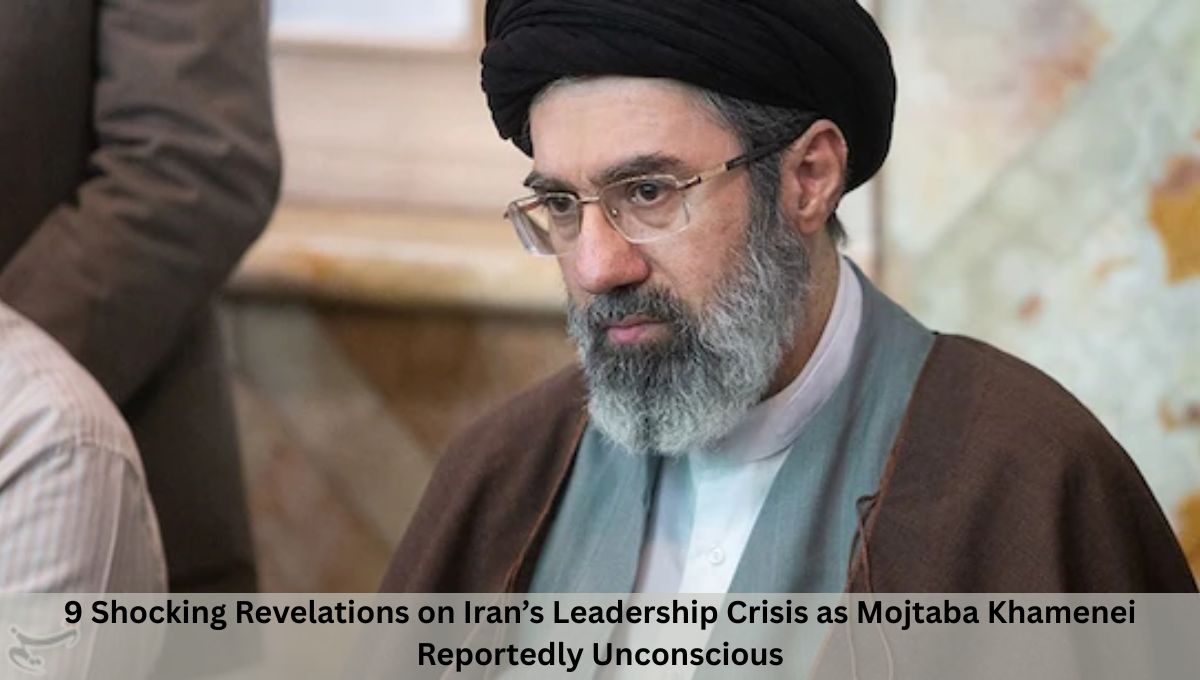
Iran Leadership Crisis Deepens as Mojtaba Khamenei Reportedly Unconscious and unable to govern.
A new and deeply concerning dimension has emerged in the escalating Middle East conflict:
reports that Iran’s Supreme Leader, Mojtaba Khamenei, is unconscious and unable to perform his duties.
If accurate, this development could fundamentally alter the trajectory of the ongoing war involving Iran, the United States, and Israel, while raising urgent questions about who is actually in control of one of the region’s most powerful nations.
At a moment when decisions carry global consequences—from oil markets to military escalation—the possibility of a leadership vacuum in Tehran has intensified uncertainty worldwide.
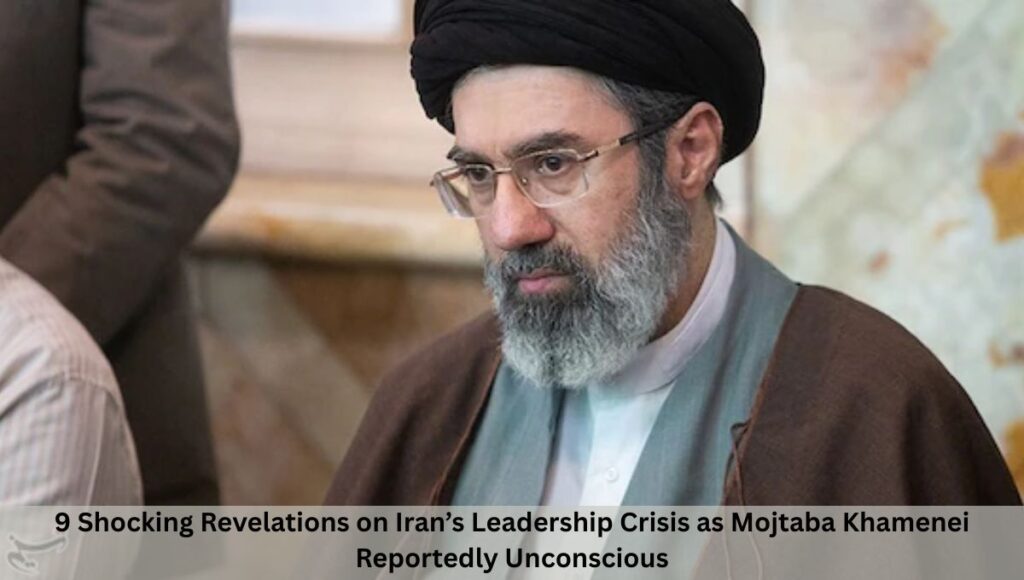
9 Shocking Revelations on Iran’s Leadership Crisis as Mojtaba Khamenei Reportedly Unconscious
Intelligence Claims: What the Report Says
According to a diplomatic memo cited in international reporting, Mojtaba Khamenei is currently receiving urgent medical treatment in the city of Qom and is in a “severe” condition.
Key Allegations from the Memo:
- He is reportedly unconscious
- Unable to participate in decision-making
- Under intensive medical care in Qom
- His location has been disclosed publicly for the first time
The memo is believed to be based on intelligence assessments from the United States and Israel and shared with regional allies.
However, it is critical to note that these claims remain unverified independently, and neither Tehran nor Washington has officially confirmed them.
Iran’s Official Position: “He Is Still in Charge”
Iranian authorities have acknowledged that Mojtaba Khamenei was injured in an airstrike earlier in the conflict.
However, they firmly maintain that he remains the country’s leader and is actively governing.
Despite these assurances, several factors have fueled skepticism:
Red Flags Raising Questions:
- No public appearances since assuming leadership
- No verified video or audio messages
- Statements delivered only through state media
- Release of an AI-generated video instead of real footage
These anomalies have intensified speculation about his actual condition.
The Qom Factor: Why Location Matters
The reported location of Mojtaba Khamenei in Qom is highly significant.
Why Qom Is Important:
- It is Iran’s religious capital
- A major center of Shia clerical authority
- Historically central to political-religious leadership
The presence of the Supreme Leader in Qom, rather than Tehran, may suggest a highly controlled or protected environment—potentially reinforcing concerns about his health or security.
The Airstrike That Changed Everything
The current crisis traces back to the opening days of the war on February 28, when a major airstrike reportedly killed former Supreme Leader Ali Khamenei.
Reported Impact of the Strike:
- Death of Ali Khamenei
- Casualties among close family members
- Injuries to Mojtaba Khamenei
While Iran confirmed Mojtaba was wounded, early reports suggested relatively minor injuries. The latest intelligence assessments, however, indicate a far more serious condition.
This discrepancy has added to the uncertainty surrounding his health.
Who Is Running Iran Right Now?
If Mojtaba Khamenei is indeed incapacitated, the implications are profound.
In Iran’s political system, the Supreme Leader holds ultimate authority over:
- Military strategy
- Foreign policy
- Religious leadership
- Key state institutions
Possible Power Centers Emerging:
1. Islamic Revolutionary Guard Corps (IRGC)
The IRGC is widely seen as the most likely institution to assume de facto control.
- Controls significant military assets
- Deep influence over domestic politics
- Historically central in crisis situations
2. Senior Clerical Establishment
Religious authorities in Qom could play a stabilizing role, particularly in maintaining legitimacy.
3. Government Officials and Negotiators
With reports suggesting that the United States is negotiating with other Iranian officials, operational authority may already be shifting.
Trump’s Strategy: Negotiating Without the Supreme Leader
US President Donald Trump has indicated that he is not directly engaging with Iran’s Supreme Leader.
Instead, negotiations appear to involve:
- Senior Iranian officials
- Military-linked representatives
- Diplomatic intermediaries
This shift could reflect:
- Recognition of a leadership vacuum
- Strategic adaptation to internal Iranian dynamics
- Intelligence assessments about Khamenei’s condition
Funeral Delays Raise Further Questions
Another unusual development is the delayed funeral of former Supreme Leader Ali Khamenei.
Why This Matters:
- Shia tradition typically mandates swift burial
- The delay has extended beyond expected timelines
- Preparations reportedly include a large mausoleum
Intelligence reports suggest the mausoleum could accommodate multiple graves—fueling speculation about the broader condition of the Khamenei family.
Understanding “Incapacitated”: What It Means Medically
The term “incapacitated” has been widely used in reports—but what does it actually mean?
Possible Medical Scenarios:
- Loss of consciousness or coma
- Severe brain injury
- Critical organ damage
- Neurological impairment
Such conditions are considered medical emergencies and often require intensive care.
Risks Associated with Incapacitation:
- Long-term brain damage
- Organ failure
- Dependency on life-support systems
- Uncertain recovery outcomes
Recovery depends heavily on:
- The cause of the condition
- Speed of medical intervention
- Overall health of the patient
War Context: Why Leadership Stability Matters
The timing of this reported health crisis could not be more critical.
The ongoing war has already:
- Killed thousands across the region
- Disrupted global energy supply
- Triggered widespread geopolitical tensions
Key Risk:
Without a clear decision-maker, Iran’s response strategy could become:
- Fragmented
- Delayed
- More aggressive due to decentralized control
This increases the risk of miscalculation and unintended escalation.
Oil, Markets, and Global Fallout
The uncertainty surrounding Iran’s leadership is already impacting global markets.
Immediate Effects:
- Rising oil prices
- Increased volatility in financial markets
- Supply chain disruptions
Broader Concerns:
- Energy security risks
- Inflation pressures
- Economic instability in energy-dependent countries
The Strait of Hormuz remains a central concern, with its status closely tied to Iran’s decision-making capacity.
Competing Narratives: Intelligence vs Official Claims
At the heart of the story is a clash between two narratives:
Intelligence Reports:
- Claim severe incapacitation
- Suggest leadership vacuum
- Highlight internal uncertainty
Official Iranian Position:
- Asserts continued leadership
- Downplays severity of injuries
- Maintains operational stability
This divergence reflects the broader information warfare that often accompanies geopolitical conflicts.
Regional Implications: A Wider Middle East Impact
The potential incapacitation of Iran’s Supreme Leader has implications far beyond the country’s borders.
Possible Regional Effects:
- Increased aggression from proxy groups
- Escalation of Israel-Iran conflict
- Shifts in alliances and diplomacy
Countries across the Middle East are closely monitoring the situation, preparing for multiple scenarios.
Could This Trigger a Power Struggle?
One of the most significant risks is the possibility of internal conflict within Iran’s leadership.
Potential Scenarios:
- IRGC consolidates control
- Clerical factions compete for authority
- Temporary collective leadership emerges
Such instability could weaken Iran’s strategic position while increasing unpredictability.
The Role of Information Warfare
It is also important to consider the role of information in shaping perceptions.
In modern conflicts:
- Intelligence leaks can influence negotiations
- Media reports can affect public sentiment
- Disinformation can be used strategically
The report about Mojtaba Khamenei’s condition may itself be part of a broader narrative battle.
What Happens Next?
Several outcomes remain possible:
Scenario 1: Recovery and Return
Khamenei recovers and resumes leadership, restoring central authority.
Scenario 2: Continued Incapacitation
Power shifts informally to other institutions, particularly the IRGC.
Scenario 3: Leadership Transition
A formal succession process begins, potentially triggering internal tensions.
Scenario 4: Escalation of War
Uncertainty leads to more aggressive actions by multiple actors.
Conclusion: A Critical Moment in Global Politics
The reported condition of Mojtaba Khamenei represents more than a personal health crisis—it is a pivotal moment in global geopolitics.
At a time when the Middle East is already on edge, the possibility of a leadership vacuum in Iran adds a dangerous layer of uncertainty.
Whether these reports are confirmed or not, their impact is already being felt across:
- Diplomatic channels
- Military strategies
- Global markets
As the situation evolves, one thing is clear:
the world is watching closely, aware that the decisions—or lack thereof—made in Tehran could shape the future of global stability.
Also Read: 7 Shocking Revelations About Mojtaba Khamenei’s Escape, Injuries & Iran’s Leadership Crisis
Related Posts:
- 3 Explosive Conditions Iran Sets to End War with US…
- 7 Powerful Facts About Ayatollah Ali Khamenei’s…
- 5 Major Takeaways from the US Supreme Court's…

- 9 Explosive Claims as Trump Says US Winning Iran War

- 10 Explosive Warnings as Donald Trump Calls Iran…
- 7 Heartbreaking Facts About Venezuela's Earthquake Disaster