9 Explosive Facts About US ‘Bunker Buster’ Strikes on Iran Near Hormuz, fueling geopolitical tensions. In a dramatic escalation of the ongoing conflict, the United States has launched powerful airstrikes using “bunker buster” bombs on Iranian missile sites near the strategic Strait of Hormuz.
The move marks one of the most significant military actions aimed at reopening the vital waterway after Iran effectively shut it down.
The strikes come amid intensifying hostilities between the United States, Israel, and Iran—a conflict that is already reshaping global geopolitics, disrupting energy markets, and testing international alliances.
With nearly one-fifth of the world’s oil supply passing through the Strait, the stakes are enormous—not just for the region, but for the entire global economy.
9 Explosive Facts About US ‘Bunker Buster’ Strikes on Iran Near Hormuz
US Deploys ‘Bunker Buster’ Bombs Near Hormuz
Precision Strikes on Missile Sites
According to the United States Central Command (CENTCOM), US forces targeted hardened Iranian missile installations along the coastline.
In an official statement, CENTCOM confirmed:
“US forces successfully employed multiple 5,000-pound deep penetrator munitions on hardened Iranian missile sites along Iran’s coastline near the Strait of Hormuz.”
These missile systems were believed to house anti-ship cruise missiles capable of targeting oil tankers and commercial vessels.
Why These Targets Matter
Threat to Global Shipping
The targeted Iranian missile sites posed a direct threat to:
- Oil tankers transiting the Strait
- Commercial shipping routes
- Naval vessels operating in the Gulf
By neutralizing these sites, the US aims to restore safe passage through the Strait of Hormuz.
Understanding ‘Bunker Buster’ Bombs
What Are Deep Penetrator Munitions?
“Bunker busters” are specialized bombs designed to:
- Penetrate thick layers of earth and concrete
- Destroy underground or fortified targets
- Detonate only after reaching critical depth
The weapon reportedly used in the strikes is the GBU-72 Advanced 5K Penetrator.
Key Features of the GBU-72
- Weight: ~5,000 pounds (2,200+ kg)
- Capability: Penetrates deep underground structures
- Guidance: GPS + inertial navigation
- Cost: Estimated $288,000 per unit
These bombs are particularly effective against:
- Missile silos
- Command centers
- Underground bunkers
Comparison with Larger US Weapons
While powerful, the GBU-72 is not the largest in the US arsenal.
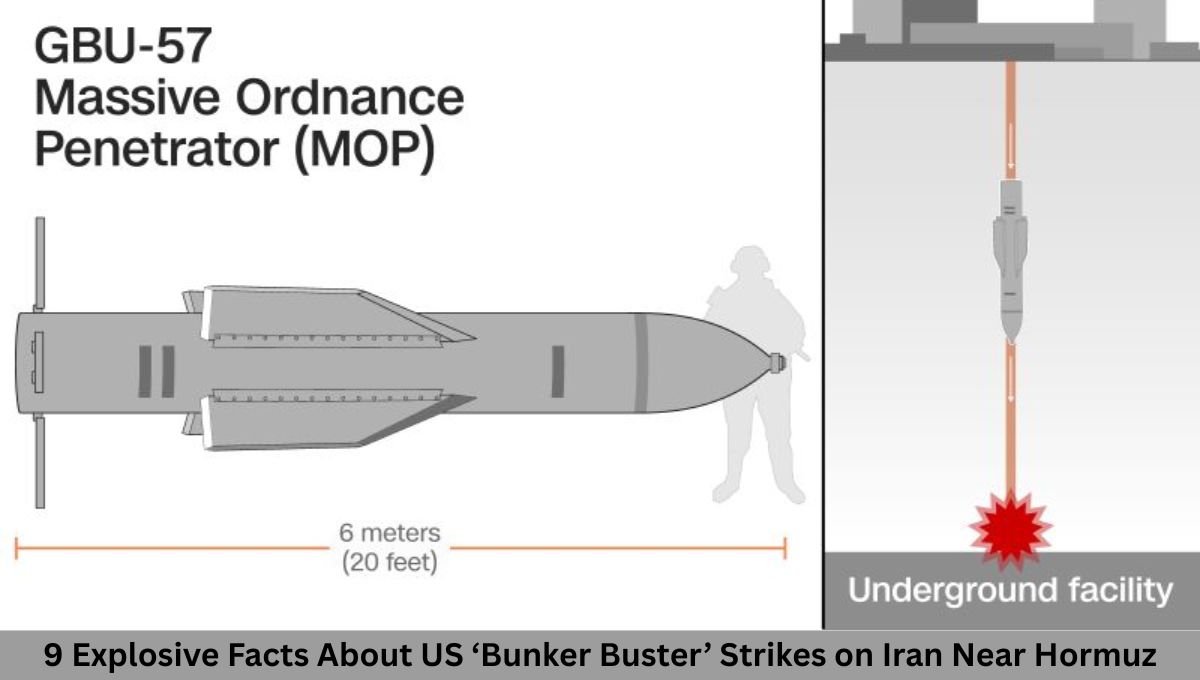
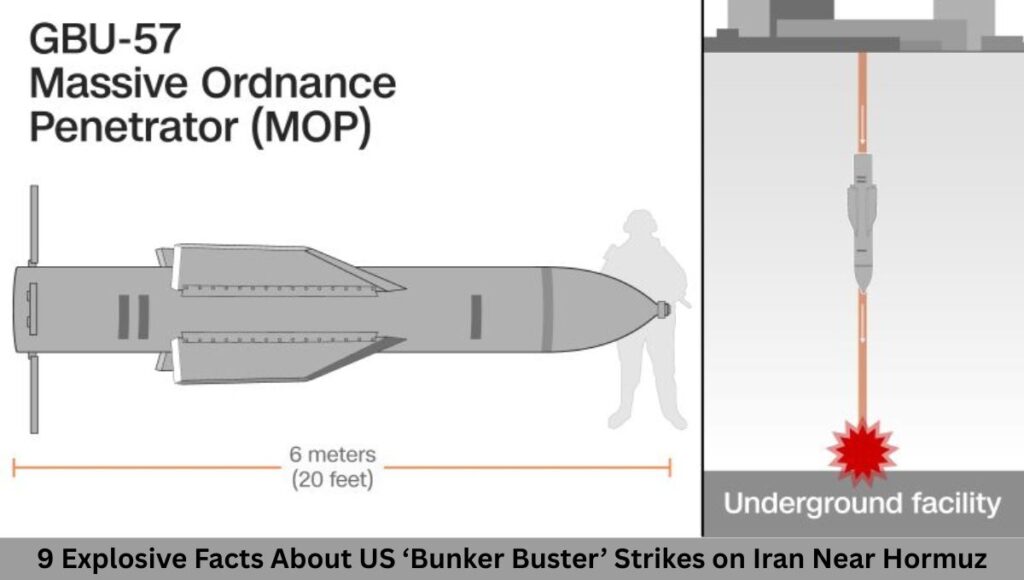
- Smaller than the GBU-57 Massive Ordnance Penetrator (30,000 pounds)
- More flexible—can be deployed by fighter jets like the F-15E
- Designed for precision rather than sheer blast power
This makes it ideal for targeted strikes in complex environments like coastal Iran.
Why the Strait of Hormuz Is Critical
Global Energy Lifeline
The Strait of Hormuz is one of the most strategically important waterways in the world.
- Handles ~20% of global oil supply
- Connects Gulf producers to international markets
- Vital for Asia, Europe, and beyond
Impact of Iran’s Blockade
Iran’s actions—including mines, drones, and missile threats—have:
- Reduced ship traffic drastically
- Triggered insurance spikes for shipping
- Sent oil prices soaring globally
Iran’s Strategy: Controlling the Chokepoint
Iran has leveraged its geographic advantage to:
- Deploy coastal missile batteries
- Use asymmetric naval tactics
- Threaten energy supply chains
By choking the Strait, Iran aims to increase pressure on Western economies and force diplomatic concessions.
Trump’s Response and NATO Tensions
Allies Refuse to Join
President Donald Trump had urged allies to assist in securing the Strait. However, several members of NATO declined.
This includes countries such as:
- United Kingdom
- Spain
Trump criticized their decision, calling it:
“A very foolish mistake.”
“We Don’t Need Help”
Despite frustration, Trump insisted the US would act independently:
- Emphasized American military strength
- Downplayed the need for coalition support
This stance reflects ongoing tensions between the US and its traditional allies.
Global Oil Markets in Turmoil
Energy Prices Surge
The disruption in the Strait has caused:
- Brent crude prices nearing or exceeding $100 per barrel
- Rising fuel costs worldwide
- Inflationary pressures in major economies
Economic Ripple Effects
Countries dependent on imported oil are facing:
- Higher transportation costs
- Supply chain disruptions
- Slower economic growth
Iran Calls for Global Condemnation
Iran has urged the international community to:
- Condemn US and Israeli strikes
- Recognize the blockade as part of the broader war context
Iranian Foreign Minister Abbas Araqchi reportedly raised concerns with the United Nations about escalating tensions.
Expanding Battlefield Across the Region
Israel-Iran Conflict Intensifies
The war has expanded beyond Iran’s borders, with:
- Israeli strikes on Iranian infrastructure
- Iranian missile attacks on Israeli cities
- Operations targeting Hezbollah in Lebanon
Key Figures Targeted
Israel claims to have eliminated:
- Ali Larijani
- Gholamreza Soleimani
These developments mark a significant escalation in leadership targeting.
No Signs of De-escalation
Ongoing Military Operations
Both sides continue to launch:
- Missile strikes
- Air raids
- Drone attacks
US forces have also released video footage showing continued “hunt and destroy” missions.
US Military Strategy: Control the Strait
The primary US goal is to:
- Neutralize Iranian missile threats
- Reopen the Strait of Hormuz
- Ensure free flow of global oil
Potential Next Steps
- Increased naval deployment
- Escort missions for oil tankers
- Further airstrikes on Iranian assets
Deployment of US Forces
Reports indicate the deployment of assets such as:
- Amphibious assault ships
- Thousands of Marines
This suggests preparations for a prolonged presence in the region.
Internal US Divisions Emerge
The resignation of Joe Kent has added a political dimension to the crisis.
Kent stated:
“I cannot in good conscience support this war.”
His remarks raise concerns about:
- Intelligence assessments
- Decision-making processes
- Long-term strategy
Risks of Wider Regional War
Potential Escalation Scenarios
- Involvement of Gulf nations
- Expansion into Iraq and Lebanon
- Direct confrontation between major powers
Global Security Concerns
The conflict risks evolving into a broader regional or even global crisis.
Humanitarian Impact
The war has already resulted in:
- Thousands of casualties
- Displacement of civilians
- Damage to infrastructure
Humanitarian organizations warn of worsening conditions if fighting continues.
Historical Context of ‘Bunker Busters’
These weapons have been used in:
- The Gulf War
- The Iraq War
- Operations in Afghanistan
Their use signals a focus on hardened, high-value targets.
Why This Moment Matters Globally
1. Energy Security
Any disruption in Hormuz affects:
- Oil prices
- Global inflation
- Economic stability
2. Geopolitical Alliances
The NATO divide highlights shifting global power dynamics.
3. Military Strategy
The use of advanced munitions reflects evolving warfare tactics.
What Happens Next?
Key questions remain:
- Will Iran retaliate further?
- Can the Strait be fully reopened?
- Will allies eventually join the US effort?
The answers will shape the trajectory of the conflict.
Conclusion: A Turning Point in the Conflict
The US deployment of bunker buster bombs against Iranian missile sites marks a decisive moment in the Iran war.
By targeting critical infrastructure near the Strait of Hormuz, Washington has signaled its determination to secure global energy routes—regardless of allied support.
As tensions rise and the battlefield expands, the world watches closely.
The outcome of this confrontation will not only determine control over a vital waterway but could also redefine global alliances and economic stability for years to come.
Also Read: 10 Explosive Signals as Donald Trump Urges Nations to Secure Strait of Hormuz Amid Iran War
Also Read: US Just Used ‘Bunker Busters’ Against Iran, Again. What Are They?
Related Posts:
- 3 Explosive Conditions Iran Sets to End War with US…

- 10 Explosive Warnings as Donald Trump Calls Iran…
- 10 Explosive Strikes: Israel Bombs Tehran Oil Depots…

- 9 Explosive Claims as Trump Says US Winning Iran War

- 7 Powerful Facts About Ayatollah Ali Khamenei’s…

- 10 Explosive Signals Trump Says Iran War Could End…