

Two days since the announcement of the tariff, Wall Street Plummets as U.S.-China Trade War Escalates:
Market Reaction to Tariffs Shakes Global Economy.
Since the onset of the COVID-19 pandemic, the Wall Street on April 5, 2025, experienced a catastrophic plummet, marking its most significant crisis. The S&P 500 dropped by 6 percent, while the Dow Jones Industrial Average fell by 2,231 points—a staggering 5.5 percent loss.
This decline was recorded as China retaliates against newly imposed tariffs by President Donald Trump. This move by China intensifies fears of an impending global recession.
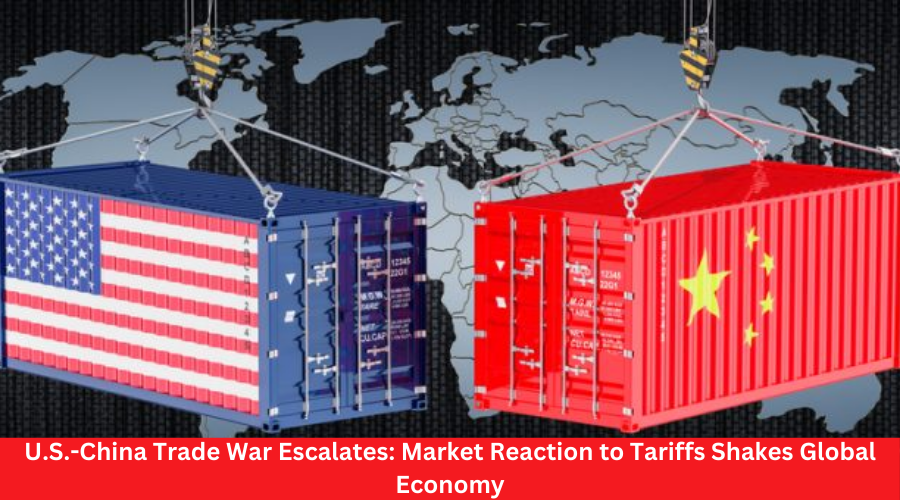
Wall Street Plummets as U.S.-China Trade War Escalates: Market Reaction to Tariffs Shakes Global Economy
Trade War Escalation: Tariffs in Focus
US President Donald Trump on April 2nd announced a bold new tariff policy, imposing 34 percent tariff on Chinese imports. In retaliation China imposed reciprocatory tariffs on all U.S. goods which will take effect on April 10.
The investors were caught off guard as the trade war escalated, which lead to panic as world wide financial markets reacted strongly to the crises.
Unexpected Resilience: Jobs Report Fails to Boost Confidence
The investor sentiment remained grim despite the release of a better-than-expected U.S. jobs report earlier that morning which is often viewed as a signal of economic health. Economic analysts state that tensions around U.S.-China trade relationship have overshadowed positive domestic economic data.
Out of 500 companies listed on the S&P 500, 14 countries ended the day in the green. This accentuates the sharp impact of the trade conflict.
Corporate Losses: Multinationals Feeling the Heat
Major corporations suffered substantial losses specifically those vulnerable to the trade fallout. Following the announcement of an antitrust probe by China, DuPont saw its stock plunge by 12.7 percent, while GE Healthcare faced a 16 percent decline, reflecting its heavy reliance on the Chinese market.
Crude oil and base metals mirrored this trend, with crude oil prices since 2021 hit their lowest levels.
Inflation Concerns: Fed Chair Powell Sounds the Alarm
Federal Reserve Chair Jerome Powell warned that with announcement of the tariffs there would be inflation risks. Powell suggested that the central bank may not go with immediate rate cuts, in spite of a significant market pressure urging a monetary policy shift.
The yield on the 10-year Treasury dipped to 4.01 percent, illustrating market anxiety over economic stability.
Trump’s Reaction: A Focus on Opportunity
Inspite ofthe chaos on Wall Street, President Trump remained unfazed. Speaking to Truth Social from Mar-a-Lago Trump stated that the U.S. economy would ultimately urge foreign manufacturers to establish operations stateside to avoid heavy import duties.
Trump later said that China had played it wrong and that they panicked. He also said that it was a time to get rich.
Global Implications: Trade Shockwaves Beyond U.S. Borders
It is observed that the trade war’s implications are extending beyond U.S. markets and the analysts warn of possible ripple effects across the globe. The US tariffs are pushing Chinese companies to search for new markets, and it is apparent that there could be a surge in imports to countries like India.
Currently Indian trade officials are assessing the impact of the new tariffs. India’s domestic industries as experts warn could face significant challenges apart from an influx of cheaper Chinese goods.
India’s Strategic Response: A Departure from Retaliation
A high-level meeting was held by Trade officials from India’s Ministry of Commerce and Industry to discuss the potential ramifications of the U.S.-China standoff. The discussion focused on how the situation could lead to increased imports from China given its overcapacity.
Economists believe that Indian manufacturers, specifically manufacturers in electronics, machinery, and textiles, could face dire consequences from an overwhelming supply of Chinese products entering the local market.
Some experts hypothesize that countries such as Australia and Brazil, may take hold of the opportunity to escalate their market share in China. The Protect American Jobs Act launched by the Indian government plans to negotiate rather than retaliate against U.S. tariffs.
International Community’s Response: A Measured Approach
The repercussions of the US tariffs may take weeks to take shape completely, meanwhile trade officials analyze potential oversupply from China. The current trade landscape is marked by surging tensions and uncertainty. As the new developments unfold the countries are navigating their positions, making everything more complex.
Other nations are considering and evaluating different possibilities before opting for retaliation. While the European Union indicates that it will proceed in a calm, carefully phased, unified way while considering measures against U.S. tech companies.
Corporate Challenges: Business Adjustments Amid Uncertainty
Meanwhile the market fluctuations are pressurizing U.S. companies. Notably, Nintendo indicated that it would delay preorders for its anticipated Switch 2 gaming console as it calculates the impact of ongoing trade uncertainties.
Also Read: Global Trade War Intensifies as Trump Slaps Massive Tariffs on China and Allies
Also Read: Stocks, oil fall as US-China tariff war escalates
Related Posts:
- U.S.–China Trade War 2025: 500% Tariff Threat Sparks…
- 7 Big Takeaways: Macron’s High-Stakes China Visit…

- Trump Threatens 50% Tariffs on China as Trade War…
- Shocking Impacts of Trump’s 100% Tariffs on China
- 10 Powerful Revelations from the Trump–Putin Call on…
- 10 Big Takeaways from Trump’s 155% Tariff Warning to China
