According to the Wall Street Journal, Pentagon Restricts Ukraine’s Use of US Missiles Against Russia Amid Trump’s Frustration Over Peace Talks. The Pentagon has been quietly restricting Ukraine’s use of US-made long-range Army Tactical Missile Systems (ATACMS), preventing Kyiv from striking targets deep inside Russian territory, according to a report in the Wall Street Journal (WSJ) published on Saturday.
This restriction, which has been in place for months, has limited Ukraine’s ability to fully deploy one of its most powerful American-supplied weapons in the ongoing war against Russia. The revelation comes at a time when US President Donald Trump has grown increasingly frustrated over his inability to secure a peace deal between Russia and Ukraine, now entering its third year of conflict.
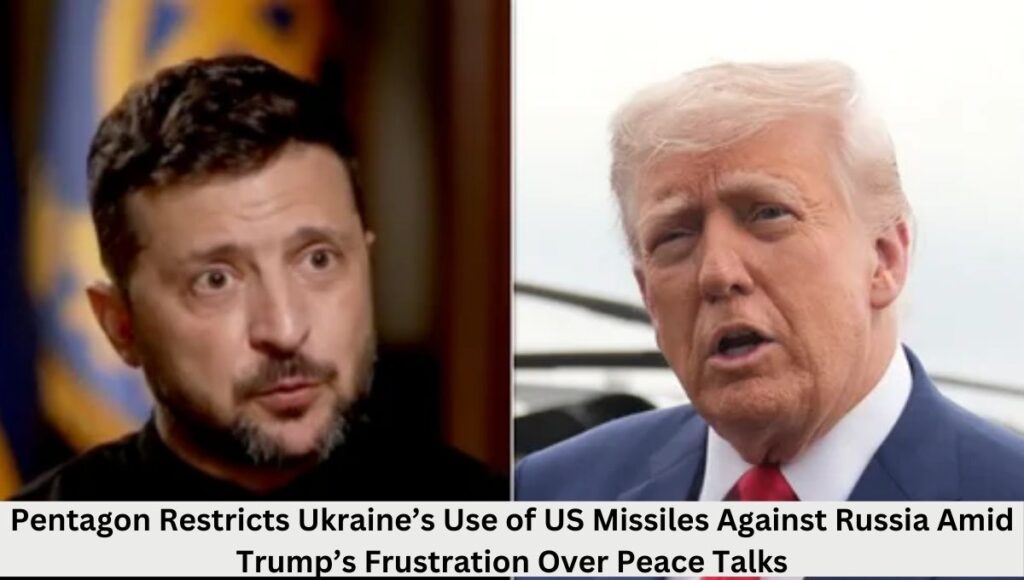
Pentagon Restricts Ukraine’s Use of US Missiles Against Russia Amid Trump’s Frustration Over Peace Talks
Pentagon’s Quiet Review Process
According to the WSJ, the Pentagon has established a special approval mechanism that gives Defense Secretary Pete Hegseth the final say over whether Ukraine can use long-range ATACMS missiles for strikes inside Russian territory.
Officials familiar with the matter said this system was designed to prevent escalation, fearing that deep strikes into Russia could provoke a direct confrontation between Washington and Moscow.
The approval process reportedly began in late spring 2025 and has effectively barred Ukraine from launching ATACMS against Russia for months.
On at least one occasion, US officials blocked a planned Ukrainian strike inside Russia.
Background: What Are ATACMS?
The Army Tactical Missile System (ATACMS) is a US-made, precision-guided tactical ballistic missile with ranges of up to 300 kilometers (186 miles).
- Ukraine first received shorter-range ATACMS in fall 2023, limited to strikes within occupied Ukrainian territory.
- In spring 2024, upgraded versions with extended range were supplied, but restrictions continued.
- Despite these capabilities, the Pentagon’s review has restricted their operational use against Russia itself.
Ukraine has argued that these weapons are critical to hitting Russian supply lines, bases, and command centers far beyond the front lines.
Trump’s Growing Frustration
The news of these restrictions broke just as President Trump expressed visible frustration with the stalemate in peace negotiations.
Following a summit with Russian President Vladimir Putin, a meeting with European leaders, and a separate engagement with Ukrainian President Volodymyr Zelensky, Trump admitted that “observable progress” remained elusive.
On Friday, Trump told reporters at the White House:
“I’m going to make a decision as to what we do and it’s going to be, it’s going to be a very important decision. And that’s whether or not it’s massive sanctions or massive tariffs or both, or we do nothing and say it’s your fight.”
This statement underscored Trump’s frustration with the drawn-out war and his struggle to maintain US leadership in brokering a settlement.
The Elusive Putin-Zelensky Meeting
One of Trump’s key goals has been to arrange a bilateral meeting between Putin and Zelensky. However, this effort has repeatedly stalled.
Russian Foreign Minister Sergei Lavrov, speaking to NBC on Friday, dismissed the likelihood of such a summit in the near term:
“Putin is ready to meet with Zelensky when the agenda would be ready for a summit. And this agenda is not ready at all.”
For now, no meeting between the two wartime leaders is planned.
Escalation Concerns: Why the Pentagon is Restricting Missiles
The Pentagon’s cautious stance reflects longstanding fears in Washington: that enabling Ukrainian strikes deep inside Russia could push the conflict into a direct US-Russia confrontation.
By requiring case-by-case approval for long-range ATACMS use, officials hope to manage escalation risks while still supporting Ukraine’s defense.
A senior defense official told WSJ that the restrictions also apply to some European-supplied long-range missiles, such as the British Storm Shadow, because they rely on US targeting intelligence.
Elbridge Colby’s Role in Policy
The report further notes that Elbridge Colby, the Pentagon’s policy undersecretary, played a key role in shaping the current restrictions.
Colby developed a review mechanism and rating system to evaluate weapon supply and deployment, classifying systems under red, yellow, and green categories to help determine availability and usage.
This system ensures that the US maintains sufficient reserves of critical weaponry while controlling how far Ukraine can go in its strikes against Russia.
Trump’s Contradictory Messaging
Interestingly, President Trump has sent mixed signals on Ukraine’s ability to strike inside Russia:
- On August 21, 2025, Trump said Ukraine had “no chance of winning” unless allowed to hit Russian territory.
- Yet, he also criticized the Biden administration for previously permitting Kyiv to use long-range weapons offensively, saying he disagreed “very vehemently” with that policy.
This inconsistency has added to confusion among allies and adversaries alike about Washington’s long-term strategy.
Ukraine’s Push for Security Guarantees
Beyond missile access, Ukraine has been pressing Washington for long-term security guarantees.
According to WSJ sources, Kyiv has proposed a $90 billion weapons purchase plan as part of broader guarantees.
- The plan would be financed largely by European allies, who would fund the purchase of US-made weapons.
- The idea is to tie Ukraine’s defense needs to US industry, securing American commitment through economic interdependence.
This proposal underscores Ukraine’s desperation to lock in lasting US support, regardless of shifting political winds in Washington.
Silence from Kyiv and Washington
When asked for comment by Reuters, Ukraine’s presidential office and defense ministry did not immediately respond.
Similarly, the White House and Pentagon declined to provide statements over the weekend.
This silence leaves the WSJ’s reporting unchallenged but also highlights the sensitivity of the issue, as Washington balances support for Ukraine with its fear of escalation.
Trump’s Options: Sanctions, Tariffs, or Withdrawal
Facing mounting pressure, Trump has floated three possible options for the US response to the prolonged war:
- Massive Sanctions on Russia to force concessions.
- Massive Tariffs aimed at crippling Russia’s economy indirectly.
- Withdrawal from the peace process, leaving Ukraine and Europe to handle the conflict independently.
Each option carries risks, particularly at a time when Europe remains divided on how far to push Moscow without worsening the crisis.
Strategic Impact of Restrictions
By preventing Ukraine from striking inside Russia with US missiles, the Pentagon is limiting Kyiv’s offensive potential.
- Russia’s supply hubs and command centers located across the border remain largely out of reach.
- Ukrainian military officials have complained that this gives Russia a strategic advantage, enabling it to launch attacks from relative safety.
- Critics argue that the restrictions are undermining Ukraine’s ability to regain occupied territory.
At the same time, US officials insist the restrictions are essential to avoid escalation and preserve global stability.
International Reactions
While the WSJ report has not been officially confirmed, it has already sparked discussions among US allies and in Kyiv.
European officials privately expressed concerns that Washington’s restrictions are hampering Ukraine’s military effectiveness, even as Western allies pour billions into support.
Meanwhile, Moscow is likely to view the revelations as proof that the US remains wary of escalation something Russia may exploit diplomatically.
Conclusion: Balancing Support and Escalation
The Pentagon’s quiet restrictions on ATACMS use reflect the broader dilemma facing the US: how to support Ukraine effectively without risking a direct confrontation with Russia.
For President Trump, the policy underscores his frustration and lack of progress in securing a peace settlement. With pressure mounting from Kyiv, Europe, and domestic critics, Trump faces difficult choices ahead.
Whether he opts for sanctions, tariffs, or withdrawal from negotiations, the decision will shape not only the future of the Ukraine war but also the credibility of US leadership in global security.
Also Read: While US restricts long-range missile use, Ukraine builds its own
Also Read: Putin Sees ‘Light at the End of the Tunnel’ in Trump Era as Relations Face Test Over Ukraine War
Related Posts:
- 12 Explosive Claims as Donald Trump Says Iran War…

- 5 Major Revelations in the BBC–Trump Panorama…

- 9 Explosive Revelations as Trump Declares His Health…

- Murdoch vs. Trump: A Media Feud with Press Freedom…

- 7 Explosive Moments in the Trump–Macron Davos Showdown

- 7 Powerful Signals Russia Is Rejecting Trump’s…