
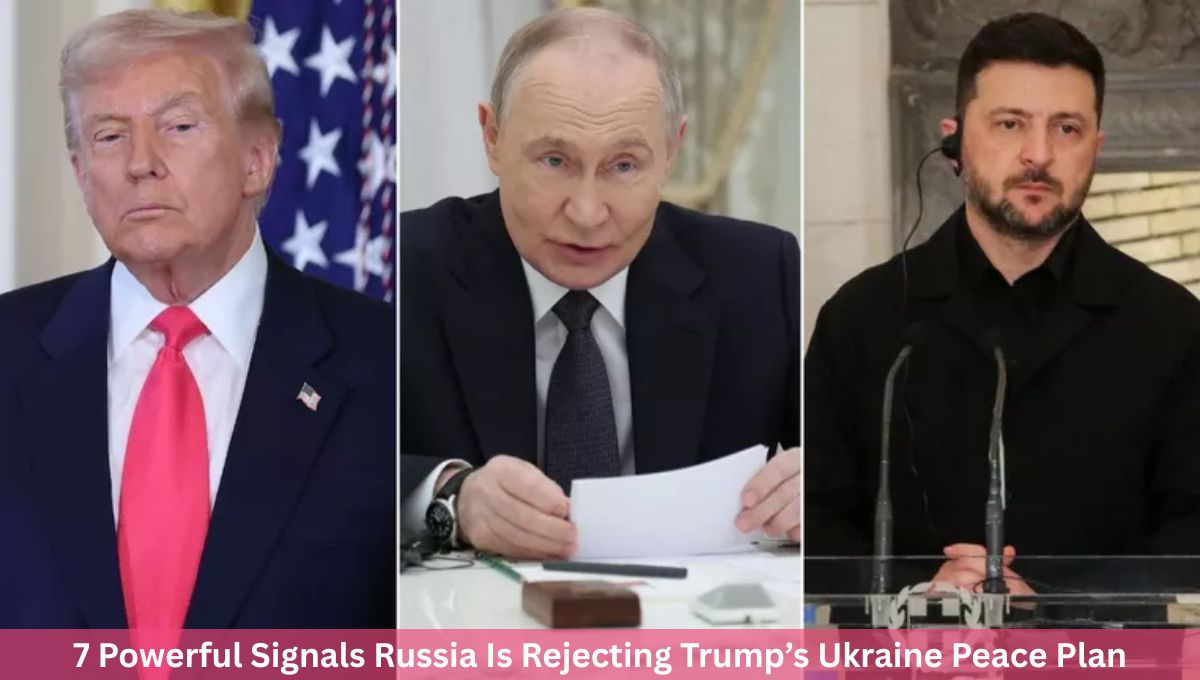
7 Powerful Signals Russia Is Rejecting Trump’s Ukraine Peace Plan warning that any deal must reflect battlefield realities. Russia has delivered its clearest and most coordinated message yet regarding former U.S. President Donald Trump’s proposed Ukraine peace plan.
While the Kremlin says it supports “any initiative that can genuinely end the war,” senior Russian officials and state-aligned analysts are openly warning that Trump’s core proposals are “unrealistic,” “politically impossible,” and fundamentally disconnected from the realities created by nearly three years of war.
This extensive report examines Russia’s position, Ukraine’s reaction, the evolving geopolitical landscape, and the challenges Trump would face in attempting to broker a ceasefire between two deeply entrenched adversaries.
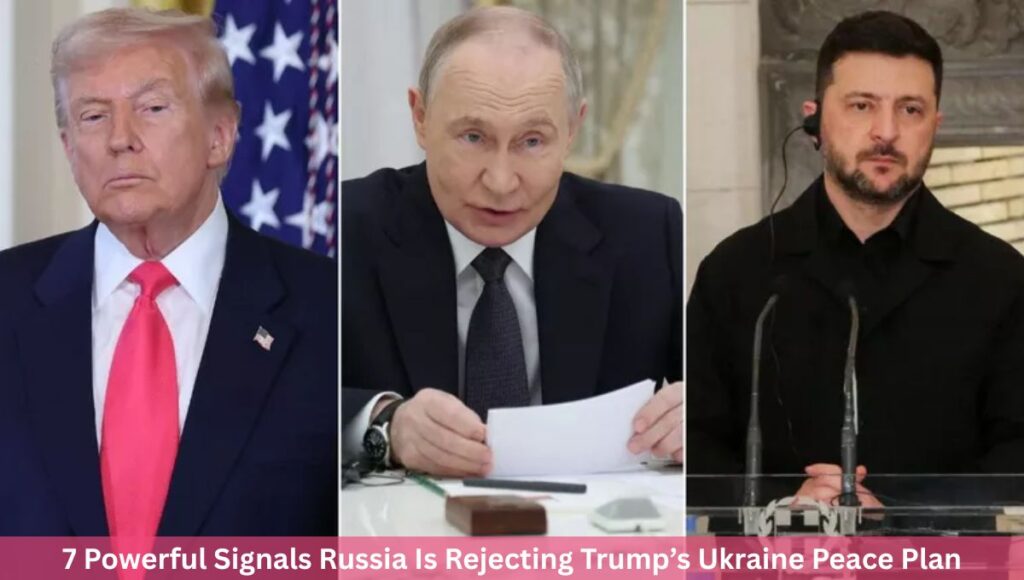
7 Powerful Signals Russia Is Rejecting Trump’s Ukraine Peace Plan
Kremlin Signals Conditional Openness — and Firm Red Lines
Although the Kremlin’s official spokesperson, Dmitry Peskov, avoided outright rejection of Trump’s idea, his remarks made Russia’s position unmistakably clear. Moscow will entertain discussions only if they are based on the current battlefield map, which means:
- Ukraine must accept Russia’s control of Donetsk
- Ukraine must accept Russia’s control of Luhansk
- Ukraine must accept Russia’s control of Kherson
- Ukraine must accept Russia’s control of Zaporizhzhia
These territories, which Russia claims to have annexed in 2022, are non-negotiable in Moscow’s view.
Peskov said:
“Any plan must reflect reality. Not hypothetical ideas, not wishful thinking.”
This phrase—“reflect reality”—has become the signature line in Russia’s messaging campaign. It appears in statements from lawmakers, state TV analysts, military officials, and policy advisers.
Why Russia Keeps Repeating “Current Realities”
In Kremlin language, “current realities” is shorthand for territorial control and irreversible annexation.
Russia expects:
- Recognition of its authority in occupied regions
- Negotiations to begin from the existing front lines
- Guarantees that Ukraine will abandon NATO membership
- Sanctions relief tied to compliance
Trump’s idea, according to Russia, does not meet these criteria.
Russian Lawmakers Call Trump’s Plan “Naive” and “Divorced from Reality”
Among Russian lawmakers, the pushback has been even sharper.
State Duma Deputy Speaker Pyotr Tolstoy dismissed the plan as “naive,” arguing that Trump misunderstands Russia’s leverage, its military commitment, and its political investment in the territories.
Tolstoy said:
“Russia has no intention of retreating from land that is now part of the Russian Federation. This is not a matter for negotiation.”
Another prominent figure, Andrey Kartapolov, head of the State Duma’s Defense Committee, declared Trump’s proposed 24-hour peace deal “impossible” and warned that any plan requiring Russia to reverse its annexations is “dead on arrival.”
These comments reflect a rare consensus across Russia’s political spectrum: Moscow will not surrender territory, regardless of who is mediating.
Why Russia Believes It Has the Upper Hand
Behind Russia’s dismissive tone lies a strategic calculation: Moscow believes time is on its side.
Russia’s assessment includes:
- Ukraine’s counteroffensives have stalled.
- Western funding is under political strain in the U.S. and EU.
- Russia’s defense industry has surged to wartime production levels.
- Public opinion within Russia remains resilient due to heavy propaganda.
- Global attention is fragmenting due to conflicts in the Middle East and Asia.
In this environment, Russia sees no incentive to compromise.
From Moscow’s perspective, Trump’s plan—especially if it pressures Ukraine to concede territory—confirms that Western resolve is weakening.
What Trump’s Ukraine Peace Plan Actually Proposes
Although Trump has not released a detailed written plan, interviews, leaks, and comments from aides outline several key components:
Reported elements of the Trump peace plan include:
- A temporary ceasefire based on current front-line positions
- A freeze on territorial claims (a Korean War–style solution)
- Security guarantees for Ukraine (but short of NATO membership)
- U.S.-Russia monitoring teams to enforce demilitarization zones
- A push for Ukraine and Russia to begin direct negotiations
- Pressure on Kyiv to surrender de facto control of some regions
The most controversial point is Trump’s willingness to force Kyiv into concessions it does not want.
Trump has insisted he could end the war “in 24 hours” by applying “tough pressure” on both sides — including pressuring Ukraine.
To Russia, this sounds promising.
To Ukraine, it sounds dangerous.
To Europe, it sounds destabilizing.
Ukraine Rejects Trump’s Territorial Concession Ideas
Ukrainian leaders have responded with barely disguised frustration.
Foreign Minister Dmytro Kuleba rejected any plan that freezes Russian territorial gains, stating:
“This is not a peace plan. It is a gift to the aggressor.”
Zelenskyy has repeatedly said Ukraine will not accept:
- Loss of territory
- Loss of sovereignty
- A ceasefire that allows Russia to regroup
- Any imposed settlement developed without Ukrainian input
Privately, Ukrainian officials fear Trump believes he can simply impose a deal, ignoring Ukraine’s agency in the process.
One adviser close to President Zelenskyy said:
“Ukraine will not sign its own death certificate to satisfy anyone’s political ambitions.”
Europe Is Deeply Uneasy About Trump’s Growing Influence
While Europe publicly welcomes all peace initiatives, diplomats in Brussels and Berlin privately express deep anxiety about Trump’s involvement.
European fears include:
- Trump may pressure Ukraine to concede territory.
- A U.S.-centric deal could sideline EU security interests.
- NATO unity could fracture under a Trump-driven agenda.
- A rushed ceasefire could leave Russia in a stronger position.
- The war’s underlying drivers could remain unresolved.
European officials worry that America’s internal politics, particularly the divisions between Biden and Trump factions, may spill over into Ukraine policy—creating conflicting signals that weaken Western leverage.
A senior EU diplomat said anonymously:
“A bad peace is worse than no peace at all.”
Russian Analysts Intensify Message That Trump Misunderstands Moscow
Russian foreign policy commentators, many aligned with the Kremlin, have been unusually candid.
Several argue that:
- Trump misreads Russia’s long-term goals
- Trump underestimates Putin’s commitment to the annexed regions
- Trump’s belief in quick diplomacy reflects a business mindset, not a geopolitical one
- Any plan assuming territorial compromise demonstrates “American arrogance”
A commentator on state TV summarized the sentiment:
“Trump thinks Russia is a business partner. Russia is a civilizational power. This is not a deal you can negotiate like a real estate contract.”
This framing is strategic—it portrays Trump as inexperienced, but potentially useful, so long as he accepts Russia’s non-negotiable demands.
Moscow Wants Negotiations — but Only a Negotiation It Can Dictate
Russia’s messaging has a dual purpose:
1. To portray itself as open to peace
This helps counter accusations of warmongering and appeals to global south nations.
2. To frame the acceptable terms of any peace process
Territory is off the table.
NATO membership for Ukraine is off the table.
Ukraine’s neutrality is mandatory.
Western sanctions must be eased.
By setting these preconditions early, Russia attempts to shape the debate before Trump formalizes his proposal.
Why Russia Is Responding So Forcefully Now
Several recent developments explain Moscow’s sudden urgency in addressing Trump’s peace plan:
• Trump met with Zelenskyy and discussed negotiations
This alarmed Moscow, which fears Trump may seek to assert personal leadership in the crisis.
• Russian forces have made incremental gains
Moscow does not want momentum to be interrupted by diplomatic pressure.
• Western unity is showing early signs of strain
Russia wants to maximize this moment, not freeze it.
• Russia wants Trump to understand its terms before he reveals his plan
Shaping the narrative early gives Moscow leverage.
Trump Faces the Same Impossible Equation as Every Mediator Before Him
The core problem remains unchanged:
- Ukraine demands full restoration of its 1991 borders.
- Russia insists its annexations are irreversible.
- Europe needs lasting security guarantees.
- The United States wants to reduce long-term military commitments.
Reconciling these four imperatives is extraordinarily difficult.
Trump believes he can do it quickly.
Russia believes he cannot.
Ukraine insists he should not try if it undermines its sovereignty.
Europe fears he might pressure Kyiv into a flawed compromise.
What Happens Next?
Diplomats expect several things in the months ahead:
Trump may reveal more details of his plan
Pressure will increase on both Kyiv and Moscow.
Europe will attempt to insert itself to avoid being sidelined
Expect new EU proposals or statements in response.
Russia will continue shaping international expectations
Moscow will emphasize “territorial reality” and “irreversible annexations.”
Ukraine will reinforce its red lines
Especially regarding territorial integrity and NATO aspirations.
Global south nations may amplify calls for diplomacy
Strengthening Russia’s narrative that Western positions are extreme.
Conclusion: A Peace Plan Without Peace Partners
Trump’s promise to end the Ukraine war in 24 hours may play well in political rallies, but Moscow’s response confirms that:
- Russia will not accept territorial concessions
- Ukraine will not accept territorial losses
- Europe will not accept security compromises
- The United States cannot impose a deal unilaterally
Russia’s rejection of Trump’s peace plan is not total—but it is fundamental.
The Kremlin is leaving the door open for talks, but only talks on its terms. Anything else, it says, is “divorced from reality.”
For Trump, this presents the same challenge that has stymied diplomats for three years: a war where both sides believe victory, not compromise, is still possible. Peace may someday come to Ukraine.
But it will not come in 24 hours.
Also Read: 7 Powerful New Signals Trump’s Ukraine Peace Push Is Reaching a Critical Stage
Also Read: Inside Ukraine peace deal: What US, Russia and Kyiv agree on, and reject
Related Posts:
- 5 Powerful Highlights as Trump Lands Second Nobel…

- Can the EU and NATO Impose Tariffs on India and…

- Trump’s 2025 Gaza Peace Plan Signing and Historic…

- 7 Powerful Measures: Trump Sanctions Russian Oil…

- Impacts of the Trump-Putin Call on Ukraine’s 2025 Strategy
- Dramatic Moments Behind Trump’s Gaza Peace Push and…
