

7 Powerful New Signals Trump’s Ukraine Peace Push Is Reaching a Critical Stage amid major geopolitical hurdles. US President Donald Trump says he will only meet Russian President Vladimir Putin and Ukrainian President Volodymyr Zelenskyy when a potential deal to end the Russia–Ukraine war is “FINAL or in its final stages,” a statement that has set off an extraordinary burst of diplomatic activity in Washington, Moscow, and Kyiv.
Trump’s Peace Plan—originally a 28-point framework widely criticized for aligning with key Russian demands—has been “fine-tuned” and narrowed to 19 items after intense negotiations in Geneva and Abu Dhabi. And while Trump insists the war “would have NEVER started” had he been president earlier, today he faces the reality of brokering a deal between two bitterly opposed states, each with core national interests that remain irreconcilable.
Still, this week brought some of the clearest signs yet that the White House sees an opportunity: Trump is dispatching Special Envoy Steve Witkoff to Moscow and sending Army Secretary Dan Driscoll to meet Ukrainian officials—parallel missions intended to push the nearly four-year war toward some form of political settlement. Below, we break down the situation, the negotiations, and why Trump says he will enter the talks only in the final phase.
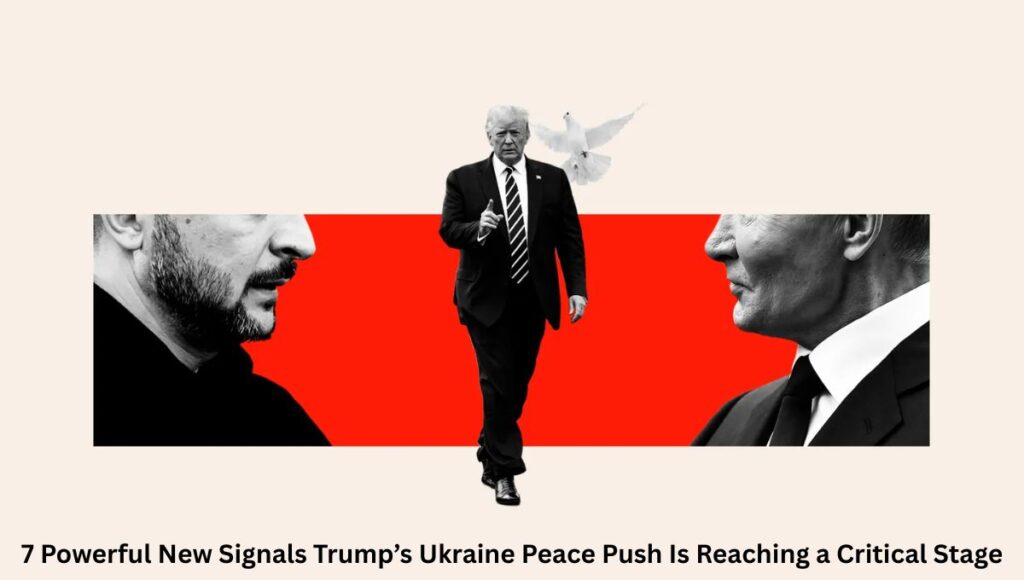
7 Powerful New Signals Trump’s Ukraine Peace Push Is Reaching a Critical Stage
Trump Signals Deal Is Approaching “Final Stages”
In a detailed Truth Social post, Trump said the United States had made “tremendous progress” toward ending the war in Ukraine. He emphasized that only “a few remaining points of disagreement” remain between the sides. According to Trump, the fine-tuned 28-point peace plan now includes clarifications and adjustments requested by both Russia and Ukraine.
Trump added that he might soon meet both Putin and Zelenskyy, but only once the peace talks reach their “final stages.” That timing appears deliberate: entering too early risks personal political entanglement, while stepping in too late could limit U.S. leverage.
Envoys Deployed to Moscow and Kyiv
Trump ordered two separate high-level meetings this week:
- Steve Witkoff, Trump’s Special Envoy, will meet President Vladimir Putin in Moscow.
- Army Secretary Dan Driscoll will meet Ukrainian officials, continuing a dialogue he has been leading in Abu Dhabi.
The two missions mark a significant intensification of U.S. engagement after weeks of behind-the-scenes drafting involving U.S., Ukrainian, Russian, and European negotiators.
Senior U.S. Officials to Oversee the Process
Trump said he will be personally briefed by:
- Vice President JD Vance
- Secretary of State Marco Rubio
- Secretary of War Pete Hegseth
- White House Chief of Staff Susie Wiles
The involvement of Rubio, Vance, Hegseth, and Wiles underscores how deeply the administration is positioning itself in the negotiations—not merely as a mediator but as a primary architect.
How the Peace Plan Evolved From 28 Points to 19
The original 28-point U.S.-drafted peace proposal, leaked last week, drew immediate backlash from Kyiv and European capitals. Critics said it too closely reflected Moscow’s interests—especially provisions urging Ukraine to renounce NATO ambitions, make territorial concessions in Donbas, and limit the size of its armed forces.
Ukrainian Shock and European Alarm
European governments were reportedly blindsided by the draft. Many feared the U.S. was drifting toward a bilateral deal with Russia that sidelined Ukraine’s partners and imposed security arrangements that could reshape Europe’s strategic map for decades.
Kyiv privately conveyed its “vehement opposition.” But the shock also accelerated engagement: by Monday, Ukraine re-engaged intensely with U.S. negotiators and moved to shape the framework into something closer to its own security expectations.
The Revised 19-Point Framework
During talks in Geneva over the weekend, the U.S. produced a revised list of 19 core proposals. While details remain confidential, Ukrainian officials say the essence of the new framework is “solid” and includes significantly improved security guarantees.
European leaders also say the revised proposals no longer seek to limit the Ukrainian military or block eventual NATO membership.
What Ukraine Is Saying: “Ready to Move Forward” but Still Cautious
President Volodymyr Zelenskyy publicly stated Tuesday that Kyiv supports “the framework’s essence” but must still address “sensitive points” directly with President Trump.
Zelenskyy Affirms Ongoing U.S. Coordination
In a message posted after a conversation with German Chancellor Friedrich Merz, Zelenskyy stressed:
“Communication with the American side continues. I am grateful for all of America’s efforts and personally for President Trump’s efforts.”
Zelenskyy rejected reports that Ukraine had already agreed to a peace deal but acknowledged meaningful progress in talks with U.S. negotiators.
Ukraine Insists Europe Must Be Included
In an address to allied partners, Zelenskyy warned:
“Security decisions about Ukraine must include Ukraine. Security decisions about Europe must include Europe.”
This was a clear response to fears that Washington and Moscow might shape a framework over Ukraine’s head—a dynamic Ukrainians say has no chance of succeeding.
European Allies Enter the Diplomatic Arena
The European Union and key European governments have now pushed themselves squarely into the negotiating process.
On Tuesday, a major video conference of the coalition of the willing—co-chaired by UK Prime Minister Keir Starmer and French President Emmanuel Macron—gathered leaders from across Europe, New Zealand, Estonia, Italy, Sweden, and the U.S. Secretary of State Marco Rubio.
Europe Wants Guarantees on Security, Reconstruction, and Russia’s Future Behavior
During the call:
- Starmer said Ukraine proposed “constructive changes” to the peace framework.
- Macron insisted the Ukrainian military must face no limitations, contradicting the original U.S. proposal.
- The bloc discussed using frozen Russian assets—worth roughly $300 billion—for reconstruction.
Macron also urged applying “continued pressure” on Putin, noting that Russia launched deadly strikes on Kyiv even as peace talks were underway.
Russia Responds with Skepticism and Concerns About the “Spirit of Anchorage”
While the U.S. and Ukraine express cautious optimism, Moscow remains wary. Russian Foreign Minister Sergei Lavrov emphasized that the modified plan must reflect the “spirit and letter” of the Anchorage summit between Trump and Putin earlier this year.
Moscow Worried About Revisions to the U.S. Draft
According to Kremlin sources:
- Russia has not been shown the revised U.S.-Ukraine-European version.
- The Kremlin is unhappy that the newer draft allegedly allows Ukraine to join NATO and does not mandate withdrawal from Donbas.
Russian media reports also say behind-the-scenes interactions continue between Russian envoy Kirill Dmitriev and U.S. envoy Steve Witkoff, who reportedly played a role in shaping the initial 28-point plan.
On-the-Ground Reality Clashes With Diplomatic Momentum
Even as peace negotiations intensify, violence escalated.
Overnight Russian Attacks on Kyiv
Russia launched another heavy barrage of airstrikes on Tuesday:
- At least seven people killed
- Residential blocks hit
- Energy infrastructure damaged
Ukraine Strikes Back
Ukraine allegedly launched one of its largest drone attacks on Russia’s Krasnodar region:
- Three people killed
- Homes severely damaged
- Over 249 drones shot down, according to the Russian Defense Ministry
These attacks underscore the urgency—but also the fragility—of any negotiated ceasefire.
The U.S. Motivations Behind the Push for a Ukraine Deal
Trump’s decision to escalate peace efforts now appears driven by several factors:
1. Mounting Casualties
Trump claimed 25,000 soldiers died last month, though he gave no source. Regardless of the exact number, international estimates point to a rising battlefield death toll on both sides.
2. Political Timelines and Diplomatic Opportunity
With Washington entering the holiday season and gearing up for a heavy 2026 political year, the White House wants momentum before global attention shifts.
3. U.S.–Europe Coordination Needs Repair
The initial 28-point plan strained relations with European allies who felt sidelined. The revised framework is partly an effort to rebuild Western unity.
4. The Desire for a Signature Foreign Policy Victory
A Ukraine peace deal—if viable and durable—would be the most significant global achievement of Trump’s second term.
Key Remaining Obstacles to a Peace Agreement
Despite this week’s optimism, several core disputes remain unresolved.
Ukraine’s Territorial Integrity
Whether Ukraine will be expected—or pressured—to concede any territory remains the most volatile question.
Ukraine’s NATO Ambitions
Moscow has long treated Ukraine joining NATO as an unacceptable red line.
The Future of Sanctions and Frozen Assets
Europe and the U.S. must agree on how to use frozen Russian assets for reconstruction or investments.
Russia’s Military Presence in Donbas and Crimea
Any map-drawing exercise risks collapsing the talks entirely.
Why Trump Won’t Meet Putin or Zelenskyy Yet
Trump says he will enter the process only when the peace plan is “FINAL or in its final stages.” Advisors say this position is intended to:
- Avoid becoming tied to early disagreements
- Preserve leverage with both sides
- Step in as a closer, not a negotiator
- Reduce political risk if talks collapse
But Ukrainian officials privately express concern that without Trump’s direct involvement, some of the most sensitive issues—especially territorial ones—may not be solvable at lower levels.
What Happens Next
For now, the process depends on the results of two critical meetings:
- Steve Witkoff in Moscow with Vladimir Putin
- Dan Driscoll in Europe with Ukrainian officials
If those talks narrow the remaining disagreements, Trump could schedule separate or joint meetings with Putin and Zelenskyy within weeks.
But with Russia escalating strikes on Kyiv and Ukraine mounting drone attacks on Russian territory, the diplomatic and military tracks remain dangerously out of sync.
Conclusion: A Peace Deal Nearing—but Not Yet in Hand
This week delivered the strongest signals yet that the U.S. believes a Ukraine peace deal is possible. Envoys are traveling. Drafts are being negotiated. Europe is fully engaged. Ukraine says the “framework’s essence” is acceptable. And Trump claims only a “few” disagreements remain.
But the pathway ahead is still narrow, politically fraught, and intensely fragile. For now, the world waits to see whether Trump’s next move—his own entry into the talks—comes before the war further escalates or before the fragile diplomatic momentum begins to slip away.
Also Read: 28-Point ‘Secret’ US-Russia Peace Plan: Inside Trump’s Bold Ukraine Gamble
Related Posts:
- 5 Powerful Highlights as Trump Lands Second Nobel…

- Trump’s 2025 Gaza Peace Plan Signing and Historic…

- Can the EU and NATO Impose Tariffs on India and…

- Impacts of the Trump-Putin Call on Ukraine’s 2025 Strategy
- 11 Explosive Revelations From Ted Cruz’s Leaked…

- Dramatic Moments Behind Trump’s Gaza Peace Push and…
