28-Point ‘Secret’ US-Russia Peace Plan: Inside Trump’s Bold Ukraine Gamble inspired by his Gaza deal. The United States under President Donald Trump is quietly developing a 28-point peace plan in consultation with Russia to end the war in Ukraine, according to explosive new reporting and multiple officials from Washington, Moscow, and Kyiv.
The initiative—inspired by Trump’s own 20-point Gaza peace deal—marks the boldest attempt yet by his administration to secure a negotiated settlement in Europe’s deadliest conflict since World War II.
Sources familiar with the discussions say the roadmap is far more ambitious than previous U.S. proposals, covering peace terms, security guarantees, the future of Europe’s security architecture, and the resetting of U.S. relations with both Russia and Ukraine.
Yet the plan also raises difficult questions, especially regarding contested territories in eastern Ukraine and how Kyiv’s Western allies will respond.
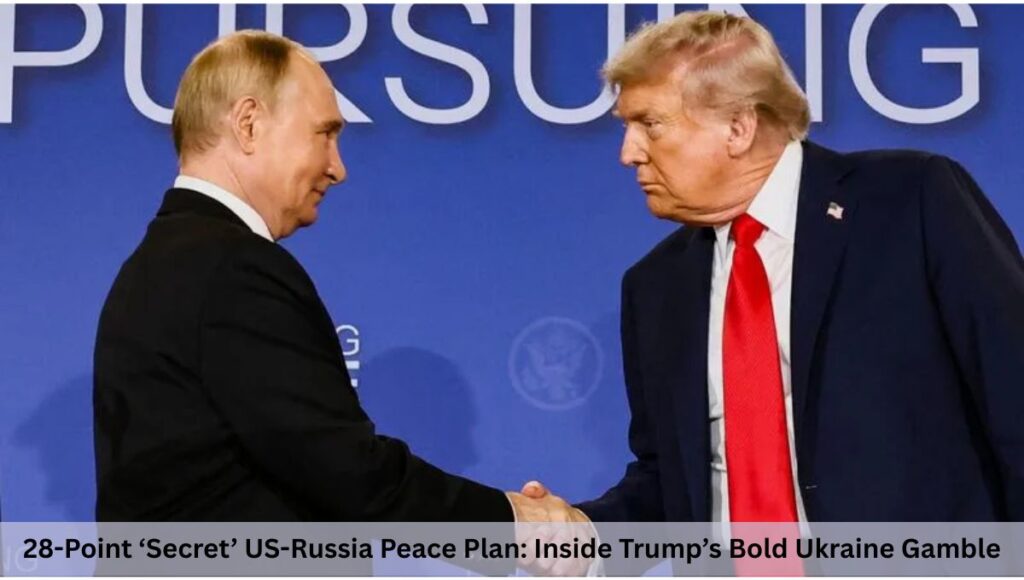
28-Point ‘Secret’ US-Russia Peace Plan: Inside Trump’s Bold Ukraine Gamble
A Secret 28-Point Peace Framework Takes Shape
The 28-point plan has been under quiet development for weeks, Axios first reported, and involves high-level engagement between U.S. envoy Steve Witkoff and Russia’s influential diplomat Kirill Dmitriev. According to U.S. officials, their conversations have been “extensive”—far deeper than previously disclosed.
Four Pillars of the Proposed Deal
Sources say the plan is divided into four major categories:
- Peace in Ukraine
- Security guarantees for both sides
- A revised European security framework
- Future U.S. relations with Russia and Ukraine
This sweeping approach goes beyond just ending the fighting. It aims to reshape broader geopolitical tensions that have defined Russia-West relations for more than a decade.
Russian envoy Dmitriev told Axios that this effort is “a much broader framework” meant to bring “lasting security to Europe, not just Ukraine.”
Trump Privately Confident the Deal Can Work
According to one senior Russian official, Trump believes there is a “real chance” the 28-point blueprint can end the conflict—despite the massive political and strategic obstacles.
A White House official echoed this sentiment:
“The president has been clear that it is time to stop the killing and make a deal to end the war. President Trump believes there is a chance to end this senseless war if flexibility is shown.”
The plan’s timing coincides with what experts say is a shifting battlefield, with Russian forces making steady if limited gains and Ukraine struggling with manpower shortages.
Steve Witkoff: Trump’s ‘Peace Missions’ Envoy Leading the Drafting
The architect of the plan is Steve Witkoff, the U.S. Special Envoy for Peace Missions. Witkoff has been at the center of Trump’s diplomatic push in the Middle East—including the Gaza peace deal—and has now taken on the Ukraine file.
Three Days of Talks in Miami
Russian envoy Kirill Dmitriev revealed that he spent three days in Miami, from October 24–26, meeting with Witkoff and other Trump administration members.
Dmitriev described the discussions as constructive:
“We feel the Russian position is really being heard.”
Moscow believes this increases the chances that the deal might succeed where previous Western negotiations failed.
Ukraine Notified, Zelensky Meeting Delayed
Ukraine is aware that the U.S. and Russia are working on a potential peace framework. Witkoff met Rustem Umerov, Ukrainian President Volodymyr Zelensky’s national security adviser, earlier in the week in Miami.
A Ukrainian official said:
“We know the Americans are working on something.”
Zelensky Meeting Postponed
Witkoff was scheduled to meet President Zelensky in Turkey this week, but the visit was unexpectedly delayed. U.S. officials say the meeting will be rescheduled.
Kyiv’s public reaction to the plan remains muted, and Ukrainian officials are signaling they want more clarity—especially regarding territorial issues and security guarantees.
Europe Also Being Briefed as Washington Widens Diplomatic Outreach
In addition to Ukraine, the White House has begun briefing European governments about the emerging plan. U.S. officials say early signals from Europe are mixed but open to discussion.
One U.S. official said:
“We think the timing is good for this plan now. But both parties need to be practical and realistic.”
European capitals are said to be cautiously optimistic, though skeptical about how the plan would handle issues like:
- Russian control of eastern Ukrainian territory
- NATO security commitments
- Long-term European defense strategy
Inspired by Trump’s Gaza Deal
Much of the 28-point plan’s structure mirrors Trump’s 20-point Gaza peace plan, which resulted in a multi-party ceasefire and hostage release agreement.
Lessons Carried Into Ukraine
The Gaza plan included:
- An immediate ceasefire
- A demilitarized, deradicalized Gaza
- A full humanitarian and reconstruction strategy
- Hostage releases within 72 hours
Trump and his advisors believe a similar structured, point-by-point approach can help resolve the Ukraine war—though the geopolitical stakes are vastly different.
The Alaska Principles: Foundation of the 28-Point Draft
According to Dmitriev, the peace roadmap builds on principles Trump and Vladimir Putin discussed at their Alaska summit in August. While the full details of that meeting remain undisclosed, the areas of agreement reportedly included:
- A mutual desire to reduce U.S.-Russia tensions
- A path to restoring diplomatic relations
- A broad security framework for Europe
- A mechanism to halt the Ukraine war
These “Alaska principles” are now being expanded into the written 28-point document expected to be completed before the next Trump-Putin meeting.
What the Plan Doesn’t Clarify Yet
Despite wide-ranging goals, the proposal leaves major issues unresolved:
Territorial Disputes in Eastern Ukraine
The most sensitive question—how to handle Russia’s territorial claims in Donetsk, Luhansk, Zaporizhzhia, and Kherson—remains unaddressed.
Ukrainian officials are wary of any plan that undermines Kyiv’s sovereignty.
Ukraine’s Path to NATO
European officials also question whether the proposal will pressure Kyiv to halt or reverse its NATO aspirations—something Russia demands.
Enforcement Mechanisms
No enforcement or verification structure has been described, raising doubts about long-term durability.
Russia Believes It Holds More Leverage Now
Russian officials privately told Axios that Moscow feels the U.S. is now “recognizing the reality” of Russia’s battlefield gains and security concerns.
Dmitriev said:
“Russia’s position on the battlefield is improving, giving Moscow more bargaining power.”
This assessment suggests Russia may push for stronger concessions than earlier in the war.
U.S. Rejects UK-Style Ukraine Peace Proposal
The U.S. plan is separate from a UK-led effort to propose a Gaza-style solution for Ukraine. Dmitriev dismissed the British initiative as unrealistic:
“It overlooks Russia’s positions and therefore will not succeed.”
Trump advisors believe their plan stands a better chance since it is shaped directly with both Moscow and Kyiv.
What Happens Next?
The U.S. intends to finalize the 28-point draft before Trump and Putin meet again. A planned Budapest summit, however, has been postponed.
Key Steps to Watch
- Completion of the written 28-point framework
- Rescheduled Trump–Zelensky meeting
- European reactions to the U.S. briefings
- Russia’s battlefield posture and political messaging
- The next Trump-Putin summit date and location
U.S. officials believe the plan can succeed if all parties show “flexibility,” though the path remains uncertain.
A High-Stakes, High-Risk Diplomatic Gamble
Trump’s 28-point blueprint represents one of the most ambitious attempts yet to end the Russia-Ukraine war. The plan aims to combine talks on peace, territorial security, and a new vision for Europe—while simultaneously reshaping U.S.-Russia relations.
Whether it succeeds depends on factors largely outside Washington’s control:
- Russia’s demands
- Ukraine’s red lines
- Europe’s willingness to compromise
- The trajectory of the war itself
But one thing is clear: the U.S. has launched its most serious diplomatic push since the war began, and its outcome could redefine global politics for years to come.
Also Read: 7 Key Takeaways as the UN Approves Trump’s Gaza Peace Plan
Also Read: Top US army officials in Ukraine in attempt to revive peace talks, Politico reports
Related Posts:
- Trump’s 2025 Gaza Peace Plan Signing and Historic…

- 5 Powerful Highlights as Trump Lands Second Nobel…

- 7 Shocking Reasons FIFA’s Peace Prize for Trump…

- Dramatic Moments Behind Trump’s Gaza Peace Push and…

- Trump’s 2025 Nobel Peace Prize Snub: Politics Over…

- 9 Explosive Revelations as Trump Declares His Health…