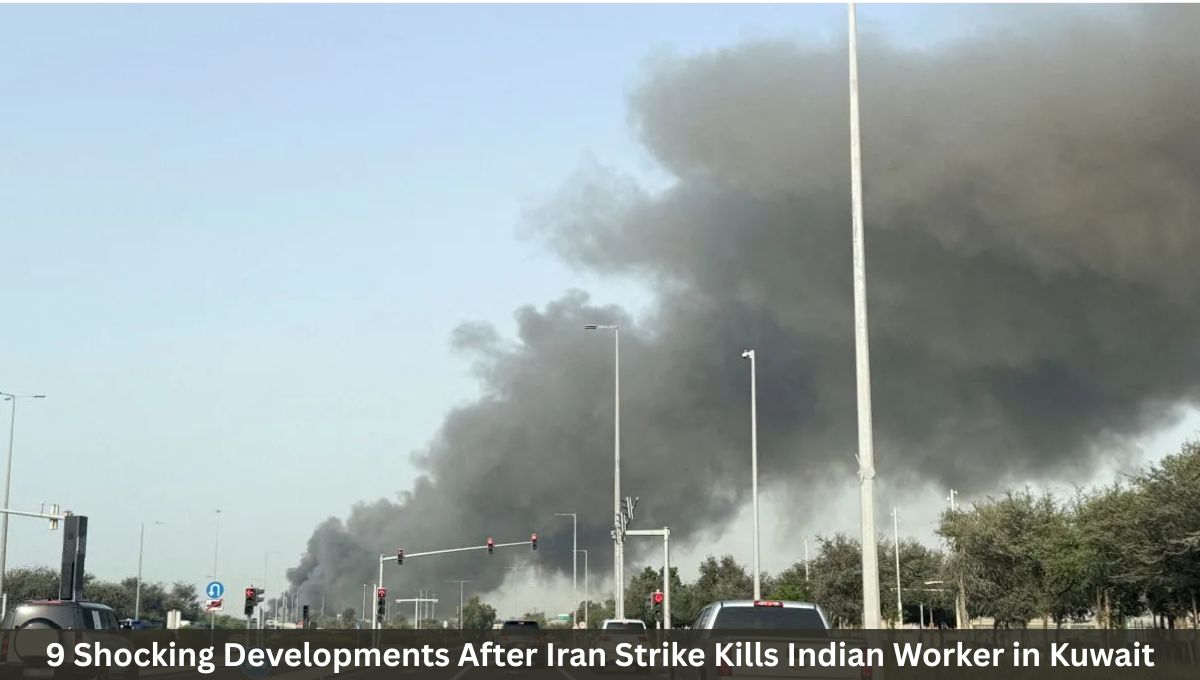
9 Shocking Developments After Iran Strike Kills Indian Worker in Kuwait, hits desalination plant. The escalating conflict in the Middle East has taken a tragic turn with an Iranian strike on critical infrastructure in Kuwait, resulting in the death of an Indian worker and significant damage to a power and water desalination facility.
The attack marks a dangerous widening of the war beyond its primary theaters, signaling that even countries not directly involved in frontline combat are increasingly vulnerable.
Kuwaiti authorities confirmed that a service building at a power and desalination plant was hit, describing the incident as part of what they termed “Iranian aggression” against the Gulf state.
The strike underscores a troubling reality:
essential civilian infrastructure is becoming a target in a rapidly intensifying regional conflict.
9 Shocking Developments After Iran Strike Kills Indian Worker in Kuwait
What Happened in Kuwait?
Details of the Attack
According to Kuwait’s Ministry of Electricity, Water and Renewable Energy, the strike targeted a service building within a major power and desalination facility.
The impact caused:
- The death of an Indian national working at the site
- Significant structural damage to the building
- Immediate deployment of emergency and technical teams
Authorities acted quickly to contain the situation, activating emergency protocols to ensure that electricity and water services remained operational.
Official Response
Kuwaiti officials emphasized that:
- The country’s power and water systems remain stable
- Technical teams are working around the clock
- Coordination with security agencies is ongoing
Residents were urged to rely only on official sources for updates and to avoid spreading misinformation during a highly sensitive period.
A Human Tragedy Amid Geopolitical Conflict
Indian Worker Among Rising Civilian Casualties
The death of the Indian worker highlights the human cost of a conflict that is increasingly affecting civilians across the region.
India has a large expatriate population in Gulf countries, with millions of workers employed in sectors such as:
- Construction
- Energy
- Infrastructure
- Services
This latest fatality adds to a growing toll of Indian nationals killed since the conflict began.
Wider Impact on Indian Nationals
Reports indicate that multiple Indian citizens have been killed or injured across the region, including in:
- The United Arab Emirates
- Saudi Arabia
- Oman
- Maritime routes in the Gulf
The Indian government has been actively coordinating with regional authorities to provide assistance and ensure the safety of its citizens.
Why Desalination Plants Matter
Critical Infrastructure in a Water-Scarce Region
Desalination plants are lifelines in Gulf countries, where natural freshwater resources are extremely limited.
These facilities:
- Convert seawater into drinking water
- Supply millions of residents
- Support industrial and economic activities
An attack on such infrastructure is not just a military action—it is a direct threat to civilian survival.
Potential Consequences of Disruption
If desalination facilities are severely damaged or shut down, the consequences could include:
- Water shortages
- Public health crises
- Economic disruption
- Social instability
The Kuwait attack has raised alarms about the vulnerability of these critical systems.
A Broader Pattern of Escalation
Kuwait Under Repeated Threat
Kuwait has faced multiple attacks since the conflict began.
According to defense officials:
- Missiles and drones have repeatedly entered Kuwaiti airspace
- Military installations have been targeted
- Personnel have been injured in recent incidents
This pattern suggests that the country is increasingly being drawn into the conflict.
Expansion Beyond Primary Battlefields
The war, initially centered on Iran, Israel, and US assets, has now spread across:
- Gulf states
- Maritime routes
- Energy infrastructure
This expansion significantly raises the stakes for the entire region.
Iran’s Strategy: Targeting Infrastructure
Retaliation Against US Allies
Iran has warned that it would target infrastructure in countries hosting US military assets.
This includes:
- Power plants
- Energy facilities
- Military bases
- Logistics hubs
The Kuwait strike appears to align with this strategy.
Economic Pressure as a Weapon
By targeting critical infrastructure, Iran can:
- Disrupt energy supplies
- Increase economic pressure on adversaries
- Influence global markets
This approach turns economic stability into a battlefield.
The Strait of Hormuz Factor
A Global Energy Chokepoint
The Strait of Hormuz remains one of the most strategically important waterways in the world, handling around 20% of global oil and gas shipments.
Iran’s actions in the region—including restrictions on shipping—have:
- Driven up oil prices
- Disrupted global supply chains
- Increased market volatility
Ripple Effects Worldwide
The impact is not limited to the Middle East.
Countries across the globe are feeling the effects through:
- Rising fuel costs
- Inflationary pressures
- Economic uncertainty
Military Developments Across the Region
Ongoing Strikes and Counterstrikes
The Kuwait incident is part of a broader pattern of military activity:
- Airstrikes on Iranian infrastructure
- Missile and drone attacks across Gulf states
- Targeting of industrial and energy facilities
These actions indicate that the conflict is far from de-escalating.
Risk of Ground Escalation
There are growing concerns about the possibility of ground operations, which could:
- Intensify the conflict
- Increase casualties
- Draw in additional countries
Global Response and Diplomatic Efforts
Calls for De-escalation
International leaders and organizations have called for:
- Immediate ceasefire
- Diplomatic negotiations
- Protection of civilian infrastructure
However, progress has been limited.
Role of Mediation
Countries like Pakistan have offered to mediate talks between the United States and Iran, though no concrete breakthroughs have been achieved so far.
The Vulnerability of Civilian Infrastructure
A Dangerous Precedent
The targeting of power and desalination plants sets a worrying precedent. Such attacks blur the line between military and civilian targets, increasing risks for ordinary people.
International Law Concerns
Under international humanitarian law, civilian infrastructure is supposed to be protected. Repeated attacks on such facilities raise serious legal and ethical questions.
Economic Fallout: A Global Crisis in the Making
Energy Market Turmoil
The conflict has already led to:
- Rising oil prices
- Supply disruptions
- Increased shipping costs
These factors contribute to global economic instability.
Impact on Developing Nations
Countries heavily dependent on energy imports are particularly vulnerable, facing:
- Higher fuel costs
- Inflation
- Slower economic growth
India’s Diplomatic and Humanitarian Response
Protecting Its Citizens
India has taken several steps to support its nationals in the region:
- Coordinating with embassies
- Assisting affected families
- Monitoring the security situation
Broader Implications
The safety of Indian workers abroad has become a key concern, highlighting the interconnected nature of global labor markets.
What This Means for the Future
Rising Risk of Regional War
The Kuwait attack signals that the conflict is expanding, increasing the likelihood of:
- A full-scale regional war
- Greater civilian casualties
- Long-term instability
Urgent Need for Diplomacy
Without meaningful diplomatic intervention, the situation could deteriorate further, with far-reaching consequences.
Conclusion: A Warning Signal to the World
The Iranian strike on a Kuwait desalination plant is more than an isolated incident—it is a stark warning about the direction in which the conflict is heading.
The death of an Indian worker underscores the human cost of geopolitical rivalries, while the damage to critical infrastructure highlights the vulnerability of essential systems.
As the war continues to escalate, the need for restraint, dialogue, and international cooperation has never been more urgent.
The world now faces a critical moment:
Will diplomacy prevail, or will the conflict continue to spiral out of control?
Also Read: 10 Shocking Developments as Iran Strikes Near Israel Nuclear Site, over 100 Injured
Also Read: Iranian attack damages Kuwait power and desalination plant, kills worker