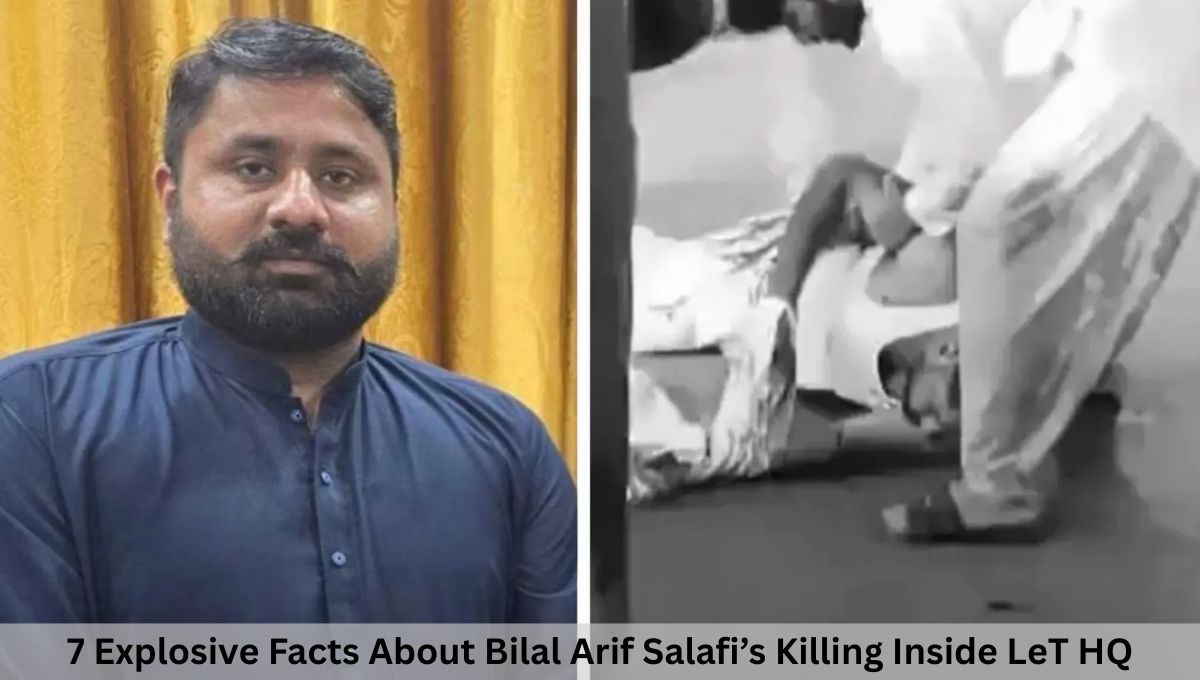
7 Explosive Facts About Bilal Arif Salafi’s Killing Inside LeT HQ after Eid prayers in Pakistan. A dramatic and deeply unsettling incident has emerged from Pakistan, where Bilal Arif Salafi, a senior commander of the militant organization Lashkar-e-Taiba (LeT), was killed in a brazen attack inside the group’s heavily guarded headquarters in Muridke.
Thank you for reading this post, don't forget to subscribe!The assassination, which took place shortly after Eid-ul-Fitr prayers, has sent shockwaves across security and intelligence circles globally.
The attack not only highlights vulnerabilities within militant infrastructures but also raises serious questions about internal dynamics, external pressures, and the broader security landscape in South Asia.
This article breaks down everything known so far—from who Bilal Arif Salafi was to the possible motives behind the attack and its wider implications.
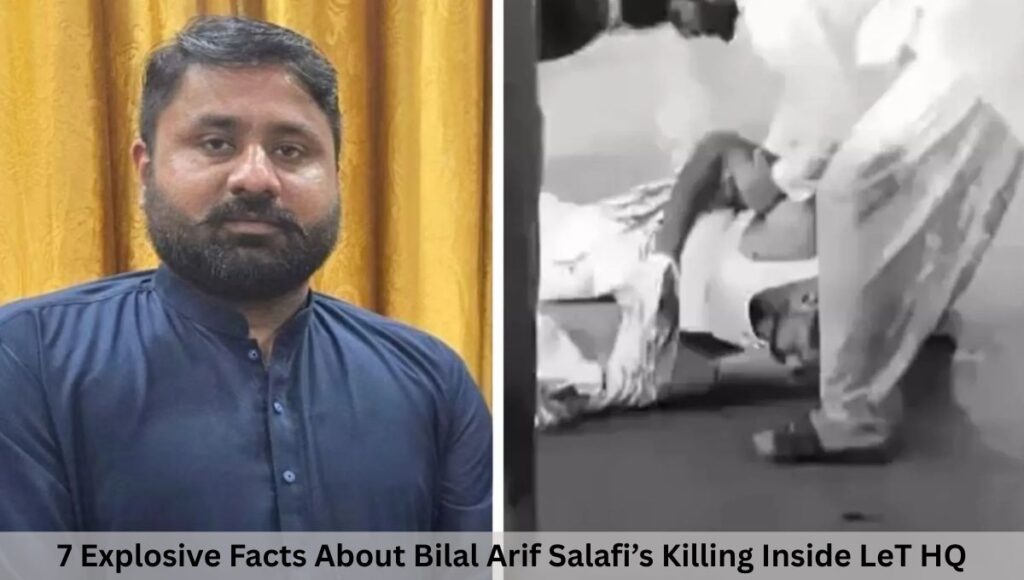
7 Explosive Facts About Bilal Arif Salafi’s Killing Inside LeT HQ
Who Was Bilal Arif Salafi?
Bilal Arif Salafi was widely regarded as a significant figure within Lashkar-e-Taiba’s operational structure.
While not as publicly known as top leadership figures, his role within the organization was strategically important.
Key Roles and Responsibilities
- Recruitment Operations:
Salafi was reportedly responsible for identifying and recruiting young individuals into the organization. His work focused on expanding the group’s base, particularly among impressionable youth. - Ideological Training:
He played a major role in indoctrination efforts, providing ideological guidance and shaping the beliefs of new recruits. - Operational Support:
His presence at the Markaz Taiba complex indicated involvement in broader operational or logistical activities within the group.
Why He Mattered
Recruitment and ideological conditioning are central to the sustainability of militant organizations.
Individuals like Salafi act as force multipliers, ensuring a steady inflow of new members. His elimination could therefore impact the group’s long-term operational capacity.
What Happened at Muridke Headquarters?
The attack occurred at the Markaz Taiba complex in Muridke, near Lahore—a site long associated with Lashkar-e-Taiba’s activities.
Timeline of the Attack
- The incident took place shortly after Eid-ul-Fitr prayers.
- The area was crowded with attendees, including senior operatives.
- Armed attackers reportedly entered the premises.
- Salafi was targeted in a swift and coordinated assault.
- The attackers escaped immediately after the attack.
Nature of the Assault
Reports suggest the attackers:
- Opened fire at close range
- Stabbed the victim multiple times to ensure fatality
This combination indicates a deliberate and targeted killing, rather than a spontaneous act of violence.
A Shocking Security Breach
Perhaps the most alarming aspect of the incident is where it occurred.
High-Security Location
The Markaz Taiba complex is considered:
- A core operational hub
- A controlled and monitored facility
- A location typically protected by internal security layers
Yet, attackers were able to:
- Gain access
- Execute a high-profile target
- Escape without immediate interception
What This Suggests
This raises several critical possibilities:
- Internal security lapses
- Insider involvement
- Highly sophisticated planning
- Possible intelligence penetration
For a facility of this nature, such a breach is highly unusual and deeply concerning.
Conflicting Reports: Who Killed Him?
As of now, there is no official confirmation regarding the identity of the attackers or the motive behind the killing. However, multiple theories have emerged.
1. Internal Rivalry
Some analysts believe the killing could be the result of:
- Power struggles within the organization
- Disputes over influence or resources
- Factional divisions
This theory is supported by the targeted nature of the attack and the breach within a controlled environment.
2. Family Dispute Angle
Certain reports suggest:
- The involvement of family members
- A personal dispute escalating into violence
- Arrests of individuals linked to the victim
However, this remains unverified and could be part of conflicting narratives.
3. External Targeted Operation
Another widely discussed possibility is:
- A covert operation by external intelligence agencies
- Part of a broader pattern of eliminating militant figures
- Strategic targeting of mid-level commanders
While speculative, similar incidents in recent months lend some weight to this theory.
Pattern of Targeted Killings in Pakistan
The killing of Bilal Arif Salafi is not an isolated incident. Over the past few months, there has been a noticeable rise in attacks on individuals linked to militant organizations.
Emerging Trends
- Multiple high-profile figures have been targeted
- Attacks often carried out by “unknown gunmen”
- Incidents occurring in urban as well as secure zones
Possible Explanations
- Internal fragmentation within militant networks
- Increased surveillance and pressure from security agencies
- Covert operations by foreign actors
This pattern suggests a shift in the operational environment, where even established networks are facing internal and external threats.
Viral Videos and Public Reaction
Following the attack, several videos surfaced on social media claiming to show the aftermath.
What the Videos Show
- The injured commander lying on the ground
- People gathering around in panic
- Attempts to assist or move the victim
Verification Status
- The authenticity of these videos remains unconfirmed
- No official validation from authorities
Impact of Viral Content
Such footage:
- Amplifies public attention
- Fuels speculation
- Shapes narratives before official confirmation
Why the Timing Matters: Eid Gathering Attack
The attack’s timing adds another layer of significance.
Eid-ul-Fitr Context
Eid is:
- A major religious festival
- A time of large public gatherings
- Typically associated with heightened security
Implications
- The attackers exploited a moment of relative openness
- Increased crowd density may have aided escape
- Symbolic impact—targeting during a religious event
This raises broader concerns about security preparedness during high-profile gatherings.
Strategic Significance of Muridke
Muridke has long been associated with the operational and ideological infrastructure of Lashkar-e-Taiba.
Why Muridke Matters
- Known hub for training and indoctrination
- Historical base for leadership activities
- Symbolic importance within the organization
An attack here is not just tactical—it is symbolically powerful, signaling vulnerability at the core.
Global Context: Terrorism Trends in Pakistan
The incident also reflects broader security challenges in Pakistan.
Rising Concerns
According to recent assessments:
- Pakistan has seen increasing militant activity
- Certain regions account for a majority of attacks
- Groups like Tehrik-e-Taliban Pakistan remain highly active
Key Observations
- Internal security challenges persist
- Militant networks are evolving
- Violence is becoming more unpredictable
What Happens Next?
Authorities in Pakistan have launched an investigation, but key questions remain unanswered.
Key Areas of Focus
- Identifying the attackers
- Determining the motive
- Assessing security lapses
- Evaluating internal vulnerabilities
Possible Outcomes
- Increased security within militant networks
- Heightened alert across similar facilities
- Further targeted attacks or retaliation
Global Implications
While this incident is localized, its implications extend far beyond Pakistan.
Why It Matters Globally
- Affects regional stability in South Asia
- Influences counterterrorism strategies
- Highlights evolving threat dynamics
For International Observers
- Signals shifting power structures within militant groups
- Raises questions about intelligence penetration
- Indicates potential escalation or fragmentation
Conclusion: A Turning Point or Isolated Incident?
The killing of Bilal Arif Salafi inside a high-security compound is more than just another violent episode—it may represent a deeper shift within militant ecosystems.
Whether driven by internal rivalries, personal disputes, or external operations, the incident underscores one critical reality:
no space is entirely secure in an increasingly complex security landscape.
As investigations unfold, the world will be watching closely—not just for answers, but for what this event signals about the future of militancy, security, and geopolitical stability in the region.
Also Read: 9 Explosive Claims: Pakistani Man Says Iran Forced Him into Trump Assassination Plot
Also Read: LeT Commander Bilal Arif Salafi Shot, Stabbed By Unidentified Gunmen in Pakistan’s Muridke: Reports
Related Posts:
- 7 Powerful Facts About Ayatollah Ali Khamenei’s…
- 5 Major Takeaways from the US Supreme Court's…

- 7 Heartbreaking Facts About Venezuela's Earthquake Disaster

- 9 Explosive Claims as Trump Says US Winning Iran War

- In 8 Moves, EU Targets China-Linked Refineries and…

- 3 Explosive Conditions Iran Sets to End War with US…