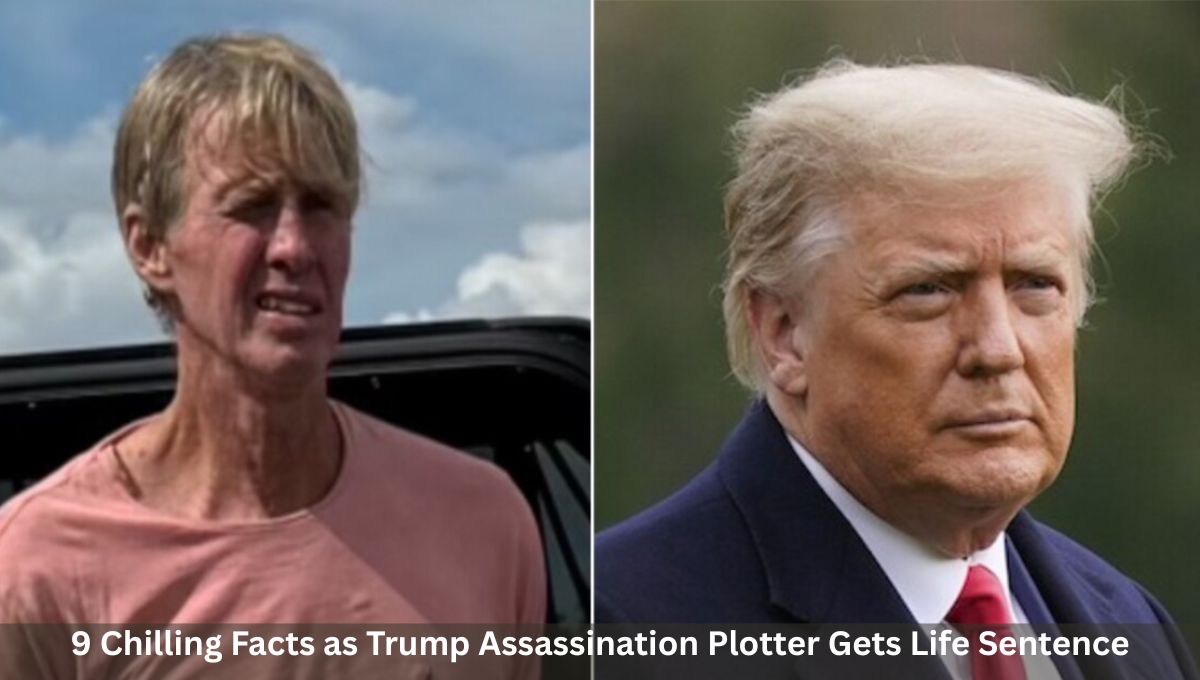
9 Chilling Facts as Trump Assassination Plotter Gets Life Sentence in a landmark US case.The attempted assassination of a sitting or leading presidential candidate is among the gravest crimes in any democracy. In the United States, such acts carry not only severe legal consequences but deep symbolic weight, striking at the very foundation of democratic governance.
That reality was underscored on February 4, 2026, when a federal judge sentenced Ryan Routh, the man convicted of attempting to assassinate Donald Trump, to life in prison without the possibility of parole. The sentence closes a harrowing chapter in one of the most disturbing episodes of political violence in modern US history.
The plot unfolded on a Florida golf course in September 2024, just weeks before the US presidential election that ultimately returned Trump to the White House.
Prosecutors described the crime as a calculated, premeditated attempt to “upend American democracy.” The court agreed.
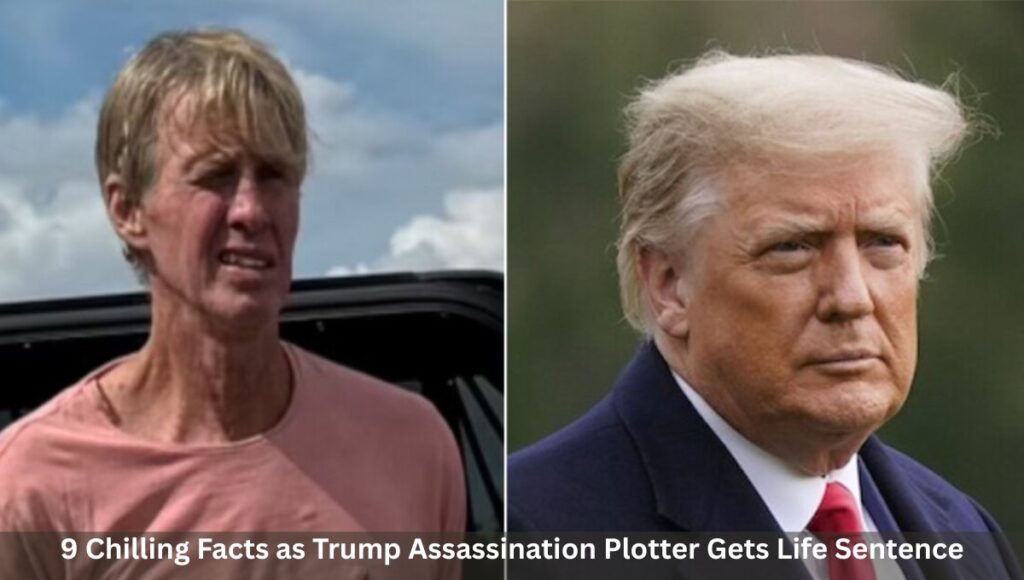
9 Chilling Facts as Trump Assassination Plotter Gets Life Sentence
1. The Florida Golf Course Attack: What Happened
A Sniper’s Nest in Plain Sight
On September 15, 2024, Donald Trump was playing golf at Trump International Golf Club in West Palm Beach, Florida. Unbeknownst to him, a heavily armed man lay hidden in thick bushes near the course.
That man was Ryan Routh, then 59 years old.
According to trial testimony, Routh had positioned himself near the sixth hole, concealed by foliage and fencing.
He carried a semi-automatic rifle equipped with a scope and extended magazine, along with additional equipment that prosecutors said was consistent with a planned sniper-style attack.
Routh waited for hours—nearly 10 hours, according to investigators—monitoring the course and Trump’s expected movements.
2. How the Assassination Attempt Was Stopped
A Secret Service Agent Spots the Rifle
The attack was thwarted by a US Secret Service agent assigned to sweep the course ahead of the former president.
As the agent scanned the area, he noticed something alarming:
the barrel of a rifle protruding from the bushes.
Moments later, the agent spotted part of Routh’s face.
Believing his life and Trump’s life were in immediate danger, the agent fired several shots. Routh dropped his weapon and fled without firing a single round.
Trump had not yet come into Routh’s line of sight.
3. The Arrest and Evidence Trail
Months of Planning, Weeks of Surveillance
Routh was arrested shortly after fleeing the scene, thanks in part to a civilian witness who recorded his vehicle’s license plate.
Federal investigators later uncovered extensive evidence showing the attack was not impulsive.
Prosecutors said Routh:
- Spent weeks plotting the assassination
- Arrived in South Florida about one month before the attack
- Lived at a truck stop while tracking Trump’s movements
- Used multiple mobile phones and false names
- Compiled lists of places Trump was likely to appear
Officers also recovered:
- The abandoned rifle
- Body armour-like metal plates
- A video camera aimed at the golf course
- Notes referring to the incident as “an assassination attempt”
4. The Charges That Led to a Life Sentence
Five Serious Federal Convictions
In September 2025, a federal jury found Routh guilty on all counts, including:
- Attempted assassination of a major presidential candidate
- Using a firearm in furtherance of a violent crime
- Assaulting a federal officer
- Possessing a firearm as a convicted felon
- Possession of a firearm with a defaced serial number
US District Judge Aileen Cannon, who presided over the case, later wrote that Routh’s conduct “undeniably warrants a life sentence.”
5. Chaos in the Courtroom
Self-Representation and Erratic Behaviour
Routh’s trial was highly unusual.
He chose to represent himself for most of the proceedings, despite having no formal legal training.
During the trial, he frequently delivered rambling statements touching on unrelated topics such as:
- US history
- Foreign conflicts
- Adolf Hitler
- Russian President Vladimir Putin
- Challenging Trump to a golf match
Judge Cannon repeatedly interrupted him and, on several occasions, removed the jury while restoring order.
After the jury returned its guilty verdict, Routh attempted to stab himself in the neck with a pen. US marshals intervened immediately.
6. Sentencing Day: ‘Deliberate and Evil’
Judge Cannon’s Blistering Rebuke
At sentencing on February 4, 2026, Judge Cannon delivered a scathing assessment of Routh’s actions.
“Your plot to kill was deliberate and evil,” she said. “You are not a peaceful man. You are not a good man.”
Cannon noted Routh’s extensive criminal history—at least 36 prior convictions, including firearms-related offenses—and said his conduct showed a lifelong disregard for the law.
She sentenced him to:
- Life imprisonment without parole
- An additional seven years for the firearm charge
Other sentences will run concurrently.
7. Prosecutors: ‘An Assault on Democracy’
Why the Government Sought Life in Prison
Lead prosecutor John Shipley told the court that Routh’s crime went far beyond an attack on one man.
“American democracy does not work when individuals take it into their own hands to eliminate candidates,” Shipley said.
Prosecutors argued that:
- Routh showed no remorse
- He was prepared to kill anyone who stood in his way
- His actions were aimed at destabilizing democratic institutions
In a statement after sentencing, US Attorney General Pam Bondi said Routh would “never walk free again.”
“Ryan Routh’s heinous attempted assassination of President Trump was not only an attack on our President—it was a direct assault against our entire democratic system,” she said.
8. The Defense Argument—and the Court’s Rejection
‘He Chose Not to Pull the Trigger’
Routh’s defense attorney argued for a lesser sentence, saying:
- Routh never fired his weapon
- He “chose not to pull the trigger”
- A 20-to-27-year sentence would be sufficient
Judge Cannon rejected that reasoning outright.
“The fact that the attempt failed does not diminish the intent,” she said, emphasizing that only chance and a vigilant agent prevented a fatal outcome.
9. A Nation Already on Edge
The Second Attempt on Trump’s Life in 2024
The Florida incident was not an isolated case.
Just two months earlier, in July 2024, a gunman opened fire at a Trump campaign rally in Butler, Pennsylvania, killing one person and wounding several others. Trump was grazed in the ear.
The two assassination attempts intensified fears about political violence in the United States during an already polarised election year.
Despite the danger, Trump continued campaigning and ultimately won the November 2024 presidential election, returning to the White House after four years out of office.
Political Violence and the Global Implications
Why This Case Resonates Beyond the US
While the trial and sentencing occurred in an American courtroom, its implications are global.
Political violence targeting democratic leaders:
- Undermines electoral legitimacy
- Encourages copycat attacks
- Destabilizes international confidence in democratic systems
For global audiences, the case highlights how even long-established democracies face growing threats from radicalized individuals willing to resort to violence.
Security Lessons from the Florida Case
How Close It Came
Prosecutors emphasized how narrowly catastrophe was avoided.
Evidence showed Routh was positioned just 126 feet from Trump’s expected location. Had the Secret Service agent not acted, the outcome could have been dramatically different.
The case has since prompted renewed scrutiny of:
- Protective intelligence
- Perimeter security at public venues
- Early threat detection
Conclusion: A Sentence That Sends a Message
The life sentence handed down to Ryan Routh marks one of the most severe punishments ever imposed for an attempted assassination of a US political leader.
For the court, the message was unequivocal: political violence will be met with the harshest possible response.
For the public, the case serves as a sobering reminder of how fragile democratic norms can become when extremism, grievance, and violence intersect.
And for the world watching from afar, it stands as a stark illustration that safeguarding democracy requires constant vigilance—not only at the ballot box, but in the spaces where leaders live, campaign, and govern.
Also Read: Ryan Routh Found Guilty of Attempted Assassination of Donald Trump, Tries to Stab Himself in Court
Also Read: Ryan Routh: Trump’s assassination’s plotter sentenced to life in prison — here’s a breakdown