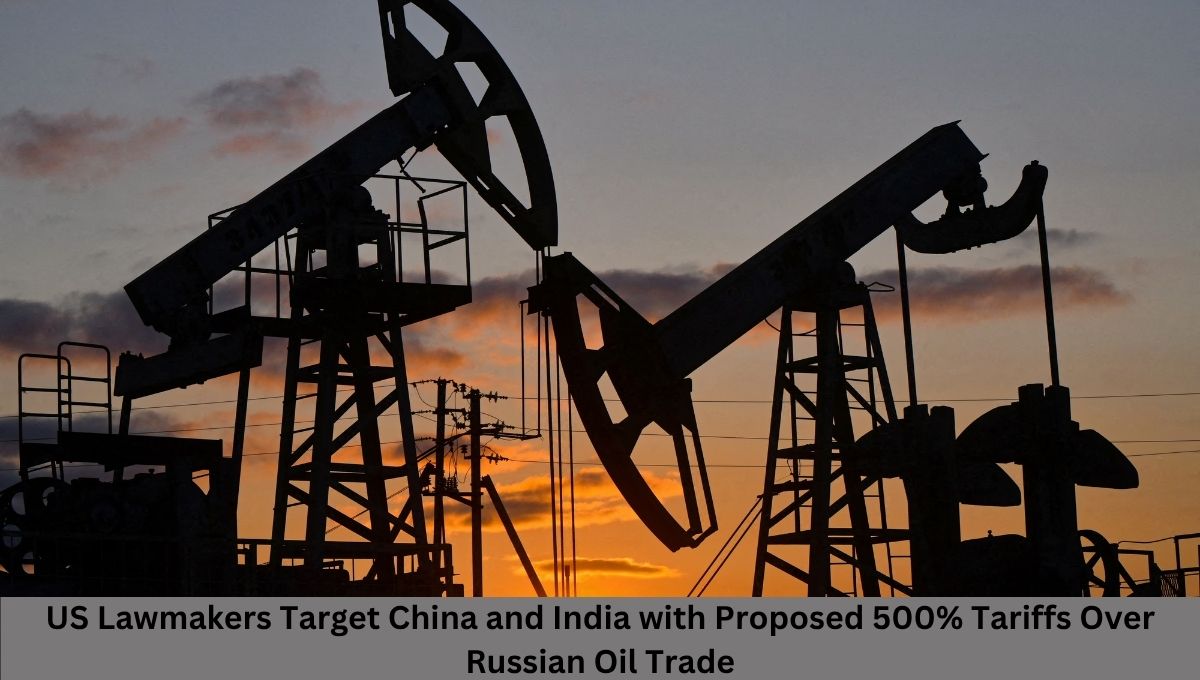
In a significant geopolitical development, US Lawmakers Target China and India with Proposed 500% Tariffs Over Russian Oil Trade. US lawmakers are intensifying pressure on China and India over their continued purchases of Russian oil.
Republican Senator Lindsey Graham and Democratic Senator Richard Blumenthal are spearheading a bipartisan push for sanctions aimed at countries that, according to them, are indirectly funding Russia’s ongoing war in Ukraine.
Their proposal includes a staggering 500% tariff on imports from nations trading oil and related products with Russia a dramatic escalation in the global economic effort to isolate Moscow.
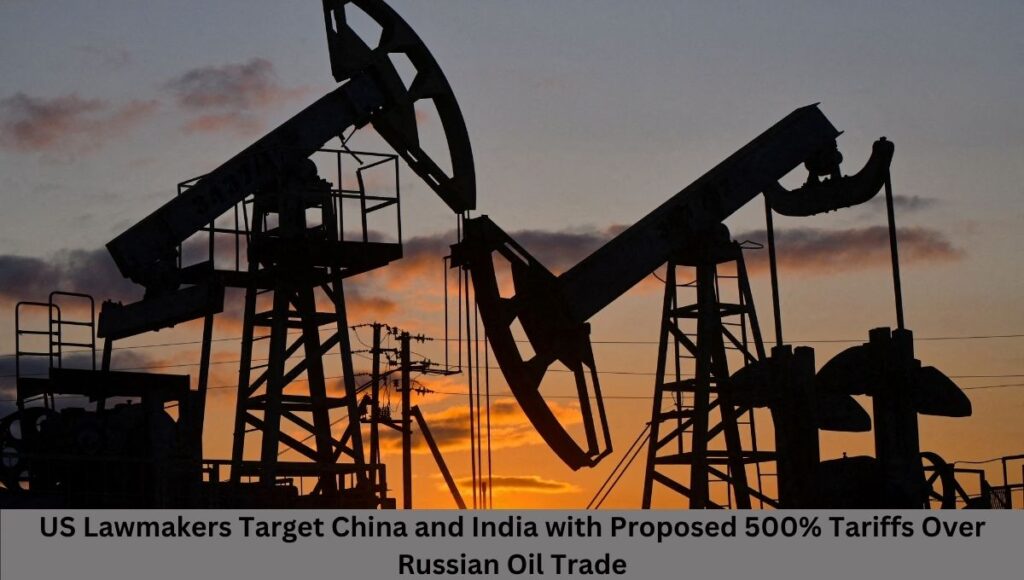
US Lawmakers Target China and India with Proposed 500% Tariffs Over Russian Oil Trade
Graham: “Push China to Help End the War”
Speaking on the platform X, Senator Graham accused China of aiding Russia’s war machine by purchasing cheap crude oil from Moscow. “If you want this war to end, push China to help end it,” he stated.
He emphasized that China’s actions are enabling Russia to continue its brutal campaign against Ukraine, calling on the global community to take a firm stance.
The senators urged that harsher sanctions and broader international accountability are needed to halt Russian aggression, citing credible evidence that Russian President Vladimir Putin is preparing for a new offensive in Ukraine this summer or early fall.
Bipartisan Unity: “Bone-Crushing” Sanctions Bill in the Works
In Paris, after visiting Ukraine and holding discussions with French President Emmanuel Macron, both Graham and Blumenthal signaled strong European alignment with their strategy.
They are pushing a bipartisan sanctions bill in the US Senate that would introduce what Blumenthal termed “bone-crushing” economic penalties against Russia and its trading partners.
Graham described it as “the most draconian bill I’ve ever seen in my life in the Senate,” targeting countries like India and China that collectively account for around 70% of Russia’s oil exports.
Why Target China and India?
The rationale behind the 500% tariff proposal lies in the sheer volume of Russian crude flowing to China and India.
Both nations have become primary outlets for Russian oil since Western sanctions first took hold, allowing Moscow to maintain economic stability despite isolation from Western markets.
For China, the oil supply bolsters its massive industrial demand, while India benefits from discounted rates that support domestic energy needs and economic growth.
US lawmakers now aim to make this trade arrangement economically unsustainable by imposing harsh tariffs on any goods imported from these countries to the United States.
Tariffs as a Strategic Tool Amid Tense Trade Talks
The proposed sanctions arrive just ahead of US-India trade talks scheduled for June 5-6, 2025. Observers note the timing is not accidental the tariff threat is seen as a preemptive move to gain leverage in negotiations and force India to align more closely with US policy on Russia.
Although former President Donald Trump has not endorsed the bill, it is reportedly being developed in coordination with his advisers. Graham acknowledged Trump’s diplomatic instincts but warned, “By trying to engage Putin by being friendly and enticing it’s become painfully clear he’s not interested in ending this war.”
India’s Dilemma: Energy Security vs. Trade Stability
India faces a critical challenge. Roughly 40% of its oil imports come from Russia, making energy from Moscow vital to keeping inflation in check and industries running.
A 500% tariff on Indian exports to the US could severely disrupt trade, harming sectors like petrochemicals, manufacturing, and transport. India may look to diversify its energy sources or negotiate exemptions.
Historically, India and Russia have found ways to work around sanctions such as selling oil under the $60-per-barrel price cap indicating that New Delhi may again adopt a flexible, multi-channel strategy to manage the fallout.
China’s Calculated Response Likely to Defy US Pressure
China, with its deeper trade volume and strategic partnership with Russia, is unlikely to buckle under US demands easily. While the tariffs could hit Chinese exports hard particularly in electronics, textiles, and machinery China’s large domestic market and expanding trade with other countries offer it a cushion.
Beijing is expected to adopt a firm diplomatic stance while reinforcing its energy ties with Russia and other alternative suppliers. With China and Russia both seeking to reshape the global order, the proposed US sanctions could further entrench geopolitical divisions.
Global Oil Markets Brace for Disruption
Should the US follow through with these tariffs, global oil markets could face turbulence. Russia currently supplies over 10% of the world’s crude oil.
Any attempt to cut off this supply line or limit its access to markets could cause prices to spike globally, impacting even US consumers.
Countries dependent on discounted Russian oil would be forced to seek costlier alternatives, creating ripple effects in global inflation, trade deficits, and energy availability.
Stock Market Sentiment: Volatility on the Horizon
Investors are watching developments closely. A potential escalation in US-China-India trade tensions could lead to short-term stock market corrections, especially in energy-sensitive sectors.
While markets often price in geopolitical risks over time, the scale of the proposed tariffs five times the base rate could create lasting uncertainty.
Retail and institutional investors are being advised to diversify portfolios and monitor energy prices, currency movements, and upcoming trade negotiations. Sectors less exposed to international supply chains, such as domestic tech or consumer services, may offer a hedge.
A Defining Moment in Global Trade Politics
This latest development is more than a sanctions bill it’s a pivotal moment in the reshaping of global trade. It forces countries like India and China to choose between economic pragmatism and geopolitical alignment. It also reflects how energy security, military conflict, and international diplomacy are increasingly intertwined.
For India and China, navigating this landscape will require deft diplomacy, alternative energy strategies, and regional alliances. For the US, the challenge lies in maintaining bipartisan support and international backing for sanctions strong enough to alter Putin’s calculations without destabilizing allies or markets.
Conclusion: A Precarious Balancing Act
As the US pushes for tougher sanctions on China and India over their Russian oil ties, the global community is entering uncharted economic waters. The proposed 500% tariffs represent an unprecedented approach to geopolitical leverage through trade policy.
Whether this pressure will curb Russia’s war capabilities or deepen global divides remains to be seen. But one thing is clear the outcome will have lasting implications for international diplomacy, trade dynamics, and global economic stability.
Also Read: China Slams U.S. Over Tariff Truce Violations, Vows “Forceful Measures”
Also Read: “We’ll Cross The Bridge When We Get There”: S Jaishankar On 500% Tariff Threat Over Russian Oil