

A New Tariff Shockwave strikes the markets asTrump Doubles Metal Tariffs to 50% India Faces Trade Setback as UK Secures Exemption. In a move that’s shaking global markets, US President Donald Trump has signed an executive order to double tariffs on imported steel and aluminium from 25% to 50%, effective June 4, 2025.
The hike, which Trump claims will “further secure the steel industry in the US,” has sparked immediate reactions across global trading partners. While the United Kingdom has been exempted from this sharp increase thanks to a bilateral trade agreement, India is among the nations expected to face direct consequences.
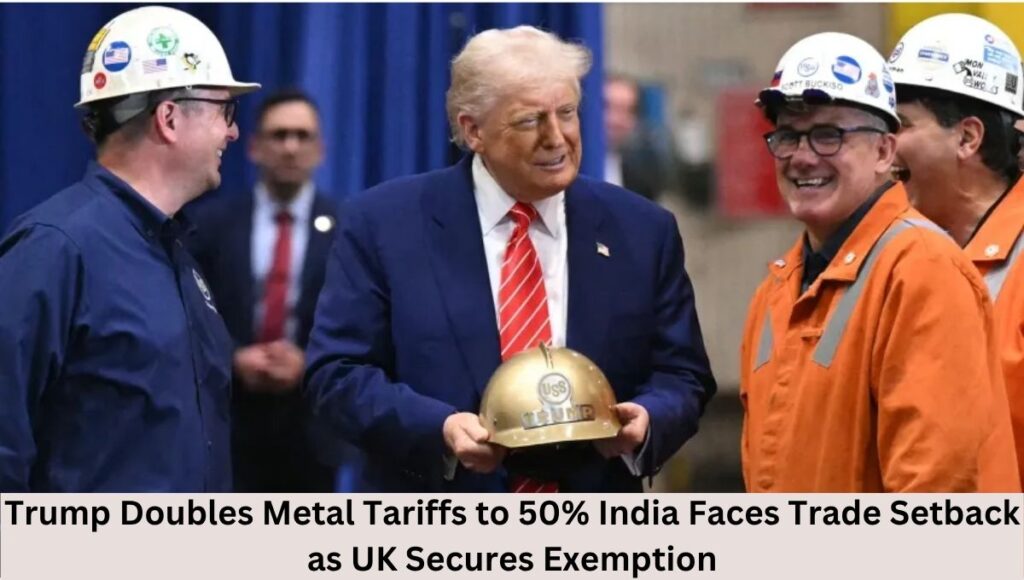
Trump Doubles Metal Tariffs to 50% India Faces Trade Setback as UK Secures Exemption
Trump’s Justification: “Protecting American Steel”
Speaking at a US Steel plant in Pennsylvania, President Trump said the previous 25% tariff wasn’t enough to deter low-priced metal imports that “undercut American industry.” According to him, at 50%, foreign producers “won’t be able to get over the fence.”
Trump framed the hike as a national security measure, stating that excessive imports posed a threat to domestic manufacturing capabilities.
In an official proclamation, the White House said the move aims to counter foreign countries dumping cheap steel and aluminium into the US market. The administration maintains that boosting tariffs will help reduce this threat and improve the competitiveness of US industries.
The UK’s Special Deal: A Diplomatic Win
While most trading partners were hit with the new tariff rates, the United Kingdom managed to retain the 25% rate after a swift agreement between UK Trade Minister Jonathan Reynolds and US Trade Representative Jamieson Greer.
The deal is part of a larger UK-US trade pact involving reciprocal tariff adjustments including reduced duties on UK steel and car exports to the US and lowered UK tariffs on American beef and ethanol.
UK Prime Minister Keir Starmer celebrated the development, saying the outcome was a testament to “strong and strategic” bilateral cooperation. “We’re pleased that UK steel will not be subject to these additional tariffs,” a spokesperson said.
India Left Out: Rising Concerns from Exporters
India, which exports approximately $5 billion worth of steel, aluminium, and related products to the US annually, was not granted an exemption.
The Engineering Export Promotion Council (EEPC) of India voiced concerns about the impact on engineering exports, warning that the tariff hike could render Indian goods less competitive in the US market.
Pankaj Chadha, Chairman of EEPC India, noted: “This may not be the right time for such unilateral tariffs, especially when BTA (bilateral trade agreement) talks are underway.”
He urged the Indian government to seek a waiver similar to that of the UK, pointing out that the tariff hike could seriously jeopardize engineering exports.
India’s Response: Acknowledging the Hit
India’s Union Minister for Commerce, HD Kumaraswamy, acknowledged the hike’s potential impact but downplayed the scale, saying: “Minor impact will be there… A minor problem is there because we are not exporting in a big way.”
However, he warned that consignments already en route to the US, arriving after June 4, could face the new 50% tariff, potentially leading to unexpected financial losses and shipment disruptions.
Global Reactions: EU and OECD Sound the Alarm
The European Union condemned the tariff hike, stating that it “undermines ongoing efforts” to reach negotiated trade solutions. The EU Commission warned of potential retaliation, which could further escalate trade tensions.
The Organisation for Economic Cooperation and Development (OECD) also flagged the tariff move as a concern. Chief economist Alvaro Pereira said that trade, consumption, and investment were already being disrupted by the US’s protectionist policies.
He added that the US economy would feel the brunt of the tariff wars in the long run.
Ripple Effects on US Consumers and Industries
The tariff hike is expected to affect a wide range of sectors in the US from automakers and construction firms to grocery chains and electronics manufacturers. Items like cars, canned goods, and refrigerators, which rely heavily on imported steel and aluminium, could become more expensive for US consumers.
According to recent AP reports, steel prices in the US have already increased by 16% since Trump took office in January 2025. This further burden on businesses and households comes as inflation concerns persist across American markets.
The Bigger Picture: Escalation or Strategy?
Since his return to the presidency, Trump has reignited a series of trade wars, targeting both adversaries and allies. In April 2025, he imposed 10% tariffs across most US trading partners, with even higher rates reserved for specific nations.
The 90-day pause on these elevated tariffs expires July 9, making the current period critical for trade negotiations.
The White House is pushing for quick trade deals. Letters sent to partner countries reportedly demand offers by Wednesday, or risk further tariff hikes. China, already slapped with a 145% tariff on selected imports, responded with 125% retaliatory tariffs, intensifying the US-China trade standoff.
What This Means for India Going Forward
With the Bilateral Trade Agreement (BTA) talks between India and the US still in progress, this development adds a layer of urgency.
India may push for a tariff waiver in future negotiations, especially if domestic exporters begin to feel significant pressure.
For now, Indian engineering exporters must prepare for higher costs and reduced competitiveness in the US market.
Businesses reliant on US-bound shipments should evaluate their logistics and consider exploring alternative markets until the situation stabilizes.
Conclusion: A Turning Point in Global Trade
Trump’s decision to double metal tariffs is more than just an economic maneuver it’s a strategic message to global partners. While it may provide short-term protection to US industries, the long-term consequences for trade relationships, global supply chains, and consumer prices are far-reaching.
As countries like India, the EU, and Mexico weigh their options, negotiation windows are shrinking. Whether these moves secure domestic industry or isolate the US in trade circles remains to be seen.
Also Read: US-China Trade War Escalates: Trump Slaps 245% Tariffs, Beijing Warns of Global Fallout
Also Read: Trump’s new move could hammer India’s factories, and wreck exports and jobs
Related Posts:
- Trump Doubles Down on Steel: 50% Tariffs and $14B…
- Trump's Tariff Hikes and Social Media Blasts Disrupt…

- 5 Key Takeaways from Trump–Carney Meet: Trade,…
- What’s Next for Donald Trump After Court Rules His…

- Trump Targets Sri Lanka, BRICS with Sweeping Tariffs
- Can the EU and NATO Impose Tariffs on India and…
