Amid trade tensions, Trump’s Tariff Hikes and Social Media Blasts Disrupt Global Trade Talks. In a week marked by economic turbulence and diplomatic unease, U.S. President Donald Trump has once again upended global trade talks this time by combining sharp tariff hikes with a stream of provocative late-night social media posts.
The Trump administration’s decision to double tariffs on imported steel and aluminum, along with escalating rhetoric aimed at Chinese President Xi Jinping, is sending shockwaves through ongoing negotiations with both China and the European Union.
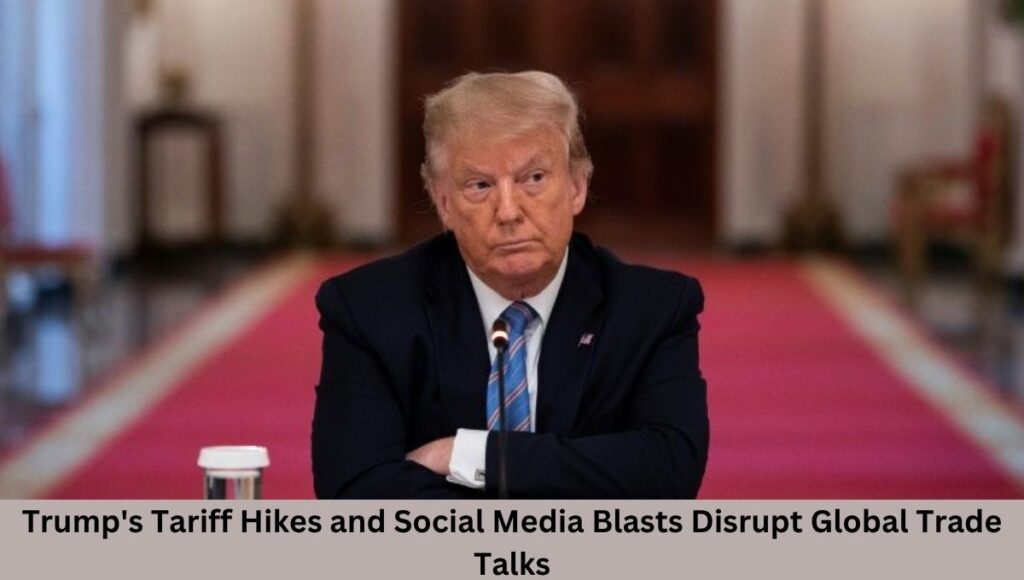
Trump’s Tariff Hikes and Social Media Blasts Disrupt Global Trade Talks
Trump Calls Xi “Extremely Hard to Make a Deal With”
At 2:17 a.m. ET on Wednesday, Trump took to his Truth Social platform to express frustration over stalled negotiations with China: “I like President XI of China, always have, and always will, but he is VERY TOUGH, AND EXTREMELY HARD TO MAKE A DEAL WITH!!!”
This message came just as both nations were attempting to organize a long-awaited phone call between Trump and Xi. The direct and confrontational tone stunned Chinese officials and cast serious doubt over the future of a tariff truce agreement reached in Geneva last month.
A Fragile Truce Unravels
The U.S.-China trade deal struck in May had promised relief: the U.S. agreed to reduce tariffs on Chinese goods from 145% to 30%, while China slashed its retaliatory tariffs from 125% to 10%. But the fragile truce is rapidly unraveling.
Beijing now accuses Washington of breaching the terms of the agreement by:
- Halting sales of semiconductor design software to Chinese companies.
- Blocking Chinese-made chips from Huawei.
- Revoking visas for Chinese students.
In response, China’s Ministry of Commerce warned it would “take steps to defend its interests,” further escalating the US-China trade war.
Trump Doubles Tariffs on Steel and Aluminum
Hours after his early morning post, Trump’s administration announced it would double tariffs on imported steel and aluminum from 25% to 50%, affecting countries across the board except the United Kingdom, which received a last-minute exemption.
This sudden move has angered U.S. allies and inflamed tensions in Europe. The European Union, which has been in delicate trade discussions with the U.S., is now scrambling to respond.
Europe Pushes Back, But Exemption for UK Raises Eyebrows
European Union leaders have condemned the tariff hike as “unjustified” and “damaging,” especially given the preferential treatment granted to post-Brexit Britain. French Trade Minister Laurent Saint-Martin urged restraint and diplomacy:
“We have to keep our cool and always show that the introduction of these tariffs is in no one’s interest.” EU Trade Commissioner Maroš Šefčovič met U.S. Trade Representative Jamieson Greer in Paris in what was described as a “constructive” dialogue but no concrete resolutions emerged. With a July 8 deadline looming for additional tariffs, time is running out.
OECD Cuts Global Growth Forecast
The OECD (Organisation for Economic Co-operation and Development) quickly responded to Trump’s tariff policies by slashing its global economic growth forecast.
Chief Economist Alvaro Pereira said: “The U.S. economy will suffer the most, with investment and consumer confidence at risk due to policy unpredictability.”
Global financial markets have begun to react negatively, with concerns that these actions could trigger a worldwide slowdown.
Allies Demand Exemptions from Trump Tariffs
Major U.S. trading partners are pushing back.
- Canada, the largest steel exporter to the U.S., called the move “illegal and unjustified.”
- Mexico noted the imbalance in steel trade and is seeking exemption.
Mexican Economy Minister Marcelo Ebrard stated: “It makes no sense to put a tariff on a product in which you have a surplus.”
The UK, benefiting from its exemption, has cautiously welcomed the status quo under the new trade pact, avoiding the 50% hike at least for now.
Trump’s Tariffs Face Legal and Political Resistance
There’s also growing legal scrutiny. A U.S. trade court ruled that Trump exceeded his authority under emergency powers when imposing many of the tariffs. However, a federal appeals court has temporarily reinstated the measures while the government appeals.
Commerce Secretary Howard Lutnick has hinted that new tariffs on airplane parts could be next, possibly as early as late June. He defended the moves as necessary to protect U.S. industries.
Boeing at Risk as China Eyes Airbus
Trump’s trade aggression may be jeopardizing key U.S. sectors particularly aviation.
China is reportedly eyeing a multibillion-dollar aircraft deal with Airbus, the European rival to Boeing. If finalized, this would be a strategic win for Europe and a massive loss for American manufacturing.
With European leaders planning a high-profile visit to Beijing next month, the deal could be China’s way of rewarding cooperation and punishing Trump’s confrontational policies.
Why Xi Avoids Trump’s Calls
Despite Trump’s belief in personal diplomacy, Xi Jinping remains elusive. The two leaders have not spoken since January 17, just days before Trump’s second inauguration.
According to sources, Chinese officials are hesitant to engage in a call that could be unpredictable or embarrassing. Unlike Trump’s impulsive style, China insists on heavily scripted, pre-negotiated interactions a stark contrast that makes direct talks difficult.
Trump’s unscripted Oval Office ambushes of other world leaders have reportedly raised red flags in Beijing, contributing to the silence.
Outlook: Summer of Uncertainty in Global Trade
With Trump’s aggressive stance on full display and diplomatic bridges under strain, the global trade landscape is entering a period of deep uncertainty.
Trump’s so-called “TACO” reputation the idea that he Talks Aggressively, Cuts Out may no longer hold. Both China and the EU are digging in, and the July 8 deadline for additional retaliatory tariffs could trigger further escalation.
For now, business leaders, investors, and workers around the world wait nervously, wondering how far the trade standoff will go and who will blink first.
Conclusion
President Trump’s mix of policy by tweet and tariff-heavy strategy has created new economic flashpoints in already delicate trade negotiations. While he seeks to assert American dominance in global trade, his tactics may ultimately isolate the U.S. and weaken its negotiating power. With rising tensions, stalled diplomacy, and markets on edge, the world is bracing for what could be a summer of trade warfare.
Also Read: Trump Doubles Metal Tariffs to 50% India Faces Trade Setback as UK Secures Exemption
Also Read: Trump signs order confirming parts of UK-US tariff deal
Related Posts:
- Can the EU and NATO Impose Tariffs on India and…

- 11 Explosive Revelations From Ted Cruz’s Leaked…
- 5 Powerful Highlights as Trump Lands Second Nobel…

- Trump’s 2025 Gaza Peace Plan Signing and Historic…

- Dramatic Moments Behind Trump’s Gaza Peace Push and…

- Trump Targets Sri Lanka, BRICS with Sweeping Tariffs