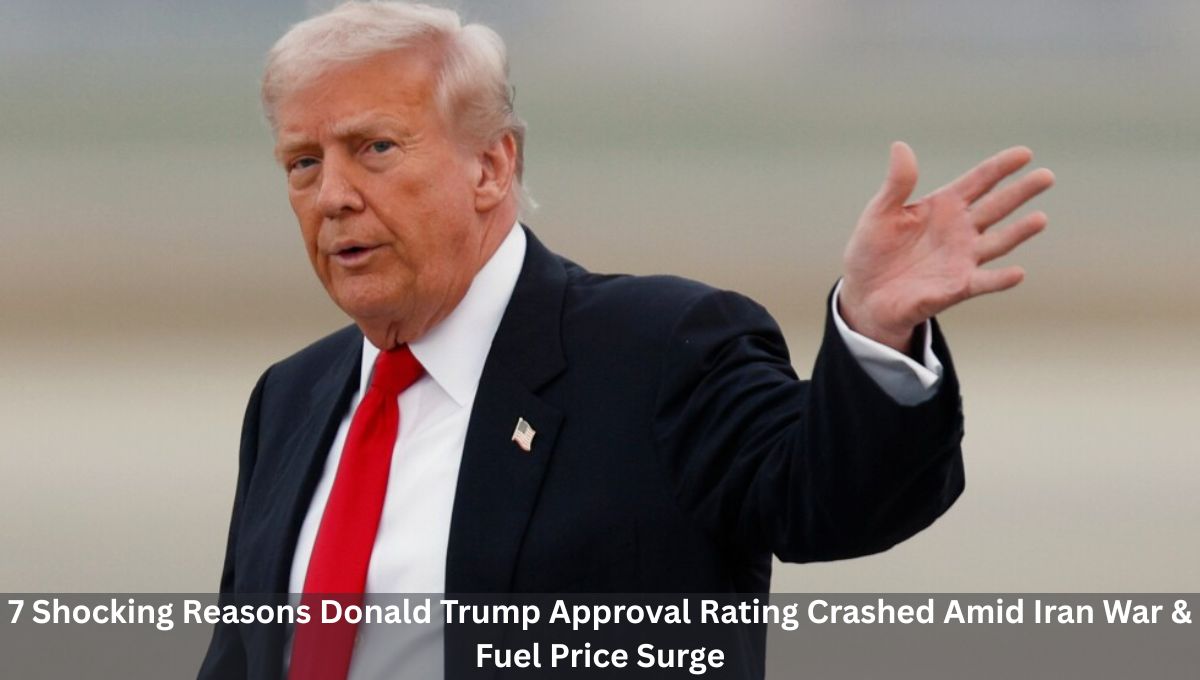
7 Shocking Reasons Donald Trump Approval Rating Crashed Amid Iran War & Fuel Price Surge, as public opposition intensifies. The approval rating of Donald Trump has fallen sharply, marking one of the most significant political downturns of his current term.
According to the latest polling data from Reuters and Ipsos, only 36% of Americans approve of his performance—a steep drop from 40% just a week earlier. This decline is not happening in isolation.
It reflects a convergence of geopolitical tensions, economic strain, and domestic dissatisfaction, particularly linked to the ongoing Iran conflict and rising fuel costs.
7 Shocking Reasons Donald Trump Approval Rating Crashed Amid Iran War & Fuel Price Surge
Trump Approval Rating Hits New Low
A Sharp Weekly Decline
The Reuters/Ipsos poll reveals a four-point drop in just one week, signaling a rapid shift in public sentiment.
This is particularly notable because:
- Trump’s approval had stabilized around 40% for months
- His early presidency saw a much stronger 47% approval
- The current figure approaches historic lows seen during past administrations
This downward trend suggests that recent developments—especially the Iran war—are having a tangible political impact.
Fuel Prices Surge: The Economic Trigger
Gas Prices Driving Public Anger
One of the biggest contributors to Trump’s falling approval is the surge in fuel prices.
Since the start of military operations against Iran, gasoline prices have risen significantly across the United States.
Key impacts include:
- Increased transportation and logistics costs
- Rising food and commodity prices
- Higher household expenses globally
For many Americans, fuel costs are a daily reminder of economic stress, making it a politically sensitive issue.
Cost of Living Crisis Deepens
The poll shows:
- Only 25% approve of Trump’s handling of the cost of living
- Just 29% approve of his economic management
These are the lowest economic approval ratings recorded during his presidency—worse than those of Joe Biden at comparable points.
This shift is particularly damaging because economic strength was central to Trump’s campaign messaging.
Iran War: A Defining Political Liability
Public Opposition to Military Action
The war in Iran is emerging as a major political liability:
- Only 35% approve of US strikes
- A significant 61% disapprove
This growing opposition reflects broader concerns about:
- Prolonged military engagement
- Economic fallout
- Global instability
Changing Perception Over Time
Initial reactions to the strikes were mixed, but as the conflict continues:
- Public support has declined steadily
- Opposition has grown more consolidated
Earlier polls showed uncertainty among voters, but recent surveys indicate firm disapproval.
National Security vs Public Confidence
Does the War Make America Safer?
The poll reveals a striking insight:
- 46% believe the war makes the US less safe
- Only 26% believe it increases safety
This perception challenges a key justification for the conflict—national security.
Deployment of Additional Troops
Reports suggest the US may send more troops to the Middle East, further fueling concerns about:
- Escalation
- Long-term military involvement
- Rising defense expenditures
Such developments could deepen public skepticism.
Republican Support Holds—but Weakens
Base Loyalty Remains Strong
Despite overall decline, Trump retains strong support within the Republican Party:
- Only about 20% of Republicans disapprove overall
- Core voter loyalty remains intact
Cracks Begin to Show
However, even within his base:
- Disapproval of cost-of-living handling rose from 27% to 34%
This suggests economic concerns are beginning to override partisan loyalty.
Economic Anxiety Across the Political Spectrum
A Nation Worried About the Economy
The poll indicates widespread economic concern:
- 63% of Americans view the economy as weak
- This includes:
- 40% of Republicans
- 66% of independents
- 84% of Democrats
Global Ripple Effects
The economic strain is not limited to the US:
- Oil supply disruptions affect global markets
- Inflation pressures increase worldwide
- Emerging economies face heightened vulnerability
This makes the issue relevant for a global audience, not just American voters.
Political Implications for Midterm Elections
Opportunity for Democrats
Analysts suggest the situation could benefit Democrats:
- Economic dissatisfaction is a major electoral driver
- National security concerns are shifting voter priorities
Republicans Still Competitive
Despite Trump’s declining approval:
- 38% of voters trust Republicans on the economy
- Compared to 34% for Democrats
This indicates a competitive political landscape heading into midterms.
The Gender and Youth Factor
Declining Support Among Male Voters
Recent data suggests:
- Significant decline in support among men
- Even sharper drop among younger male voters
This is notable because:
- Male voters were key to Trump’s 2024 victory
- Their shift could reshape electoral dynamics
Youth Disillusionment
Younger voters are increasingly critical due to:
- Economic pressures
- War-related concerns
- Changing social priorities
Fuel Prices and Global Energy Crisis
Impact of Middle East Conflict
The Iran war has disrupted oil supply chains:
- Reduced shipments from the Middle East
- Increased volatility in global energy markets
Long-Term Economic Risks
Experts warn that sustained high fuel prices could:
- Trigger inflation spikes
- Slow economic growth
- Affect global trade
This makes the issue a global economic concern, not just a domestic one.
Comparing Approval Ratings Historically
Trump’s current approval rating:
- Is above his lowest-ever 33%
- But near historically weak levels
Compared to past presidents:
- His average approval remains among the lowest
- Public perception is increasingly polarized
Strategic and Political Messaging Challenges
Campaign Promises vs Reality
Trump campaigned on:
- Avoiding foreign wars
- Strengthening the economy
Current developments contradict both:
- Active military conflict
- Rising cost of living
Communication Gap
Political strategists argue:
- The administration must better address public concerns
- Messaging needs to reflect economic realities
Public Sentiment: A Turning Point?
Growing Discontent
The convergence of war and economic stress has created:
- Broad dissatisfaction
- Cross-party concern
- Increased political volatility
Potential Outcomes
If trends continue:
- Approval ratings could fall further
- Midterm election outcomes could shift
- Policy adjustments may become necessary
Conclusion: A Critical Moment for Trump’s Presidency
The latest polling data paints a clear picture:
Donald Trump is facing one of the most challenging periods of his presidency.
With:
- Approval at a record low
- Fuel prices surging
- Public opposition to the Iran war growing
the administration is under intense pressure to respond effectively.
The coming weeks will be crucial—not only for Trump’s political future but also for the broader trajectory of US domestic and foreign policy.
Also Read: 7 Explosive Facts About Donald Trump’s Gold Coin Plan for US 250th Anniversary
Also read: He started a war, now he’s paying the price: Trump’s ratings crash to historic lows
Related Posts:
- 11 Explosive Warnings as Trump Vows to ‘Knock the…

- 5 Powerful Highlights as Trump Lands Second Nobel…

- Trump's 3 Blunt Warnings to China and Russia Over…
- 9 Explosive Revelations as Trump Declares His Health…

- Can the EU and NATO Impose Tariffs on India and…

- 3 Explosive Conditions Iran Sets to End War with US…