Israel launches Operation Rising Lion: Israel Strikes Deep into Iran as Conflict Escalates. In a stunning escalation of the ongoing Israel-Iran conflict, satellite imagery and intelligence reports confirm that Israel has launched a massive and coordinated assault on Iran’s nuclear and military infrastructure. Dubbed Operation Rising Lion, this bold offensive marks one of the most significant Israeli military operations in recent history, signaling a possible turning point in Middle East geopolitics.
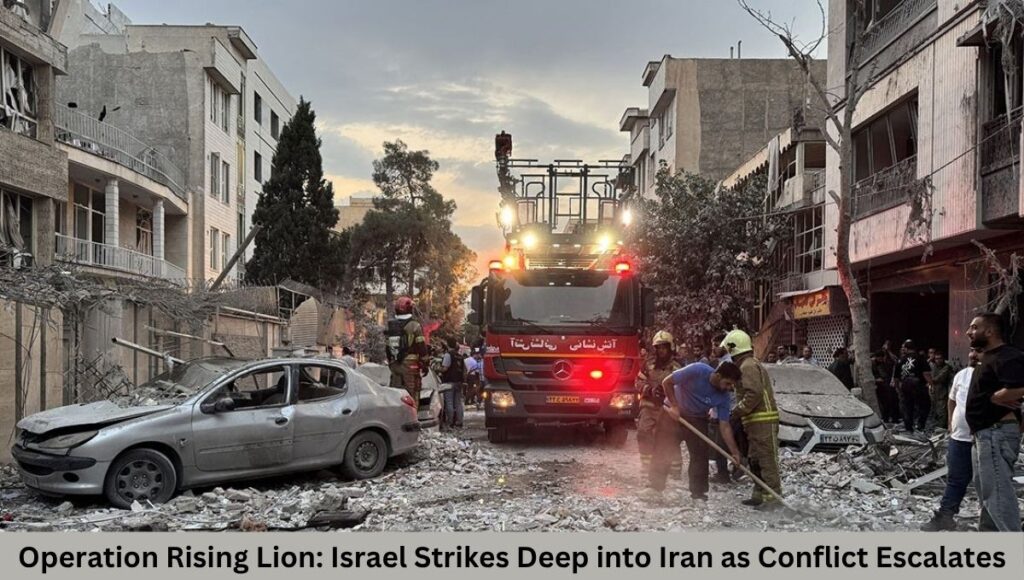
Operation Rising Lion: Israel Strikes Deep into Iran as Conflict Escalates
Key Nuclear and Missile Sites Devastated
The operation began on June 13, targeting high-value Iranian assets across multiple provinces. According to verified satellite images and statements from the International Atomic Energy Agency (IAEA), the following sites sustained major damage:
- Isfahan Nuclear Technology Centre – Iran’s central research hub
- Natanz Nuclear Facility – Core to uranium enrichment efforts
- Shiraz Missile Production Facility
- Tabriz North Missile Base
- Piranshahr Military Complex near the Iraqi border
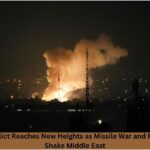
The Natanz facility, home to Iran’s underground uranium centrifuges, reportedly suffered a devastating blow, potentially setting Iran’s nuclear ambitions back by years. Structural collapse and secondary explosions were observed across multiple compounds.
Israel’s Use of Mossad Drones and AI Warfare
What makes Operation Rising Lion unprecedented is not only its precision but also its use of covert drone warfare and artificial intelligence (AI).
Sources in Israeli intelligence reveal that Mossad operatives had infiltrated Iran over the past three years, smuggling drones hidden in civilian vehicles near strategic locations.
At the moment of attack, these drones disabled Iran’s air defense systems from within, blinding radar installations and clearing the way for Israeli fighter jets and long-range drones.
AI-powered software, built with assistance from U.S. models, analyzed data from satellites, human assets, and intercepted communications to generate high-value target lists that included both infrastructure and personnel.
High-Profile Iranian Casualties Reported
Among the most shocking developments of the Israel-Iran conflict are reports that top Iranian commanders and scientists were killed in the strikes. These include:
- Gen. Hossein Salami, commander of the Islamic Revolutionary Guard Corps (IRGC)
- Gen. Mohammad Bagheri, Chief of Staff of the Iranian Armed Forces
Israeli sources indicate that these assassinations were carefully pre-planned using biometric data, intercepted phone logs, and even social media activity. The result, analysts say, is one of the most effective dismantling operations of Iran’s command structure in over a decade.
Iran Fires Hypersonic Missile at Israel
In retaliation, Iran fired a Fattah-1 hypersonic missile marking a serious escalation in regional warfare. Explosions were heard over Tel Aviv as Israeli missile defense systems intercepted incoming projectiles.
Although Israeli officials reported no large-scale casualties, the psychological impact has been significant. Iran’s Supreme Leader Ayatollah Ali Khamenei issued a stark message on social media:
“In the name of God, the battle begins.” The threat of hypersonic missile warfare adds a dangerous dimension to the Israel-Iran conflict, potentially involving other regional powers and increasing the risk of global fallout.
Netanyahu’s Symbolic “Rising Lion” Message
The operation’s name, “Rising Lion,” has drawn international attention not only for its military significance but for its symbolic meaning. A day before the strikes, Israeli Prime Minister Benjamin Netanyahu placed a note in Jerusalem’s Western Wall reading:
“The people shall rise up as a great lion. He shall not lie down until he eats the prey and drinks the blood of the slain.”
Some observers initially viewed this as a call for Israeli unity. However, growing speculation suggests the message may have been directed at Iranians, calling on them to overthrow their regime.
Iranian dissidents and exiled leaders have echoed this interpretation, calling Operation Rising Lion a possible spark for regime change in Iran.
Is Regime Change Israel’s Real Goal?
Though Israel insists its attacks are acts of self-defense, Netanyahu’s statements and the operation’s focus on eliminating Iran’s leadership raise questions about deeper motives. Retired General Amir Avivi commented:
“This was the result of Israeli intelligence working extensively for years in Iran.”
Adding fuel to speculation, reports emerged that Ali Shadmani, Iran’s top military strategist, was killed in an airstrike on a command center in Tehran on June 17.
Netanyahu later stated: “We have indications that senior leaders in Iran are already packing their bags.”
Support from Iranian Dissidents and Exiles
Prominent Iranian opposition figures such as Reza Pahlavi and Maryam Rajavi have praised the Israeli offensive. The Mojahedin-e-Khalq (MeK), in particular, claimed responsibility for leaking intelligence about Iran’s covert nuclear sites targeted in the operation.
Meanwhile, whispers of internal resistance within Iran are growing. Analysts point to:
- Local support for Mossad drone teams inside Iran
- Silent dissent within Iran’s conventional army
Mounting frustration among Iran’s youth and urban middle class
A Dangerous New Era of Warfare
Operation Rising Lion has introduced a new model of warfare: drone-based, AI-guided, and intelligence-heavy. With over 220 reported deaths in Tehran and 24 in Israel, the cost is already steep and likely to climb.
The IAEA has warned about the risk of nuclear contamination from damaged facilities like Natanz and Isfahan, though Iran continues to deny international access.
What Lies Ahead?
The Israel-Iran conflict has entered uncharted territory, with the use of hypersonic weapons, high-level assassinations, and covert technology shaping the battlefield. Diplomats worldwide are calling for restraint, but both Israel and Iran appear committed to continued engagement.
Whether this conflict ends in full-scale war, regime collapse, or a fragile ceasefire remains to be seen. But as the dust settles from Operation Rising Lion, one fact is clear:
The Middle East has entered a new, high-tech era of conflict and the consequences could be global
Also Read: Trump Blocks Israeli Plan to Assassinate Iran’s Supreme Leader as Netanyahu Defends Strike Strategy
Also Read: How Israel’s Operation Rising Lion Dismantled Iran from Within: A Case Study in the Art of Deception
Related Posts:
- 3 Explosive Conditions Iran Sets to End War with US…

- 10 Explosive Warnings as Donald Trump Calls Iran…
- 10 Explosive Strikes: Israel Bombs Tehran Oil Depots…

- 7 Powerful Facts About Ayatollah Ali Khamenei’s…
- Israel-Iran Conflict Reaches New Heights as Missile…
- 9 Explosive Signals as Netanyahu Says Israel Is…