

In a Deadly Blast at Iran’s Bandar Abbas Port: Death Toll Rises to 40, Over 1,200 Injured. At the Shahid Rajaei terminal, Iran’s primary container hub, the devastating blast occurred that shattered windows for miles and tore metal from shipping containers sending shockwaves. As emergency crews battled to contain the destruction, fires continued to rage into Sunday night.
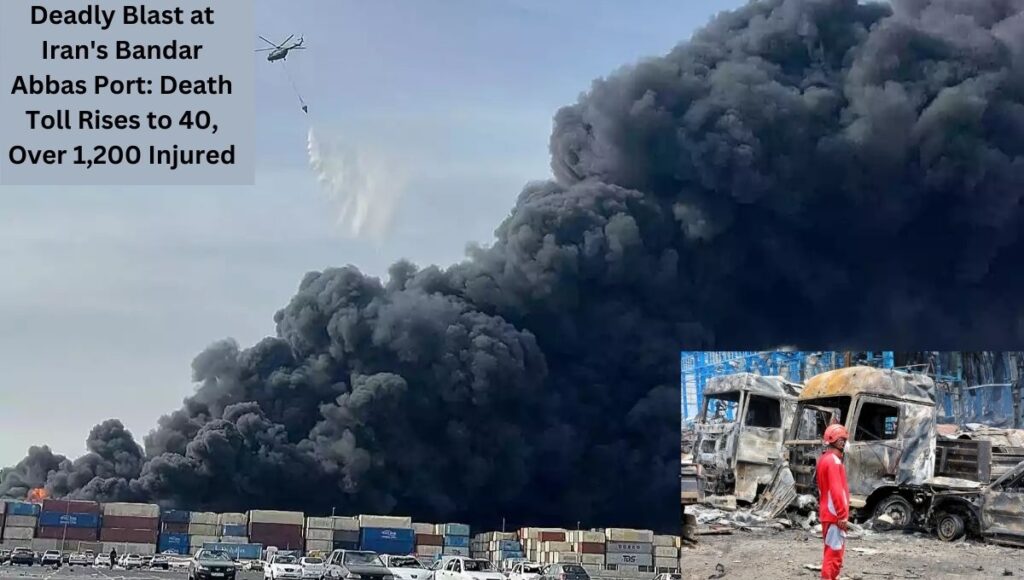
Deadly Blast at Iran’s Bandar Abbas Port: Death Toll Rises to 40, Over 1,200 Injured
Eyewitness Footage and Reports Suggest Chemical Cause
The horrifying moment was captured by the eyewitness videos when a small fire near shipping containers erupted into a powerful explosion. The Iranian media shared surveillance footage showing workers fleeing moments before a massive detonation cut off the video feed.
The reddish-brown smoke rising from the scene, as analyzed by the experts who hinted at the involvement of chemicals like sodium perchlorate or ammonium nitrate both if improperly stored are highly explosive.
Link to Missile Fuel Shipments Raises Alarm
In this blast speculation over the possible role of missile-related materials arose quickly. Reports confirmed earlier this year, that Bandar Abbas had received shipments of sodium perchlorate which is a critical chemical for solid-fueled ballistic missiles. Security firm Ambrey and CNN reported that about 1,000 tons of the chemical, was delivered by two vessels from China which is potentially enough to fuel hundreds of missiles.
However, any military connection was vehemently denied by Iranian officials. Iran’s Defense Ministry spokesperson dismissed such reports as “enemy psyops” and claimed that at the blast site no military goods were stored.
President Pezeshkian Demands Accountability
Masoud Pezeshkian, Iran’s newly elected President, on Sunday, visited Bandar Abbas, to oversee relief efforts and personally investigate the disaster. Pezeshkian, speaking on national television, questioned why for months, the hazardous containers were left sitting at the port, leading to a dangerous buildup of flammable chemicals.
He said, “We have to find out why it happened,” vowing full transparency after investigations are complete. Mohammad Ashouri, the region’s governor, following the tragedy declared three days of mourning.
Chaos and Casualties: The Aftermath
Twisted debris littered the area, as the fires continued to burn, and plumes of black smoke engulfed the skyline. According to Iran’s Red Crescent Society, over 190 of the injured remain hospitalized. The seawater was dumped by the emergency aircraft onto the blaze, and officials reported that 90% of the fire had been extinguished by Sunday afternoon.
The unaffected parts of Shahid Rajaei port have resumed activities, despite the scale of the disaster, with commercial shipping operations continuing cautiously.
Safety Negligence: A Troubling Pattern
In Iran, this explosion adds to a growing list of industrial disasters, where negligence has been frequently blamed for deadly incidents. Iran has suffered mining explosions, refinery fires, and even earlier at the Bandar Abbas port itself, a fatal accident.
Experts have compared the 2020 Beirut port disaster to this recent blast. The Beirut port disaster was caused by improperly stored ammonium nitrate. Chemical safety failures within Iran’s industrial sector seems to be a recurring and a deeply troubling issue.
International Tensions and Nuclear Negotiations
Amid sensitive nuclear negotiations between Iran and the United States in Oman, the Bandar Abbas explosion occurred. Although, currently, no evidence points to an external attack or a sabotage Iranian official due to previous acts of sabotage by foreign agents, particularly Israel, have noted the high alert status of their security services.
Authorities, including Foreign Minister Abbas Araghchi, have cautioned against premature conclusions while investigations continue.
What Comes Next?
While environmental agencies warned residents about dangerous air pollution resulting from chemical releases Iran’s Interior Ministry has launched a full investigation into the incident. Schools and offices in Bandar Abbas until further notice have been ordered closed.
As the country, grapples with the aftermath and mourns the victims, questions remain about port safety protocols and in one of Iran’s busiest and most strategic economic hubs, why such hazardous materials were left improperly stored.
Also Read: Deadly Explosion at China Chemical Plant in Shandong Kills 5, Sparks Toxic Gas Concerns
Also Read: Iranian MP blames Israel for deadly Bandar Abbas port explosion
Related Posts:
- Deadly Explosion at China Chemical Plant in Shandong…
- 7 Powerful Facts About Ayatollah Ali Khamenei’s…

- 10 Explosive Warnings as Donald Trump Calls Iran…

- 3 Explosive Conditions Iran Sets to End War with US…

- 7 Dead in Explosive Iran Protests as Economic Anger…

- 11 Explosive Warnings as Trump Vows to ‘Knock the…
