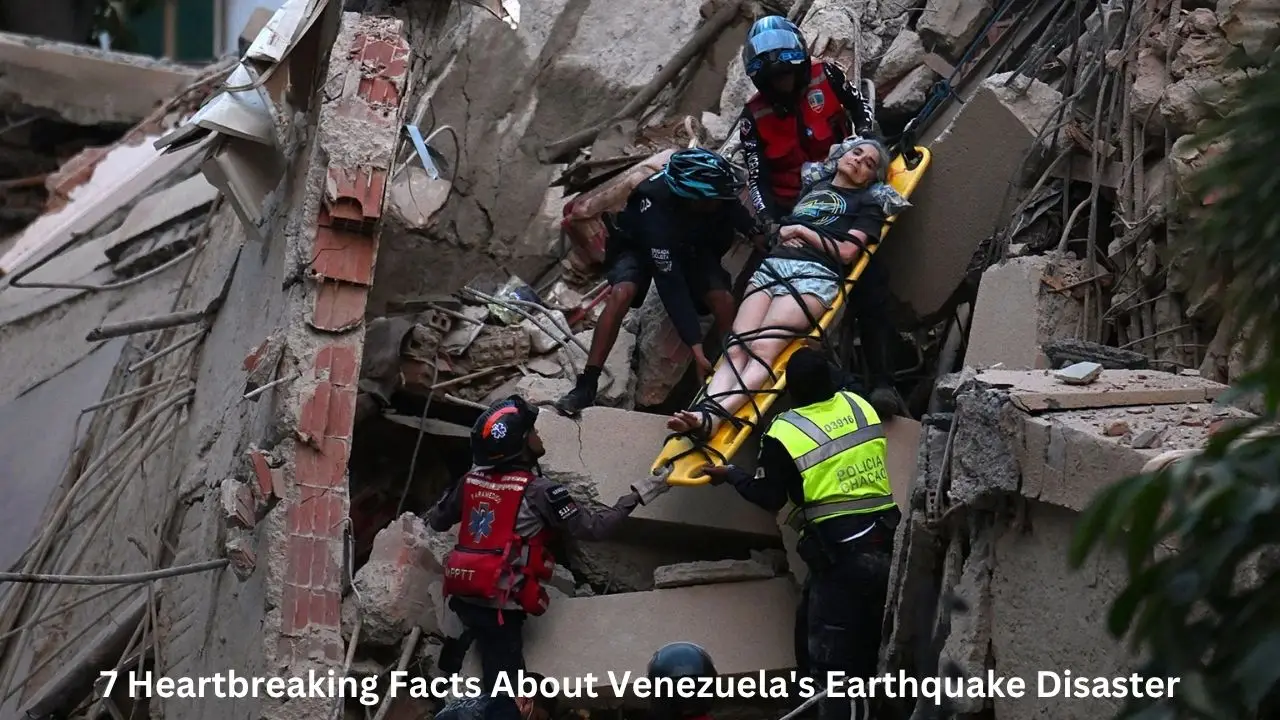
7 Heartbreaking Facts About Venezuela’s Earthquake Disaster that devastated much of the country. Nearly a week after two powerful earthquakes struck northern Venezuela, the country is confronting one of the deadliest natural disasters in its modern history. Entire neighborhoods have been reduced to rubble, hospitals are operating beyond capacity, and rescue teams continue searching desperately for survivors as hopes of finding more people alive gradually diminish.
The disaster has evolved far beyond a rescue operation. What began as an emergency response has now become a full-scale humanitarian crisis involving healthcare, food security, housing, sanitation, and long-term recovery. Aid agencies warn that the coming weeks may prove just as challenging as the earthquakes themselves. The twin earthquakes, measuring 7.2 and 7.5 magnitude, struck within seconds of each other, unleashing widespread destruction across parts of northern Venezuela.
Cities including La Guaira and surrounding communities suffered catastrophic structural damage, leaving thousands trapped beneath collapsed buildings and forcing countless families from their homes.
7 Heartbreaking Facts About Venezuela’s Earthquake Disaster
A Disaster That Changed Thousands of Lives Overnight
For residents of the affected regions, life changed in less than a minute. Homes, apartment buildings, schools, businesses, roads, and public facilities collapsed as the powerful tremors shook the country. Survivors describe scenes of confusion, fear, and devastation as clouds of dust filled the air and emergency sirens echoed through damaged cities.
Official figures indicate that the death toll has climbed to nearly 2,000, while thousands more have been injured. Authorities and humanitarian organizations also continue to receive reports of missing people, making it difficult to determine the disaster’s final human cost. Rescue operations remain underway despite increasingly difficult conditions.
Satellite assessments suggest that tens of thousands of buildings may have been damaged or destroyed, highlighting the enormous scale of the catastrophe. Entire residential blocks have suffered severe structural failures, leaving many communities without safe shelter.
For many families, the earthquake has meant the loss of loved ones, homes, livelihoods, and years of hard work in a matter of moments.
Rescue Teams Race Against Time
Search-and-rescue operations remain the immediate priority, even as the likelihood of finding additional survivors declines with each passing day.
Emergency workers from Venezuela have been joined by specialized international rescue teams equipped with search dogs, listening devices, heavy machinery, and medical personnel. Countries from across the Americas and beyond have deployed experts to assist in locating survivors trapped beneath collapsed concrete and steel.
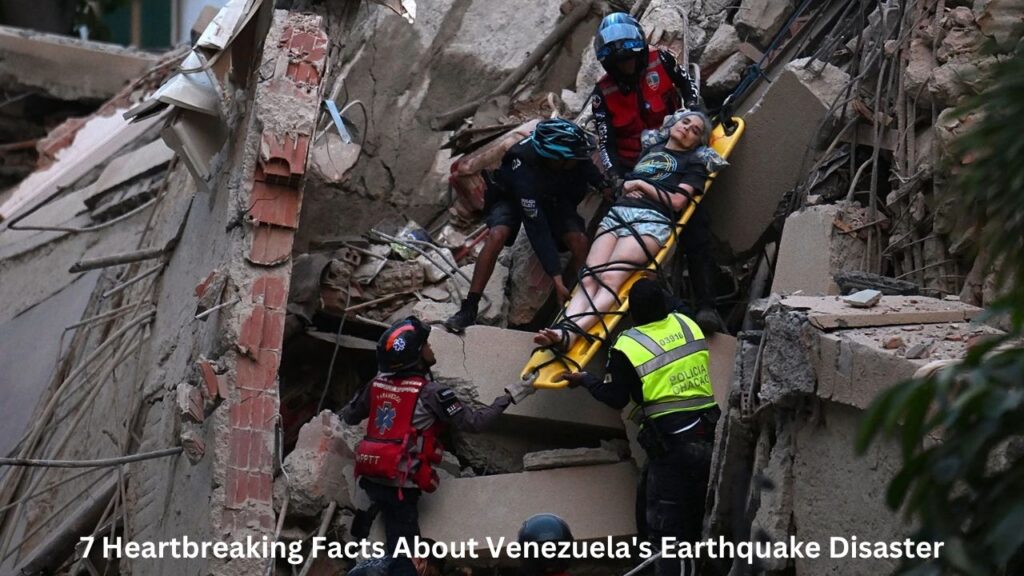
Despite the difficult conditions, rescuers have managed to save several people who remained trapped for days beneath the rubble. Stories of survival continue to inspire both emergency responders and grieving families waiting anxiously for news of missing relatives.
However, rescue officials acknowledge that the operation has entered a far more challenging phase. The critical period during which buried victims are most likely to survive has largely passed, forcing crews to work in increasingly dangerous and emotionally difficult circumstances.
Heavy debris, damaged infrastructure, unstable buildings, and disrupted transportation networks continue to slow rescue efforts. In some areas, emergency workers must carefully remove collapsed structures piece by piece to avoid triggering further collapses.
Communities Show Remarkable Resilience
While professional rescue teams work tirelessly, ordinary citizens have become an essential part of the response.
Neighbors have formed volunteer groups to distribute food, water, clothing, blankets, and emergency supplies. Community centers, schools, churches, and public buildings that survived the earthquakes have been transformed into temporary shelters for displaced families.
Across social media, volunteers have organized missing-person databases, coordinated donations, and connected separated family members. These grassroots efforts have helped fill critical gaps during the early stages of the emergency response.
Acts of compassion have emerged alongside scenes of tragedy. Volunteers have shared meals with strangers, medical professionals have worked extended shifts despite damaged facilities, and rescue personnel have continued their work under physically exhausting conditions.
These stories of resilience have become powerful reminders of how communities often unite during times of extraordinary hardship.
The Human Cost Extends Beyond the Rubble
Although collapsed buildings dominate television images, the earthquake’s true impact reaches far beyond physical destruction.
Thousands of families are now living in temporary shelters after losing their homes. Many remain uncertain about the fate of missing relatives while coping with the emotional trauma of the disaster.
Children have been displaced from schools, businesses have suspended operations, and thousands of workers suddenly find themselves without employment as commercial districts remain closed.
Mental health professionals warn that survivors may face months or even years of psychological recovery. Experiences such as losing family members, witnessing building collapses, or spending hours trapped beneath debris can leave lasting emotional scars.
For elderly residents, people with disabilities, pregnant women, and young children, the challenges are even greater. Access to medication, routine healthcare, nutrition, and safe accommodation has become increasingly difficult in many affected communities.
The humanitarian response therefore extends well beyond rescue operations. It now includes protecting vulnerable populations, restoring essential services, and helping communities begin the long process of rebuilding their lives.
A Healthcare System Under Unprecedented Pressure
As rescue operations continue, Venezuela is confronting a second crisis that could prove just as devastating as the earthquakes themselves—a rapidly escalating public health emergency.
Hospitals in the hardest-hit regions are struggling to cope with the overwhelming number of injured patients. Emergency wards are operating around the clock, while doctors, nurses, and paramedics work extended shifts to treat fractures, crush injuries, head trauma, burns, and other life-threatening conditions.
Several medical facilities sustained structural damage during the earthquakes, forcing authorities to evacuate patients and establish temporary field hospitals. In many affected communities, shortages of hospital beds, medical supplies, blood donations, and essential medicines have added to the challenges facing healthcare workers.
The situation is particularly difficult in remote areas where damaged roads and bridges have delayed the delivery of emergency medical assistance. Helicopters and military transport vehicles are being used to reach isolated communities, but difficult terrain and damaged infrastructure continue to slow relief efforts.
Health experts warn that providing immediate trauma care is only the first step. Long-term rehabilitation, mental health support, maternal healthcare, and treatment for chronic illnesses will require sustained investment long after the headlines fade.
WHO Warns of Disease Outbreak Risks
The World Health Organization (WHO) and humanitarian agencies have raised concerns about the growing risk of disease outbreaks in earthquake-affected areas.
Thousands of displaced residents are now living in temporary shelters, schools, sports halls, churches, and makeshift camps where overcrowding increases the likelihood of infectious diseases spreading rapidly.
Limited access to clean drinking water, damaged sanitation systems, interrupted waste collection, and poor hygiene conditions create an environment in which waterborne and communicable diseases can emerge quickly.
Children, elderly people, pregnant women, and individuals with weakened immune systems are considered particularly vulnerable.
Health officials are working to restore vaccination programs, distribute clean water, improve sanitation facilities, and provide emergency medical kits. Public health teams are also monitoring communities for early signs of disease outbreaks to prevent additional loss of life.
Aid organizations stress that preventing a public health crisis is just as important as rescuing survivors trapped beneath collapsed buildings.
International Aid Mobilizes
As the scale of the disaster became clear, governments and humanitarian organizations around the world began mobilizing assistance.
International search-and-rescue teams arrived with specialized equipment, rescue dogs, engineering experts, and emergency medical personnel to support local authorities.
Global humanitarian organizations have also launched emergency appeals to provide food, clean water, temporary shelter, hygiene supplies, blankets, medical equipment, and psychological support for survivors.
Financial assistance, emergency grants, and relief supplies are being coordinated through international agencies, charitable organizations, and regional partners. Many countries have pledged humanitarian assistance, while private donors and nonprofit organizations have initiated fundraising campaigns to support recovery efforts.
The focus is gradually shifting from emergency rescue toward humanitarian relief and long-term reconstruction, a transition that experts say will require sustained international cooperation over many months.
The Economic Impact Could Last for Years
Beyond the tragic loss of life, the earthquakes are expected to leave a lasting mark on Venezuela’s economy.
Thousands of homes, commercial buildings, schools, hospitals, factories, and public infrastructure have suffered severe damage. Roads, bridges, electricity networks, water systems, and communication infrastructure will require extensive repairs before affected communities can fully recover.
Small businesses that depended on daily customers have lost inventory, premises, and income. Many workers suddenly find themselves unemployed after workplaces were destroyed or forced to close.
Agricultural production has also been disrupted in some regions due to damaged transportation networks and storage facilities, raising concerns about food availability and local livelihoods.
Economists believe reconstruction will require billions of dollars in investment over several years. Rebuilding safer infrastructure while restoring public services will place enormous pressure on national resources, making continued international assistance especially important.
Rebuilding Lives Will Take More Than Reconstruction
Physical reconstruction is only one part of recovery. Communities affected by major earthquakes often face years of emotional, social, and economic challenges. Families who have lost loved ones must rebuild their lives while coping with grief and trauma.
Children whose schools have been damaged require safe learning spaces. Healthcare workers need additional resources to address both physical injuries and mental health needs. Businesses must recover before employment opportunities return to normal.
Urban planners and engineers also emphasize the importance of rebuilding more resilient communities capable of withstanding future natural disasters. Improved building standards, stronger emergency preparedness systems, and investment in disaster-resilient infrastructure could reduce the impact of similar events in the future.
Recovery therefore involves much more than replacing damaged buildings—it requires restoring confidence, strengthening institutions, and helping communities regain a sense of normalcy.
A Disaster That Resonates Beyond Venezuela
The humanitarian emergency in Venezuela serves as a reminder that natural disasters can rapidly evolve into complex global crises.
In today’s interconnected world, international cooperation plays an increasingly important role in disaster response. Governments, humanitarian organizations, healthcare professionals, engineers, and volunteers often work together across borders to save lives and support long-term recovery.
Climate-related challenges, rapid urbanization, aging infrastructure, and growing populations mean that countries worldwide face increasing risks from natural disasters. Lessons learned from Venezuela’s response may help improve emergency planning and disaster preparedness elsewhere.
The tragedy also highlights the resilience of ordinary people. Despite unimaginable loss, communities have demonstrated remarkable solidarity by supporting neighbors, volunteering in rescue efforts, donating supplies, and helping families rebuild.
Looking Ahead
As emergency operations gradually transition toward recovery, Venezuela faces one of the most challenging reconstruction efforts in its recent history.
Authorities must balance immediate humanitarian needs with long-term rebuilding while ensuring displaced families receive housing, healthcare, education, and economic support.
International assistance is expected to remain crucial during the months ahead, particularly in restoring essential services and strengthening healthcare systems.
Experts caution that recovery from a disaster of this magnitude cannot be measured in weeks. Full reconstruction is likely to take years, requiring sustained political commitment, financial resources, and international cooperation.
Conclusion
The devastating earthquakes that struck Venezuela have become far more than a natural disaster—they have evolved into one of the country’s most serious humanitarian emergencies in decades. With thousands of lives lost, tens of thousands of buildings damaged, and millions of people affected either directly or indirectly, the scale of the catastrophe continues to unfold.
While rescue workers, healthcare professionals, volunteers, and humanitarian organizations have demonstrated extraordinary courage and commitment, the road to recovery remains long and uncertain. Immediate priorities include providing shelter, restoring healthcare services, preventing disease outbreaks, and ensuring vulnerable communities receive the assistance they urgently need.
The disaster also serves as a powerful reminder of the importance of disaster preparedness, resilient infrastructure, and global solidarity. Natural disasters do not recognize national borders, and effective responses increasingly depend on international cooperation and coordinated humanitarian action.
As Venezuela begins the difficult journey from emergency response to long-term recovery, the resilience of its people remains its greatest strength. Their determination to rebuild homes, communities, and lives amid immense hardship offers hope that even in the face of overwhelming tragedy, recovery is possible.
The international community now has an important role to play in ensuring that hope is matched by sustained support, helping Venezuela recover stronger and better prepared for the future.
Also Read: 7 Shocking Revelations Behind South Korea F-15K Mid-Air Collision Caused by Pilot Selfies
Also Read: Six seconds of horror: Venezuela quake turns building into rubble, camera captures collapse
Related Posts:
- 7 Shocking Truths About Venezuela’s Earthquake…
- 6.3-Magnitude Earthquake Devastates Northern Afghanistan
- Third Earthquake Strikes Afghanistan: Death Toll…
- Japan Earthquake 2026: Deadly 7.1 Kumamoto Quake…
- Another Earthquake Strikes Afghanistan After 1,400…
- Afghanistan Earthquake 2025: Over 600 Killed, 1,500…