7 Shocking Truths About Venezuela’s Earthquake Crisis as Anger Over Rescue Delays Grows deepening tragedy. The devastating twin earthquakes that struck Venezuela have evolved into one of the country’s deadliest humanitarian disasters in modern history, leaving thousands of families grieving while raising difficult questions about the government’s emergency response.
More than a week after the powerful earthquakes measuring 7.2 and 7.5 magnitude shook the South American nation, rescue workers continue searching for survivors beneath collapsed buildings. However, growing frustration among residents has turned into public anger, with many accusing authorities of responding too slowly during the critical first hours after the disaster.
Official figures show at least 1,700 people have died, over 5,000 have been injured, and thousands remain missing. Meanwhile, satellite assessments suggest that nearly 59,000 buildings were damaged or destroyed, making this one of the most destructive natural disasters in Venezuela’s recent history.
7 Shocking Truths About Venezuela’s Earthquake Crisis as Anger Over Rescue Delays Grows
Rescue Operations Continue Amid Fading Hope
In the coastal state of La Guaira, rescue teams continue carefully digging through mountains of concrete where apartment buildings once stood.
Every few minutes, rescue workers stop machinery and call for complete silence. They listen carefully for any sounds from trapped survivors beneath the debris. For families gathered nearby, each pause brings renewed hope.
Miguel Oscar Núñez has spent days waiting outside a collapsed 12-story apartment building where his only son, 34-year-old Angel, was trapped when the earthquake struck.
Like hundreds of other relatives, he believes more lives could have been saved had rescue teams arrived sooner.
“My son may still have survived the earthquake itself,” he reportedly said. “But if he dies because help arrived too late, that is unacceptable.”
Unfortunately, after several tense moments of listening, rescuers often hear nothing before heavy machinery resumes digging.
Families Say They Were Left Alone
One of the strongest criticisms emerging from affected communities concerns the timing of rescue operations.
Residents say local volunteers and neighbors began digging through rubble immediately after the earthquake, often using only their hands, crowbars, and basic tools.
Many claim official rescue teams arrived much later. Kevin Montilla, whose wife and teenage daughter were trapped inside their apartment building, described the early response as chaotic.
According to him, local residents performed much of the initial rescue work while waiting for emergency personnel.
Across multiple neighborhoods, similar stories have emerged of communities organizing themselves before professional rescue teams reached the scene.
Entire Neighborhoods Reduced to Rubble
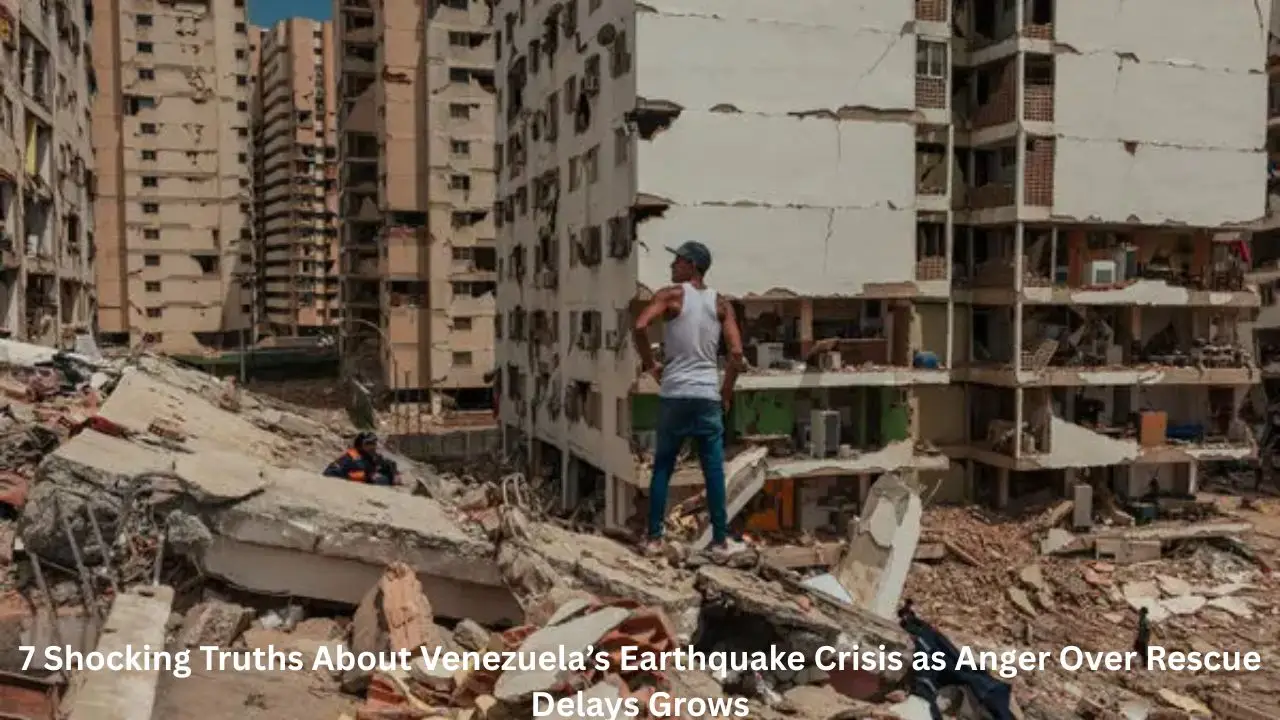
The destruction extends far beyond individual apartment blocks. Entire residential complexes across La Guaira and surrounding regions have collapsed, transforming once-busy neighborhoods into fields of twisted steel and broken concrete.
Many buildings were completely flattened, while others remain standing but have suffered structural damage that makes them unsafe to enter.
Residents continue searching for missing family members despite dangerous conditions. Some survivors describe hearing voices beneath collapsed buildings during the first night following the earthquakes.
Several people were rescued alive after neighbors spent hours digging manually through debris. However, many fear that numerous victims remain buried beneath structures that rescue teams have yet to fully search.
Hospitals Overwhelmed by the Scale of the Disaster
The humanitarian emergency has placed extraordinary pressure on Venezuela’s already strained healthcare system.
Hospitals in Caracas and other affected regions are struggling to cope with thousands of injured patients while simultaneously dealing with damaged infrastructure and shortages of medical supplies.
Doctors say intensive care units that once handled significantly more patients now operate with limited staff, insufficient ventilators, and shortages of essential medicines.
Children have been among the most severely affected.
Medical professionals report treating hundreds of young patients suffering from crush injuries, fractures, and other life-threatening trauma caused by collapsing buildings.
Several hospitals have also suffered structural damage, forcing authorities to relocate patients while emergency shelters have been established in schools and public buildings.
Longstanding Challenges Complicate Relief Efforts
Experts note that Venezuela’s response to the disaster has been complicated by years of economic difficulties and pressure on public services.
Healthcare workers say shortages of equipment, trained personnel, and medical resources existed long before the earthquakes struck.
Many experienced doctors and nurses have left the country over the past decade, reducing the healthcare system’s ability to respond to emergencies of this scale.
As rescue operations continue, medical teams face increasing challenges in treating both earthquake injuries and routine medical emergencies simultaneously.
NASA Estimates Nearly 59,000 Buildings Were Damaged
New satellite analysis has revealed the enormous scale of destruction across Venezuela.
Using high-resolution radar imagery, researchers working with NASA estimated that approximately 58,870 buildings were likely damaged or destroyed following the earthquakes.
The assessment relied on satellite observations collected shortly after the disaster and provides one of the clearest pictures yet of the widespread structural damage.
Researchers emphasized that the figures represent preliminary estimates based on changes detected from space and will require further verification through ground assessments.
Even so, the findings suggest the disaster affected a far larger area than initially understood.
Search for Missing Continues Despite Diminishing Odds
Time remains the greatest enemy for rescue workers.
Emergency response experts often describe the first 72 hours after a major earthquake as the “golden window” for locating survivors trapped beneath rubble.
As that window closes, hopes naturally begin to fade. Nevertheless, families continue waiting outside collapsed buildings, refusing to abandon hope.
Whiteboards near several rescue sites list apartment numbers alongside the names of missing residents, rescued survivors, and confirmed fatalities.
Many relatives have remained there day and night, believing their loved ones could still be alive.
Temporary Morgues Reflect the Scale of the Tragedy
With morgues reaching capacity, authorities have established temporary facilities to identify victims.
Families now face the heartbreaking task of identifying loved ones using clothing, jewelry, or personal belongings because many bodies have been severely damaged.
Some funeral homes have offered free transportation and cremation services to assist grieving families overwhelmed by the disaster.
For many survivors, receiving confirmation of a loved one’s identity is the first step toward beginning the mourning process.
International Aid Begins Arriving
The international community has expanded humanitarian assistance to Venezuela.
The United States announced one of its largest recent overseas disaster responses, pledging significant financial assistance while deploying specialized urban search-and-rescue teams.
International organizations, neighboring countries, and humanitarian agencies have also sent rescue specialists, medical personnel, equipment, and emergency supplies.
Foreign rescue teams continue working alongside Venezuelan responders to locate survivors and assist displaced communities.
Aid organizations are prioritizing emergency healthcare, temporary shelter, clean drinking water, food distribution, and sanitation services.
Aftershocks Increase Fear
The disaster has been compounded by continuing aftershocks. Although most have been significantly weaker than the initial earthquakes, they have prevented many residents from returning home.
Authorities continue inspecting damaged buildings and assigning safety ratings ranging from habitable to unsafe.
Thousands remain in temporary shelters while engineers determine whether surviving structures can safely be occupied.
The ongoing seismic activity has also complicated rescue operations by increasing the risk of additional building collapses.
Humanitarian Needs Continue Growing
Relief agencies warn that the emergency is far from over.
Beyond immediate rescue efforts, Venezuela now faces enormous challenges involving housing reconstruction, healthcare recovery, infrastructure repairs, education, sanitation, and economic recovery.
Thousands of families remain displaced after losing their homes. Schools, roads, hospitals, and public services require extensive rebuilding before normal life can resume.
Aid organizations continue calling for sustained international support as recovery is expected to take months, if not years.
Looking Ahead
As Venezuela confronts one of the darkest chapters in its modern history, rescue operations continue while difficult questions surround the country’s emergency preparedness and disaster response.
For thousands of grieving families, however, the focus remains deeply personal.They continue waiting beside collapsed buildings, hoping rescuers will find one more survivor beneath the rubble.
Whether the final death toll rises significantly higher remains uncertain, but the human cost of the disaster has already left an enduring scar on Venezuela.
The coming weeks will determine not only how successfully relief efforts continue but also how the nation rebuilds communities devastated by one of the most powerful earthquakes ever recorded in the country.
Also Read: 7 Explosive Signs of Iran Leadership Crisis as President Moves to Sack Foreign Minister
Also Read: Catastrophic M7.5 earthquake strikes northern Venezuela
Related Posts:
- 7 Heartbreaking Facts About Venezuela's Earthquake Disaster
- Third Earthquake Strikes Afghanistan: Death Toll…
- 6.3-Magnitude Earthquake Devastates Northern Afghanistan
- 7 Crucial Facts About the 4.3 Earthquake That Shook…
- 6.1-Magnitude Earthquake Rocks Western Türkiye:…
- Another Earthquake Strikes Afghanistan After 1,400…