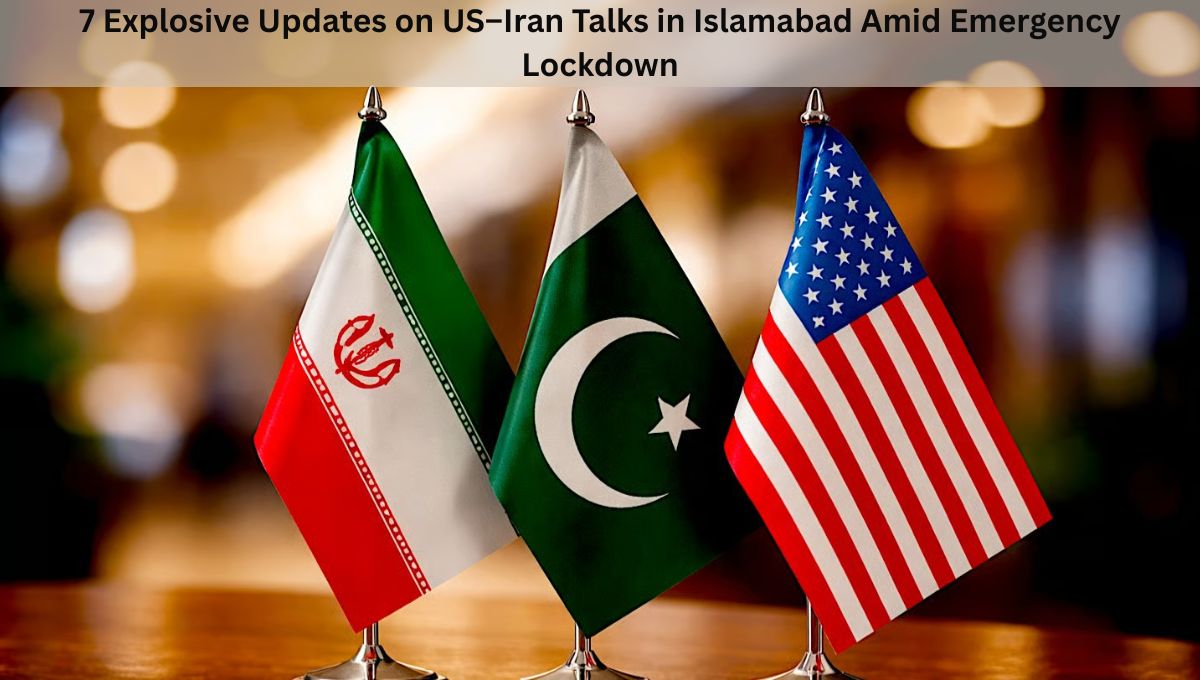
7 Explosive Updates on US–Iran Talks in Islamabad Amid Emergency Lockdown and uncertainty over Iran’s role. Pakistan has taken an extraordinary step by declaring a sudden two-day public holiday in its capital, Islamabad, ahead of high-stakes diplomatic talks between the United States and Iran.
Thank you for reading this post, don't forget to subscribe!The decision, announced at short notice, underscores the immense geopolitical significance of the upcoming negotiations, which are being closely watched around the world.
The holidays, applicable only within the Islamabad Capital Territory, come amid heightened security arrangements, growing uncertainty over Iran’s participation, and a fragile ceasefire that could either pave the way for peace—or collapse into renewed conflict.
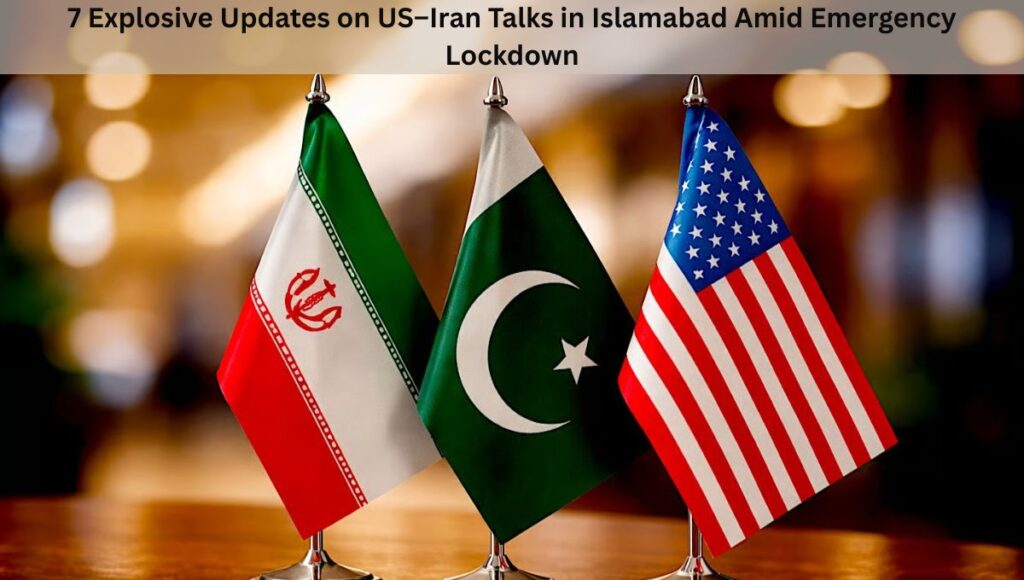
7 Explosive Updates on US–Iran Talks in Islamabad Amid Emergency Lockdown
Islamabad Comes to a Standstill Ahead of Historic Talks
Authorities in Islamabad announced that Thursday and Friday would be observed as public holidays, effectively bringing routine activity in the capital to a halt.
While no official reason was provided in the notification, such measures are typically associated with security concerns during high-profile diplomatic events.
Government offices, educational institutions, and most businesses remained closed, while essential services such as hospitals, police, and utilities continued to operate.
Residents were advised to plan their activities accordingly, as large sections of the city—particularly the Red Zone—were sealed off.
Streets appeared unusually quiet, with heavy deployment of security personnel, including army troops and paramilitary forces.
The move reflects the seriousness with which Pakistan is treating its role as host and mediator in what could become a defining diplomatic moment.
Why These Talks Matter Globally
The planned US–Iran talks come at a time of intense global instability. The conflict in the Middle East has escalated dramatically in recent weeks, with devastating consequences.
The war began after coordinated military actions targeting Iran, triggering a chain reaction of retaliatory strikes across the region.
The situation further worsened when key shipping routes were disrupted, particularly the Strait of Hormuz, through which a significant portion of the world’s oil supply passes.
This disruption has led to:
- A global energy crisis
- Sharp increases in oil and gas prices
- Supply chain disruptions worldwide
- Economic uncertainty affecting both developed and developing nations
The Islamabad talks are widely seen as a critical opportunity to de-escalate tensions and stabilize global markets.
Pakistan’s Role as a Crucial Mediator
Pakistan has emerged as a key intermediary between Washington and Tehran, leveraging its diplomatic relationships with both nations.
In recent days, Pakistani leadership has engaged in intensive behind-the-scenes diplomacy aimed at securing a ceasefire and bringing both parties to the negotiating table.
These efforts resulted in a temporary two-week ceasefire agreement, which has created a narrow window for dialogue.
Pakistan’s strategic position—geographically, politically, and diplomatically—has enabled it to act as a bridge between the two adversaries.
Officials have emphasized that their role is strictly that of a facilitator.
“Our priority is to ensure the talks proceed smoothly. We are here to assist, not to influence outcomes.”
This balancing act is delicate, as any perceived bias could undermine Pakistan’s credibility.
Security Measures Reach Unprecedented Levels
The scale of security preparations in Islamabad is unprecedented in recent years.
Authorities have implemented a multi-layered security framework to ensure the safety of visiting delegations.
Key Measures Include:
- Full lockdown of the Red Zone
- Closure of major entry and exit points
- Deployment of army and paramilitary forces
- Surveillance and monitoring systems across the city
- Emergency services placed on high alert
The Serena Hotel, a prominent five-star property, has been cleared of guests and converted into a secure diplomatic zone.
Surrounding roads have been sealed off, and access is strictly controlled.
Additional potential venues include government buildings and secure military locations, indicating contingency planning for various scenarios.
Who Is Expected to Attend the Talks?
The composition of the delegations is one of the most closely watched aspects of the upcoming talks.
United States Delegation
The United States has confirmed its participation, with a high-powered delegation expected to include:
- Vice President JD Vance
- Senior envoys and advisors
- Security and diplomatic teams
This level of representation signals the importance Washington places on the negotiations.
Iranian Delegation: Uncertainty Looms
Iran’s participation, however, remains uncertain.
While initial reports suggested that senior Iranian officials would attend, subsequent statements have cast doubt on whether a delegation has even arrived in Islamabad.
Iran has indicated that its participation depends on:
- Adherence to ceasefire commitments
- Developments in Lebanon
- Assurance of meaningful negotiations
This uncertainty has added a layer of complexity to the already fragile diplomatic process.
The Ceasefire: Fragile and Contested
At the heart of the talks is a temporary ceasefire that has temporarily halted direct confrontation between the United States and Iran.
However, the truce is under significant strain.
Key Points of Contention:
- Whether the ceasefire includes Lebanon
- Ongoing military actions in the region
- Differing interpretations of the agreement
Iran has insisted that continued military operations in Lebanon undermine the credibility of the ceasefire.
On the other hand, the United States maintains that Lebanon is not part of the agreement.
This disagreement could prove to be a major obstacle to meaningful progress.
The Lebanon Factor: A Potential Deal Breaker
Lebanon has emerged as a critical flashpoint in the broader conflict.
Ongoing military activity in the region has complicated the diplomatic landscape, raising questions about the viability of the talks.
Iran has made it clear that:
- Any continued attacks in Lebanon could derail negotiations
- A comprehensive ceasefire must include all affected regions
The United States, however, appears to view the situation differently, focusing primarily on direct US–Iran engagement.
This divergence highlights the complexity of the conflict and the challenges facing negotiators.
The Stakes: What’s on the Table?
The Islamabad talks are expected to address a wide range of critical issues, including:
1. Nuclear Program
One of the central issues is Iran’s nuclear program, with the United States seeking significant concessions.
2. Sanctions Relief
Iran is expected to push for the lifting of economic sanctions that have severely impacted its economy.
3. Regional Security
Discussions will likely include broader security arrangements in the Middle East, including:
- Military presence
- Proxy conflicts
- Strategic alliances
4. Strait of Hormuz
Control and access to this critical shipping route will be a major point of negotiation, given its global economic importance.
Economic Impact: A World Watching Closely
The outcome of the talks could have far-reaching implications for the global economy.
Current Impact:
- Record-high energy prices
- Supply chain disruptions
- Increased inflation worldwide
Potential Outcomes:
- Stabilization of oil markets
- Improved investor confidence
- Reduction in geopolitical risk
Markets around the world are closely monitoring developments, with any progress—or setback—likely to trigger immediate reactions.
Diplomatic Strategy: Indirect Negotiations
Interestingly, initial discussions are expected to follow a “shuttle diplomacy” model.
This means:
- US and Iranian delegations may not meet directly
- Pakistani officials will act as intermediaries
- Messages will be relayed between separate rooms
This approach reflects the deep mistrust between the two sides but also provides a structured pathway for dialogue.
Challenges Ahead: Why Success Is Uncertain
Despite the optimism surrounding the talks, several challenges could hinder progress.
Major Obstacles:
- Deep-rooted mistrust between the US and Iran
- Conflicting demands and expectations
- Ongoing military activity in the region
- Absence of key stakeholders in negotiations
Analysts suggest that while a complete resolution is unlikely in the short term, even incremental progress could be significant.
Pakistan’s Diplomatic Gamble
Hosting these talks represents a major diplomatic gamble for Pakistan.
Potential Benefits:
- Enhanced global standing
- Recognition as a mediator
- Strengthened diplomatic ties
Risks:
- Failure of talks could damage credibility
- Security challenges
- Political and economic implications
Pakistan’s ability to manage these dynamics will be closely scrutinized.
What Happens Next?
The talks are expected to begin over the weekend, with no fixed timeline for their duration.
Possible scenarios include:
- Breakthrough Agreement
A significant step toward long-term peace - Extended Negotiations
Talks continue beyond initial timelines - Stalemate or Collapse
Failure to reach consensus, leading to renewed tensions
Given the complexity of the issues involved, most observers expect a gradual, multi-stage process.
Conclusion: A Defining Moment for Global Stability
The upcoming US–Iran talks in Islamabad represent a critical juncture in one of the most volatile geopolitical crises in recent history.
With the world watching closely, the stakes could not be higher.
The sudden holiday declaration, stringent security measures, and intense diplomatic activity all point to the significance of the moment.
Whether these talks lead to a lasting peace or further escalation remains uncertain.
However, one thing is clear:
the decisions made in Islamabad over the coming days could shape the future of global stability, energy markets, and international relations for years to come.
Also Read: 7 Shocking Truths About Iran-US Ceasefire as Israel Excludes Lebanon from Truce
Also Read: Five Things To Know About The US-Iran Talks In Islamabad