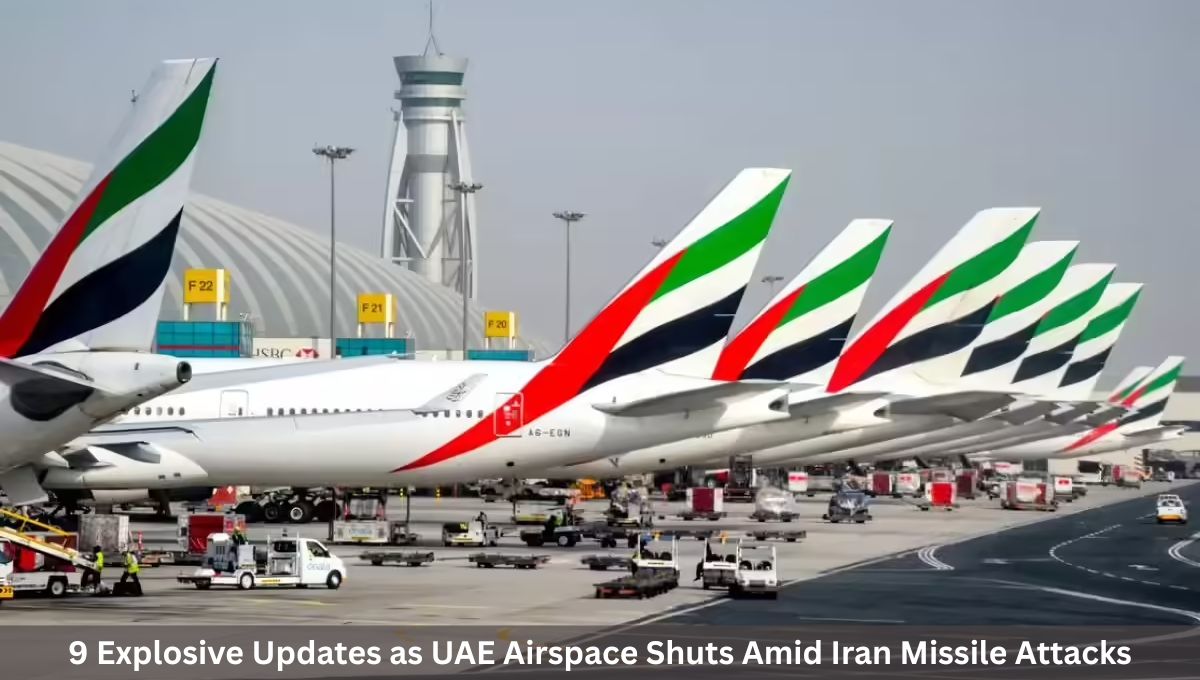
9 Explosive Updates as UAE Airspace Shuts Amid Iran Missile Attacks in ongoing conflict.The Middle East conflict entered a dangerous new phase as the United Arab Emirates briefly shut down its airspace following a wave of Iranian missile and drone threats.
Loud explosions were heard across Dubai early Tuesday, as air defence systems intercepted incoming projectiles in what officials described as a rapidly evolving security situation.
Although the airspace was reopened shortly after, the incident highlights the growing intensity of the ongoing conflict involving Iran, Israel, and the United States.
At the same time, fears of a global energy crisis are rising, with disruptions in the vital Strait of Hormuz sending oil prices soaring and threatening global economic stability.
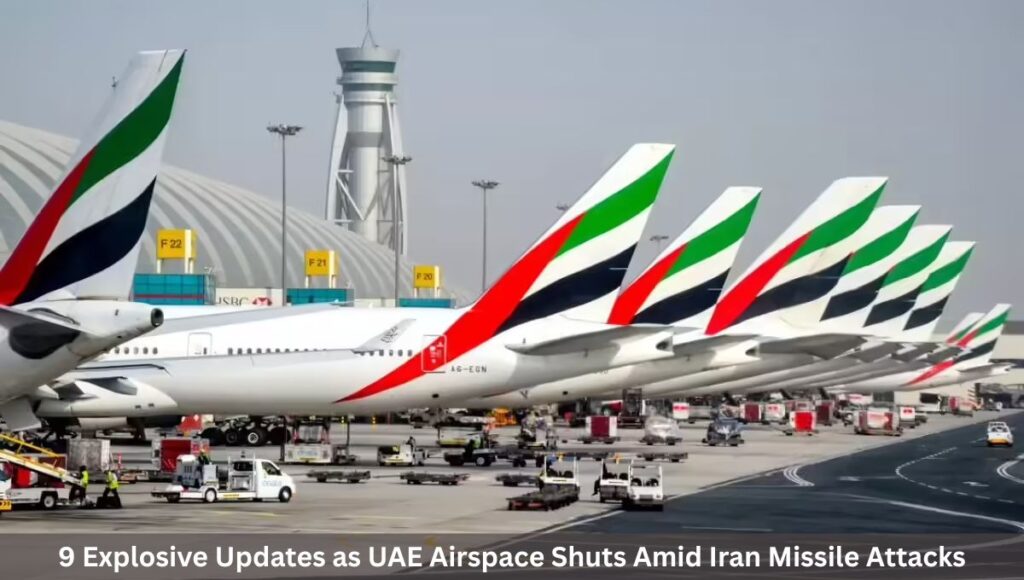
9 Explosive Updates as UAE Airspace Shuts Amid Iran Missile Attacks
UAE Airspace Closure: What Happened?
Emergency Shutdown Amid Missile Threats
The UAE’s General Civil Aviation Authority (GCAA) announced a temporary closure of national airspace as a precautionary measure.
Authorities confirmed:
- The closure was due to incoming Iranian missiles and drones
- Air defence systems were actively intercepting threats
- The decision prioritized passenger safety and national security
Within hours, officials declared that the situation had stabilized and airspace operations resumed.
Explosions Heard Over Dubai
Residents in Dubai reported:
- Loud explosions across multiple areas
- Missile warning alerts sent to mobile devices
- Visible air defence activity in the skies
Authorities later clarified that the sounds were the result of successful interceptions rather than direct hits.
Iran’s Expanding Strike Campaign
Missiles, Drones, and Strategic Targets
Iran has significantly escalated its offensive, launching:
- Over 1,900 missiles and drones toward the UAE
- Attacks targeting energy infrastructure and logistics hubs
- Strikes aimed at U.S.-linked assets and allied territories
Tehran claims these actions are in response to earlier strikes by Israel and the United States.
Targeting Critical Infrastructure
Several key locations were affected:
- Oil facilities in Fujairah caught fire after drone strikes
- A fuel tank near Dubai International Airport was hit
- The Shah gas field near Abu Dhabi experienced operational disruption
Despite the scale of attacks, most threats were intercepted, limiting casualties.
Impact on Aviation and Travel
Flight Disruptions Across the Region
The temporary airspace shutdown caused widespread disruption:
- Flights were delayed, cancelled, or rerouted
- Passengers were advised not to proceed to airports without confirmation
- Major carriers like Emirates and Etihad operated limited schedules
Airlines across the Middle East and beyond adjusted routes to avoid high-risk airspace.
Global Ripple Effects
The aviation disruption extended beyond the UAE:
- Flights to major hubs across the Gulf were affected
- International carriers suspended services to high-risk zones
- Travel advisories were issued worldwide
This highlights how regional conflicts can quickly impact global travel networks.
Israel Expands Military Operations
New Strikes on Tehran
The Israel Defense Forces announced a “wide-scale wave of strikes” targeting Iran’s capital, Tehran.
Key developments include:
- Thousands of strikes targeting military infrastructure
- Significant damage to Iran’s air defence systems
- Ongoing operations to weaken missile capabilities
Escalation in Lebanon
Israel has also intensified strikes against Hezbollah in Beirut.
Consequences include:
- Over 1 million people displaced
- Hundreds killed in Lebanon
- Rising fears of a large-scale ground invasion
Strait of Hormuz Crisis: A Global Flashpoint
Why It Matters
The Strait of Hormuz is one of the world’s most critical energy chokepoints.
- About 20% of global oil supply passes through it
- Any disruption directly impacts global energy markets
Shipping Disruptions and Oil Price Surge
Iranian actions have reduced shipping traffic to a trickle:
- Commercial vessels face increased risk
- Insurance costs for shipping have skyrocketed
- Oil prices surged above $100 per barrel
The benchmark Brent crude has risen sharply, increasing inflationary pressures worldwide.
Global Economic Impact
Energy Markets Under Pressure
The conflict has triggered:
- Rising fuel prices globally
- Increased transportation costs
- Supply chain disruptions
Countries heavily dependent on imported energy are particularly vulnerable.
Threat to Global Stability
Experts warn of broader consequences:
- Food shortages in developing nations
- Currency instability in fragile economies
- Slower global economic growth
International Response and Diplomacy
Donald Trump has urged allied nations to deploy warships to secure the Strait of Hormuz.
However:
- No immediate commitments have been made
- Some countries remain cautious about deeper involvement
Europe and Global Powers React
European leaders have expressed concern over:
- Lack of clarity in military objectives
- Risks of wider regional escalation
Diplomatic efforts are ongoing, but progress remains limited.
Human Impact and Civilian Concerns
Casualties and Damage
The conflict has taken a significant human toll:
- Civilian deaths reported in multiple countries
- Infrastructure damage across urban centers
- Displacement of populations
In the UAE, at least one civilian death was confirmed following a missile strike.
Daily Life Disrupted
Residents across the region are experiencing:
- Emergency alerts and safety advisories
- School closures and remote learning
- Work disruptions and travel uncertainty
Military Developments and Statistics
Scale of the Conflict
Key figures highlight the intensity:
- Thousands of Israeli strikes on Iran
- Hundreds of missiles launched by Iran
- Significant losses on multiple sides
The conflict is now among the most intense in recent Middle Eastern history.
Information Warfare and Conflicting Narratives
Both sides continue to present differing accounts:
- Iran frames attacks as defensive retaliation
- Israel and allies describe operations as preemptive security measures
This makes independent verification increasingly difficult.
What Happens Next?
Possible Scenarios
- Further Escalation
Continued missile exchanges and broader regional involvement - Controlled Conflict
Limited but sustained military operations - Diplomatic Resolution
Ceasefire agreements and international mediation
Risks Ahead
- Expansion into neighboring countries
- Prolonged disruption of global trade
- Increased geopolitical tensions
Conclusion: A Region on Edge
The brief closure of UAE airspace underscores how quickly the Middle East conflict is escalating.
What began as targeted strikes has now evolved into a broader regional crisis affecting global energy markets, aviation, and international security.
With tensions showing no signs of easing, the world is watching closely as events unfold.
The coming days will be critical in determining whether the situation stabilizes—or spirals into a wider conflict with far-reaching consequences.
Also Read: 8 Shocking Facts Behind UAE Arrest of 19 Indians Over AI-Generated Iran War Videos
Also Read: UAE shuts skies, then reopens within hours: What triggered the sudden disruption