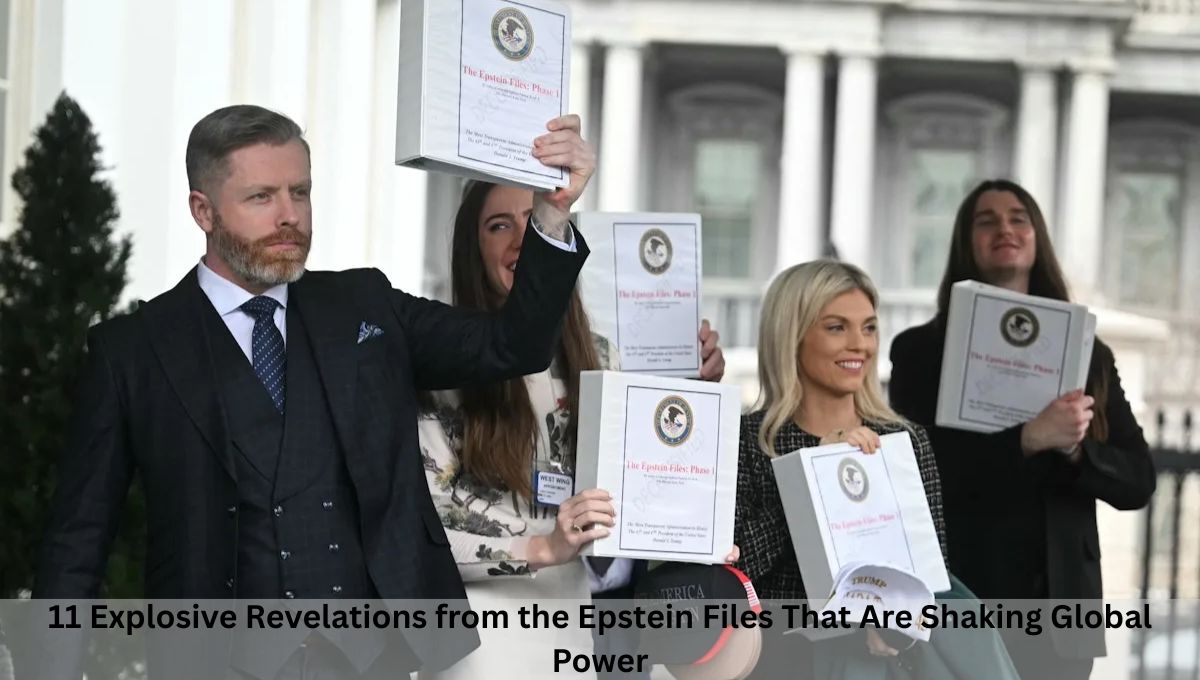
11 Explosive Revelations from the Epstein Files That Are Shaking Global Power while legal liability remains unproven. The release of millions of documents connected to convicted sex offender Jeffrey Epstein has reopened one of the most disturbing and unresolved scandals of the modern era.
While Epstein died by suicide in a Manhattan jail cell in 2019, the questions surrounding his rise, his protection, and his extraordinary access to global power have never gone away. What makes the latest tranche of disclosures different is scale. These files do not merely revisit Epstein’s crimes.
They expose the architecture of influence—the social, political, financial, and diplomatic networks that allowed Epstein to thrive for decades despite repeated warnings. No court has ruled that those named committed crimes. But legality is only one measure.
The deeper issue now confronting democracies worldwide is moral complicity, elite impunity, and the growing perception that power operates by different rules.
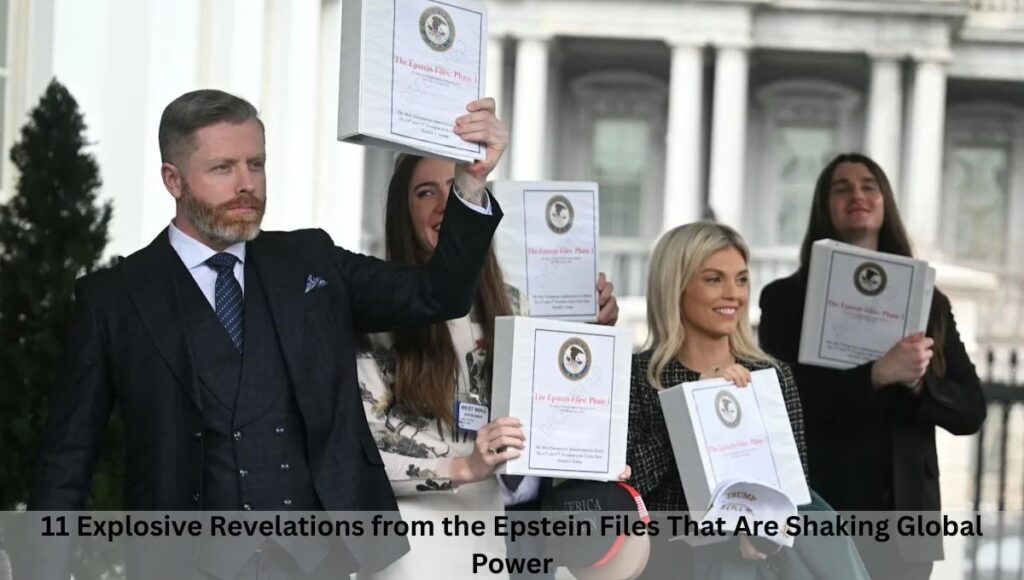
11 Explosive Revelations from the Epstein Files That Are Shaking Global Power
It May Not Be a Crime—But Is It a Moral Failure?
Deputy Attorney General Todd Blanche’s assertion that “it isn’t a crime to party with Jeffrey Epstein” is legally accurate.
Criminal prosecution requires evidence beyond a reasonable doubt. Social association alone does not meet that standard.
But such a framing risks erasing the lived reality of Epstein’s victims—girls trafficked, abused, and coerced into a world built for the pleasure and convenience of powerful men.
The Epstein files force a more uncomfortable question:
What responsibility do the powerful bear when they knowingly—or willfully—remain blind to abuse happening in their midst?
Epstein’s True Power: Curator of the Global Elite
Epstein was not simply a financier. He was a connector, a gatekeeper, and a social engineer.
A Network Built on Access
His circle included:
- Sitting and former US presidents
- Cabinet secretaries and diplomats
- Royals and crown princes
- Billionaires and tech titans
- Bankers, academics, and cultural icons
Epstein’s homes—from Manhattan to Palm Beach to his private Caribbean island—were not merely residences. They were nodes in a global influence network where politics, money, sex, and power intersected.
The Gilded World vs. Everyone Else
While Epstein’s circle attended yacht parties, private dinners, and elite conferences during the turn of the millennium, much of the world faced war, economic precarity, and financial collapse.
The contrast is stark:
- Ordinary citizens fought wars and survived recessions
- Elites socialized in spaces untouched by consequence
This imbalance now fuels populist anger and deepening mistrust in democratic institutions.
Willful Blindness: The Central Ethical Question
Many associates claim ignorance of Epstein’s crimes.
Yet Epstein had:
- A 2008 conviction for sex offences
- A widely known reputation
- A plea deal so lenient it shocked legal experts
The files reveal continued socializing after his release from jail.
Is Ignorance Plausible?
For some, perhaps. For all? That strains belief.
The more troubling possibility is willful blindness—a calculated decision not to ask questions that might disrupt access, influence, or advantage.
Donald Trump and Epstein: A Complicated History
Donald Trump’s relationship with Epstein has resurfaced repeatedly in the files.
What Is Known
- Trump socialized with Epstein in the 1990s and early 2000s
- In 2002, Trump publicly remarked on Epstein’s preference for “younger” women
- Trump later said they fell out years before Epstein’s crimes became public
Trump denies wrongdoing and has not been charged.
Recent Contradictions
In late 2025, Trump appeared to imply knowledge of others who stayed loyal to Epstein until it became inconvenient. More recently, he has urged Americans to “move on.”
Yet Trump declined to answer questions about justice for victims—an omission that continues to draw criticism.
The Clinton Connection
Former President Bill Clinton also appears frequently in Epstein-related materials.
- Clinton flew on Epstein’s plane multiple times
- He has expressed regret over the association
- No criminal charges have been filed
The issue remains symbolic rather than legal:
how proximity to power shielded Epstein from scrutiny for years.
Elon Musk, Bill Gates, and Tech’s Uneasy Intersection
The Epstein files reveal extensive outreach to tech leaders.
Elon Musk
Emails show Epstein attempting to lure Musk to social events and suggesting gatherings involving women. Musk denies attending Epstein’s island or engaging in wrongdoing.
Bill Gates
Gates met Epstein after his conviction, citing philanthropy discussions. He later acknowledged the relationship was a mistake.
These interactions highlight how Epstein positioned himself as a broker of ideas, capital, and connections, not just vice.
The International Reckoning: Beyond the United States
Unlike the US, where political momentum for deeper investigation appears limited, the fallout abroad has been swift and severe.
United Kingdom: The Fall of Peter Mandelson
Peter Mandelson, former UK cabinet minister and ambassador to Washington, is now under criminal investigation.
Key Revelations
- Financial transfers from Epstein
- Emails referring to Epstein as a close friend
- Allegations of leaking sensitive government information
Mandelson has resigned from public life. The scandal threatens Prime Minister Keir Starmer’s already fragile government.
The British Royal Family and Prince Andrew
Prince Andrew’s ties to Epstein have already reshaped the monarchy.
- He settled a civil sexual assault case without admitting guilt
- He was stripped of royal titles
- Continued revelations forced his permanent exile from public duties
The Epstein files have intensified scrutiny of royal accountability in a constitutional monarchy.
Norway: Crown Princess Mette-Marit
The Norwegian royal family faces its own crisis.
- Hundreds of emails reveal a warm, personal relationship
- Mette-Marit has publicly acknowledged poor judgment
- The scandal coincides with criminal charges against her son
Her statement reflects a rare admission of responsibility among Epstein’s former associates.
Slovakia: A National Security Adviser Resigns
Slovakia’s national security adviser stepped down after emails and photos linked him to Epstein years after his conviction.
This marks one of the clearest examples of political accountability triggered directly by the files.
India: Epstein, Anil Ambani, and Narendra Modi
Perhaps the most geopolitically sensitive revelations involve India.
What the Files Show
- Emails between Epstein and Anil Ambani after Epstein’s conviction
- Discussions touching on US ambassadors, Israel policy, and Modi’s schedule
- Claims—unverified—suggesting Epstein acted as a conduit of influence
India’s government has dismissed the material as “trashy ruminations” of a criminal. The opposition has demanded explanations.
No evidence has emerged that Prime Minister Modi had direct contact with Epstein.
Kevin Rudd and Australia
Former Australian Prime Minister Kevin Rudd appears in Epstein’s schedules.
Rudd denies visiting Epstein or maintaining a relationship. However, logistical emails suggest preparations for a meeting.
Once again, the issue is not prosecution—but perception.
Victims Left Behind
Lost amid the global spectacle are the victims.
- Girls as young as 13
- Lives permanently altered
- Justice delayed, diluted, or denied
Recent document releases even exposed victim identities, forcing emergency legal action to restore anonymity.
For many survivors, Epstein’s death ended any hope of full accountability.
Conspiracy, Cynicism, and Democratic Decay
The Epstein files have become fertile ground for conspiracy theories. Even unproven allegations gain traction in an era of distrust.
This dynamic benefits political actors who argue that everyone is corrupt, flattening moral distinctions and weakening democratic norms.
Social Media and the End of Moral Nuance
Public judgment today is binary:
- Guilty or innocent
- Hero or villain
The Epstein files illustrate how reputations collapse instantly, regardless of legal findings. Moral gradation no longer exists in the algorithmic age.
A Crisis Bigger Than Epstein
Jeffrey Epstein was not the system. He was a symptom.
The real crisis lies in:
- Elite insularity
- Lack of transparency
- Disparate standards of accountability
When power becomes socialized within closed circles, abuse thrives.
Conclusion: Legal Innocence, Moral Reckoning
Those who partied with Epstein may never face criminal charges. But history judges more than legality.
The Epstein files force a reckoning with uncomfortable truths:
- Power protects itself
- Silence enables abuse
- Victims pay the price
Epstein is gone. The question now is whether the systems that enabled him will change—or simply wait for the next scandal.
Also Read: 16 Files Vanish: Explosive Epstein Documents Spark Victims’ Fury
Also Read: Bill Gates, Elon Musk and many more earth-shaking names – List of powerful men in Epstein files