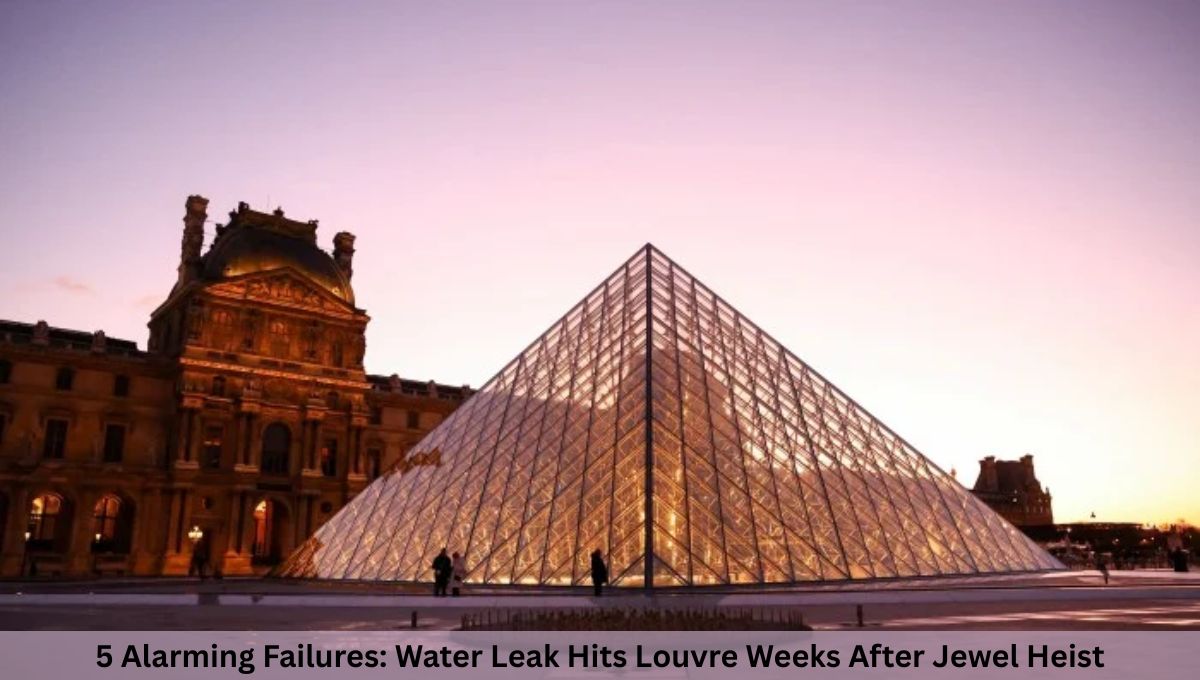
5 Alarming Failures: Water Leak Hits Louvre Weeks After Jewel Heist, raising safety concerns.Paris’s world-famous Louvre Museum is once again under intense scrutiny after a water leak damaged hundreds of works in its Egyptian antiquities department — just weeks after a brazen €88 million ($102 million) jewel heist exposed major security vulnerabilities at the iconic institution.
The latest incident, discovered in late November, has intensified concerns about the ageing infrastructure of the world’s most visited museum and raised uncomfortable questions about whether sufficient resources are being directed toward maintenance and preservation. According to museum officials, between 300 and 400 works, mostly books and archival materials used by researchers, were affected by the leak.
While authorities stress that no irreplaceable heritage artefacts were harmed, critics argue the episode reflects broader, long-standing neglect of the Louvre’s physical structure.
5 Alarming Failures: Water Leak Hits Louvre Weeks After Jewel Heist
What Happened: Inside the Louvre Water Leak
The water leak was discovered on 26 November, several hours after the Egyptian antiquities library had closed for the day.
Cause of the Leak
According to museum officials and French media reports:
- The leak originated from an obsolete heating and ventilation system
- A valve was accidentally opened, allowing water to seep through the ceiling
- The system had reportedly been shut down for months and was already scheduled for replacement in September 2026
The flooding occurred in one of the three rooms of the Egyptian antiquities library, located in the Mollien wing of the palace.
Scale of the Damage: Hundreds of Books Affected
The Louvre’s deputy administrator, Francis Steinbock, confirmed the extent of the damage in interviews with French television and international news agencies. “We have identified between 300 and 400 works, the count is ongoing,” Steinbock said.
The affected materials include:
- Egyptology journals
- Scientific documentation
- Periodicals and archaeological reviews
- Publications dating from the late 19th to early 20th centuries
These volumes are frequently consulted by Egyptologists, researchers, and students working at the museum.
‘No Precious or Unique Artefacts Affected,’ Museum Says
Despite the scale of the incident, the Louvre has emphasised that no irreplaceable items were lost. “No heritage artefacts have been affected by this damage,” Steinbock told Agence France-Presse.
He added:
“At this stage, we have no irreparable and definitive losses in these collections.”
While officials acknowledged that the damaged works are “extremely useful”, they stressed that they are not unique, seeking to reassure the public and the academic community.
Restoration Efforts Underway
The museum has moved quickly to mitigate the damage.
Restoration Process
- Affected books are being carefully dried
- Volumes will be sent to specialist bookbinders
- Items will undergo restoration before being returned to the shelves
An internal investigation has also been launched to determine how the malfunction occurred and whether preventive measures were adequate. Steinbock described the incident as “extremely regrettable”, acknowledging that the technical issue causing the leak had been known for years.
A Museum Under Pressure: Third Major Crisis in Months
The water leak marks the third major issue faced by the Louvre in just a few months — an extraordinary run of setbacks for one of the world’s cultural crown jewels.
Timeline of Recent Problems
- 19 October: Four thieves steal French crown jewels worth €88 million in broad daylight
- Early November: Structural weaknesses prompt partial closure of a gallery hosting Greek vases and offices
- Late November: Water leak damages hundreds of works in Egyptian antiquities library
Together, these events have painted a troubling picture of systemic vulnerabilities at the museum.
The Infamous Jewel Heist That Shocked France
The water leak comes on the heels of one of the most daring museum robberies in recent memory.
On 19 October, four burglars:
- Entered the Louvre during visiting hours
- Stole royal necklaces, tiaras, and earrings
- Completed the theft in under seven minutes
The jewels, valued at €88 million ($102 million), included priceless Napoleonic-era pieces. Despite arrests and charges against four suspects, the stolen jewellery has not been recovered. In response, the Louvre quietly moved some of its most precious jewels to the Bank of France for safekeeping.
Long-Standing Infrastructure Warnings
French art and heritage watchdogs say the latest damage was not unforeseeable.
Specialist publication La Tribune de l’Art reported that:
- The Egyptian antiquities department had repeatedly requested funding to protect the library
- Museum services were aware of the dilapidated condition of pipes running through false ceilings
- Smaller leaks had occurred previously
The publication argued the flooding highlights a systemic issue: an institution prioritising acquisitions and exhibitions over essential maintenance.
Audit Report Criticised Museum Spending
Concerns about the Louvre’s infrastructure were echoed in an October report by France’s public audit body, the Cour des Comptes.
The watchdog concluded that:
- The museum’s excessive spending on acquiring artwork
- Had come “to the detriment of the maintenance and renovation of buildings”
The report warned that failure to modernise ageing systems posed growing risks to collections, staff, and visitors.
Ticket Price Hike to Fund Repairs
In response to mounting criticism and financial strain, the Louvre announced a significant ticket price increase for non-EU visitors.
Key Changes
- Ticket prices for visitors from countries such as the US, UK, and China will rise to €32
- This represents a 45% increase
- The change takes effect January 2026
The museum estimates the move will:
- Boost annual revenue by up to $23 million
- Help fund long-delayed structural and security upgrades
A Global Institution Under the Microscope
The Louvre welcomed 8.7 million visitors in 2024, making it the most visited museum in the world. Nearly 69% of those visitors came from abroad, underscoring its global importance.
Yet the recent string of crises has sparked debate about how such a renowned institution could allow:
- Obsolete systems to remain in use
- Known risks to go unaddressed
- Security gaps to persist
For critics, the water leak and jewel heist point to deeper governance and funding priorities that must be re-evaluated.
Balancing Preservation, Security, and Access
Museum officials insist steps are being taken to correct the problems, but heritage experts warn that preventive maintenance is far less costly than restoration after damage occurs.
As Steinbock acknowledged, the malfunction responsible for the leak had been identified years ago, but repairs were scheduled far into the future — a delay that ultimately proved costly.
Conclusion: A Wake-Up Call for the Louvre
The water leak that damaged hundreds of books at the Louvre may not have destroyed irreplaceable artefacts, but it has delivered another blow to the museum’s reputation at a vulnerable moment.
Coming so soon after a spectacular jewel heist and structural concerns, the incident underscores the urgent need for comprehensive investment in the infrastructure, security, and long-term preservation of one of the world’s most treasured cultural institutions.
For the Louvre, the challenge now is not only restoring damaged works — but restoring confidence that the palace guarding humanity’s shared heritage is equipped to protect it.
Also Read: 8 Crown Jewels Stolen in a Shocking $102 Million Louvre Heist
Also Read: Water leak at the Louvre leaves hundreds of rare books damaged
Related Posts:
- $102-Million Louvre Heist: 7 Key Twists from Arrests…

- 8 Crown Jewels Stolen in a Shocking $102 Million…

- 7 Astonishing Twists in the $100 Million Louvre…

- 7 Shocking Facts: 600+ Artefacts Stolen in UK Museum Heist

- 7 Heartbreaking Facts About Venezuela's Earthquake Disaster

- 5 Major Takeaways from the US Supreme Court's…