7 Shocking Facts: 600+ Artefacts Stolen in UK Museum Heist, including rare Indian treasures. One of the largest heritage burglaries in recent British history has shaken the global museum community, after more than 600 artefacts — including several rare Indian objects dating back to the British era — were stolen from an offsite storage facility of the Bristol Museum.
The heist, first carried out in late September but disclosed only recently, has ignited widespread debate on museum security, colonial-era collections, and the alarming rise of high-value art thefts worldwide.
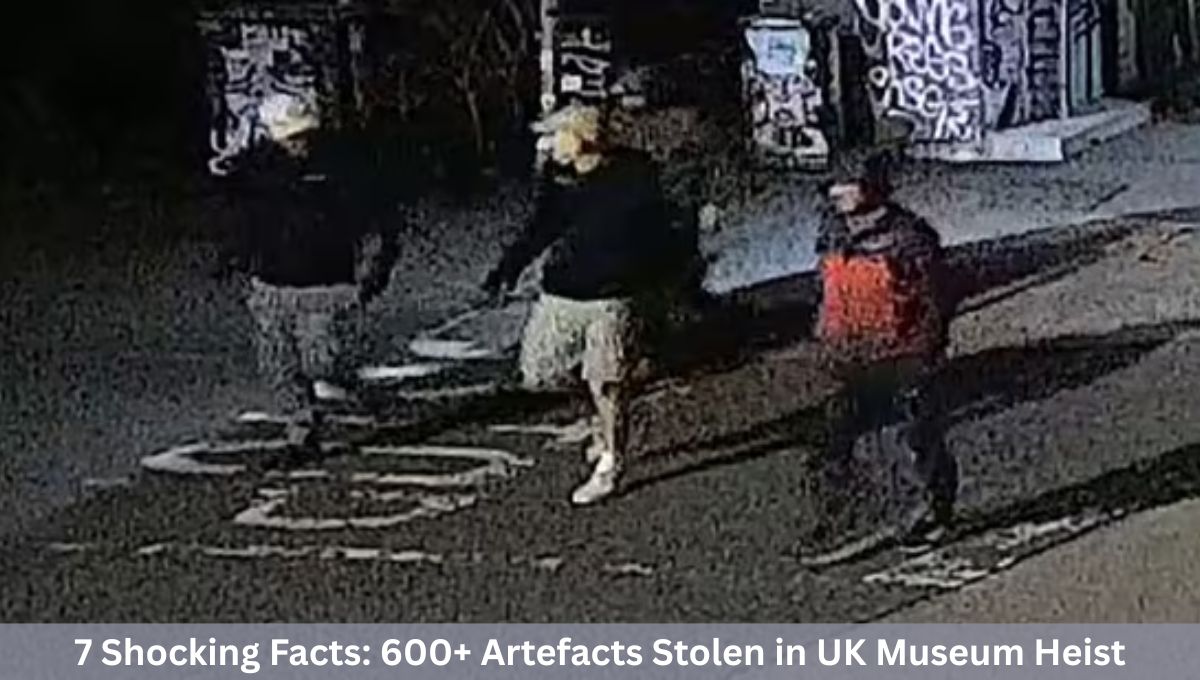
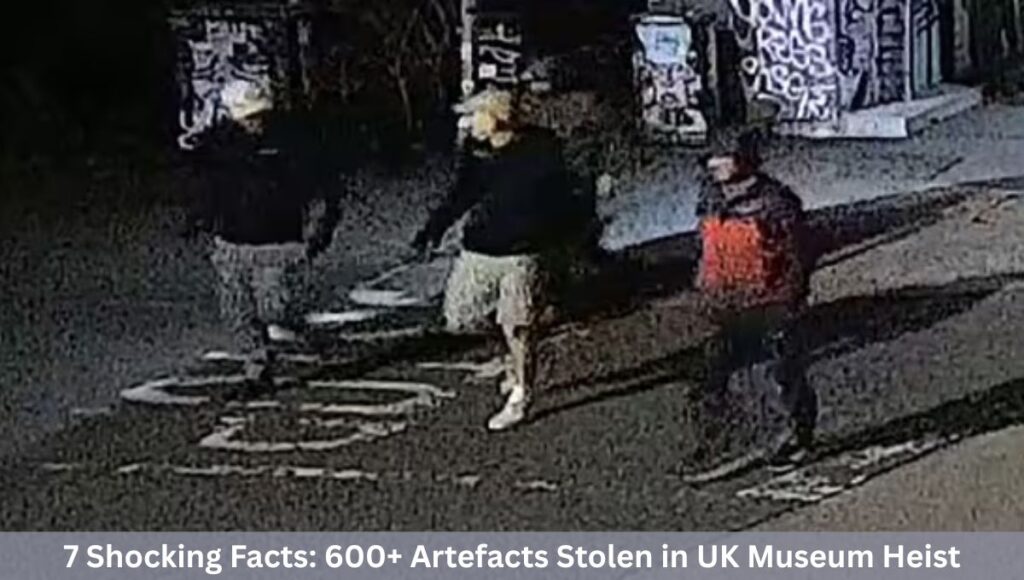
The Avon and Somerset Police on Thursday released CCTV images of four suspects, appealing to the public to help identify the men believed to be behind the meticulously executed burglary. Items taken include jewellery, medals, carved ivory pieces, figurines, military insignia, and historical artefacts reflecting Britain’s interactions with former colonies across Asia, Africa, and the Pacific.
Among the Indian items stolen were a carved ivory Buddha statue, a belt buckle worn by an East India Company officer, and an ornamental carved ivory elephant with ebony eyes — artefacts considered irreplaceable in cultural and historical value.
The heist has raised deeper questions about safeguarding museum collections, especially those linked to contested colonial histories. It has also amplified global concerns following recent art robberies in Brazil, France, and other parts of Europe, pointing to what experts describe as a “wave of organised cultural crimes.”
7 Shocking Facts: 600+ Artefacts Stolen in UK Museum Heist
How the Bristol Museum Heist Unfolded
A break-in at an offsite facility, not the main museum
Contrary to initial assumptions, the robbery did not occur inside the Bristol Museum building visited by the public, but at its offsite storage facility on Cumberland Road. The site, which houses thousands of artefacts from the British Empire and Commonwealth Collection (BECC), became the focus of the incident when thieves targeted it in the early hours of September 25, between 1 am and 2 am.
According to investigators, the offenders gained access to the storage building using methods the police have not publicly disclosed, citing the ongoing nature of the investigation. The burglary is believed to have been executed twice, based on early forensic and CCTV assessments — with the second break-in causing the most significant loss.
Why did the police reveal the theft after two months?
Authorities have not explained why public notification came so late, but Bristol City Council said initial audits and internal investigations were necessary before releasing information. Detectives spent weeks cataloguing the stolen items, reviewing CCTV recordings, and working with museum officials to identify the full scope of loss.
Detective Constable Dan Burgan, who is leading the investigation, called the incident “a significant loss for the city” and emphasised that many of the stolen artefacts were personal donations representing generations of history.
What Was Stolen? A Deep Dive Into the 600+ Missing Artefacts
The scale of the heist is vast, and while an exact financial valuation has not yet been disclosed, officials emphasise that the cultural value is immeasurable. The stolen artefacts belonged to the museum’s British Empire and Commonwealth Collection, a repository chronicling centuries of interactions between Britain and its colonies.
Categories of stolen artefacts
Police confirmed that the missing items include:
- Jewellery: necklaces, bangles, rings, and decorative ornaments
- Military memorabilia: medals, badges, pins, and belt buckles
- Carved ivory objects: elephant figurines, Buddha statues, and intricate carvings
- Decorative silverware and bronze figurines
- Natural history specimens: geological samples and mineral specimens
- Cultural artefacts donated by individuals who lived or worked in British colonies
Bristol City Council said the artefacts spanned more than two centuries, documenting life, culture, and political history across British-ruled territories.
The India Link — Rare Colonial-era Artefacts Among Items Stolen
Among the most culturally sensitive losses are artefacts originating from India, many associated with the British colonial period and the East India Company.
Key Indian artefacts stolen
- Ivory Buddha on a carved stone base, featuring seven snake heads
- Hand-carved ivory elephant ornament with inlaid ebony eyes
- East India Company officer’s waist belt buckle
- Other military medals, pins, and insignia tied to India’s colonial-era regiments
Experts warn that these items could be targeted by private collectors in the black market, especially because ivory artefacts are difficult to trace and often trafficked in secret networks.
Why the Indian artefacts matter
These items hold significant value not only for their craftsmanship but also for their deep association with colonial history. They provide insight into:
- British rule in India
- Military structures of the East India Company
- Cultural exchanges during the 18th and 19th centuries
- Personal memorabilia of officers and families who lived in colonial India
The theft of such artefacts also impacts ongoing global discussions about the repatriation of colonial-era objects from European museums.
Police Hunt for Four Suspects — What the CCTV Reveals
On Thursday, Avon and Somerset Police released several grainy CCTV images showing four white males walking along a road carrying bags shortly after the theft.
Detailed suspect descriptions
- Man 1:
- White male, medium-to-stocky build
- White cap, black jacket
- Light trousers, black trainers
- Man 2:
- White male, slim build
- Grey hooded jacket
- Black trousers and trainers
- Man 3:
- White male
- Green cap, black jacket
- Light-coloured shorts, white trainers
- Seen walking with a slight limp on his right leg
- Man 4:
- White male, large build
- Distinctive two-toned orange and navy/black puffed jacket
- Black trousers, black-and-white trainers
Police have urged residents and antique dealers to remain vigilant and to report any unusual attempts to sell historical artefacts online. Anyone with information can contact the police under case reference 5225269603.
Why Was the British Empire and Commonwealth Collection Targeted?
The BECC has long been known for its historical depth and diversity, containing artefacts from across Asia, Africa, the Caribbean, and the Pacific. Many of these objects were donated by families who lived through British colonial rule.
A collection rich in global heritage
The archive includes:
- Personal diaries
- Household objects
- Military records
- Clothing from African nations
- Photographs spanning the 1920s to 1970s
- Film and audio recordings
The theft has triggered discussions about vulnerabilities in offsite museum storage facilities, which often house the majority of collections not on public display.
A Pattern of Global Museum Heists — Brazil, Louvre, and Now Bristol
The Bristol museum heist comes during a troubling wave of international cultural thefts.
The Brazil heist
On December 10, armed thieves stole:
- Henri Matisse engravings from his Jazz series
- Five paintings by Brazilian artist Candido Portinari
The robbery took place openly during an exhibition at São Paulo’s Mário de Andrade Library.
The Louvre heist in Paris
In October, a group stole over $100 million worth of crown jewels connected to Napoleon’s era from the Louvre in a daytime burglary. A French Senate inquiry later pointed to major security lapses.
A growing global pattern
The International Council of Museums (ICOM) issued a warning about:
- Increased targeting of objects made from precious metals
- Organised networks focusing on museums and religious institutions
- The need for specialised police forces
ICOM emphasised that the loss of such artefacts is an “irreplaceable loss of heritage,” highlighting that museum security must evolve urgently.
Bristol’s Historical Context — A City with Deep Colonial Roots
Bristol’s role in the transatlantic slave trade and its ties to colonial expansion have long shaped its cultural landscape.
The city’s complex past
- Before 1807, Bristol ships transported over 500,000 enslaved Africans.
- Wealth from the slave trade funded much of Bristol’s Georgian architecture.
- In 2020, anti-racism protestors toppled the statue of slave trader Edward Colston, thrusting the city into global debate.
The stolen artefacts, many from former British colonies, were meant to help the public understand the layered and often difficult history of empire. Their disappearance therefore represents not only a material loss but also an educational and cultural blow.
Museum Security Under Scrutiny
The Bristol theft has intensified debates about the security of museum storage sites, especially those housing sensitive or high-value objects.
Was it an inside job?
Some experts have suggested the possibility of insider knowledge, especially since:
- The burglars knew where high-value items were stored
- The facility was hit twice
- Large quantities were taken without triggering immediate alarm
Authorities have not confirmed any such theory.
Security upgrades already underway
Bristol City Council says security has been “tightened significantly” at the Cumberland Road facility after the burglary.
What Happens Next? Police, Museums, and International Response
Investigations are ongoing, and police say they are coordinating with:
- Border authorities
- Art crime units
- International museums
- Auction houses and online marketplaces
Experts warn that stolen artefacts may already be trafficked across borders, concealed in private collections, or broken down to avoid detection — particularly ivory, which is often smuggled in illicit wildlife trade channels.
ICOM urges countries to create specialised art-crime enforcement units similar to those in Italy and the United States.
A Significant Cultural Loss — and a Global Wake-Up Call
For Bristol, the heist represents a painful blow to a collection meant to help educate future generations about Britain’s complex imperial legacy. For India, the loss of historically significant artefacts linked to the East India Company and colonial-era life underscores the vulnerability of diaspora heritage.
For the broader world of museums, the Bristol burglary serves as yet another warning that cultural institutions — especially offsite storage sites — face increasing threats. As Detective Constable Dan Burgan said, “These items form part of a collection that provides insight into a multi-layered part of British history. We must bring those responsible to justice.”
The hunt for the suspects continues, and investigators hope the public can help solve what is now one of the UK’s most significant museum thefts in recent decades.
Also Read: 7 Astonishing Twists in the $100 Million Louvre Heist That Shook the World