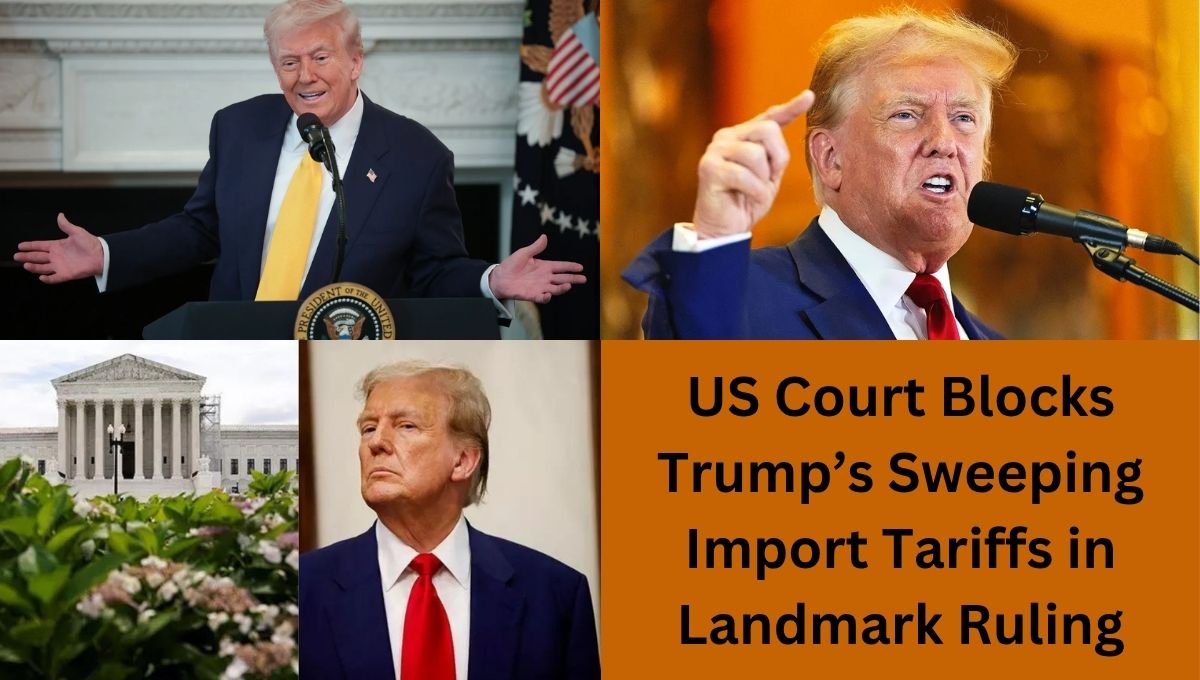
In a significant legal development, US Court Blocks Trump’s Sweeping Import Tariffs in Landmark Ruling. The US Court of International Trade in Manhattan has halted the majority of President Donald Trump’s sweeping import tariffs, known as the “Liberation Day” tariffs.
The court ruled that the President exceeded his authority under the International Emergency Economic Powers Act (IEEPA) by imposing broad tariffs on countries with large trade surpluses against the United States.
This landmark decision challenges the Trump administration’s use of emergency powers to enforce tariffs on major trading partners such as China, Mexico, and Canada. The ruling reinforces that Congress, not the President, holds exclusive constitutional authority over trade regulation.
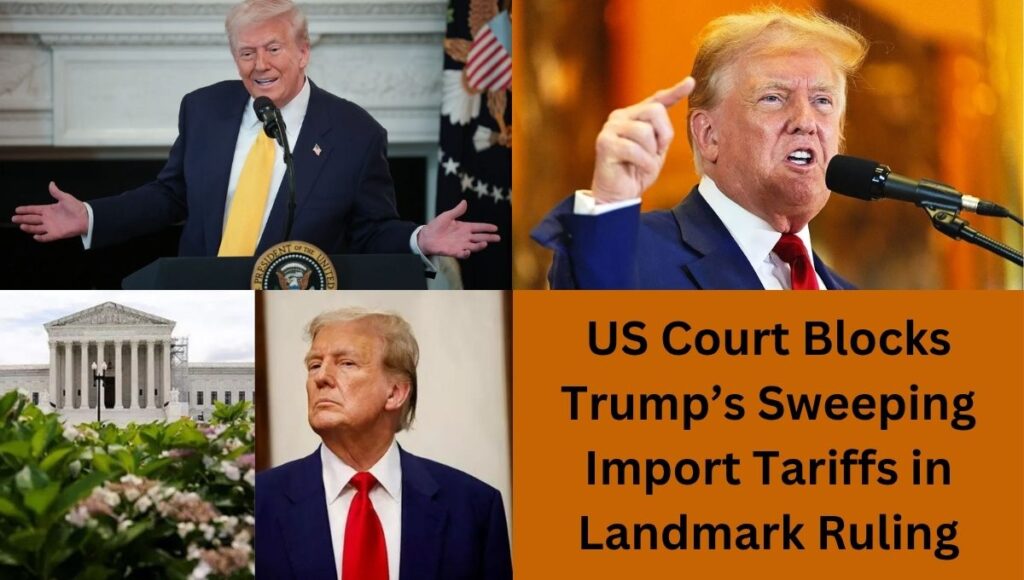
US Court Blocks Trump’s Sweeping Import Tariffs in Landmark Ruling
Background: Trump’s “Liberation Day” Tariffs and Emergency Powers
On April 2, President Trump unveiled a sweeping tariff plan dubbed “Liberation Day” tariffs. These tariffs imposed a baseline 10% import tax on most goods from countries with trade surpluses against the US. Countries like China and the European Union faced even higher rates, with tariffs reaching 30% in some cases.
The administration justified the tariffs by invoking IEEPA, a 1977 law that grants the President economic powers during national emergencies or extraordinary threats.
Trump’s team argued that persistent trade deficits and national security concerns such as the illegal flow of fentanyl from Mexico and Canada warranted these emergency tariffs. Officials also controversially suggested the tariffs helped ease tensions between India and Pakistan.
Court’s Ruling: Limits on Presidential Tariff Authority
Rejecting the Trump administration’s arguments, the three-judge panel stated that Congress did not grant the President unlimited tariff powers under IEEPA. The court emphasized that the US Constitution assigns the exclusive power to regulate commerce with foreign nations to Congress.
While the President can act in genuine economic emergencies, the court clarified that imposing tariffs remains a legislative function. The judges described any “unbounded” delegation of tariff authority to the executive branch as unconstitutional.
“The court does not pass upon the wisdom or likely effectiveness of the President’s use of tariffs as leverage. That use is impermissible not because it is unwise or ineffective, but because federal law does not allow it,” the ruling stated.
Impact on Trade and the Economy
The ruling immediately stops the enforcement of Trump’s global tariffs, including the 30% tariffs on Chinese goods and 25% tariffs on imports from Mexico and Canada.
However, tariffs imposed under Section 232 of the Trade Expansion Act covering steel, aluminum, and autos remain unaffected.
Financial markets reacted positively. US stock futures surged, with Dow futures rising nearly 500 points. Economists believe the ruling will ease pressure on small and medium-sized American businesses struggling with higher import costs caused by tariffs.
Joe Brusuelas, Chief Economist at RSM US, noted the decision could mark a “significant policy pivot” benefiting the “quiet majority” in Congress opposed to current trade policies. Smaller firms, especially, lack the financial margin to absorb ongoing tariff hikes.
Legal Challenges and Future Appeals
The case originated from lawsuits filed by the Liberty Justice Center on behalf of five small US importers and a coalition of 13 states opposing the tariffs. Plaintiffs argued that the tariffs caused economic harm and exceeded the powers granted under IEEPA.
The Trump administration immediately filed a notice of appeal. Legal experts predict the case could reach the US Supreme Court, setting an important precedent on presidential limits in trade authority.
Law professor Ilya Somin, representing plaintiffs, praised the ruling as a major victory against an “unconstitutional usurpation of legislative power.” He emphasized no statute authorizes the President to impose tariffs unilaterally under emergency powers.
White House Response and Political Reactions
The White House condemned the ruling. Deputy Chief of Staff Stephen Miller labeled it a “judicial coup” on social media.
A spokesperson asserted that “it is not for unelected judges to decide how to properly address a national emergency,” reaffirming the administration’s commitment to executive powers.
This decision highlights an ongoing tension between the executive branch and judiciary over trade policy and emergency authority.
It also complicates Trump’s approach to negotiations, particularly with China, where tariff reductions had been temporarily implemented as part of ongoing talks.
What the Ruling Means for Businesses and Consumers
If upheld on appeal, the ruling could bring clarity to US businesses and consumers impacted by tariffs. Many companies have faced higher costs for imported goods, disrupted supply chains, and rising prices.
Jeffrey Schwab, lead attorney for the Liberty Justice Center, said businesses seek clear rules rather than “the uncertainty of not knowing what the tariff rate is at any given time.” Blocking the tariffs under IEEPA can reduce that uncertainty and help companies plan better.
Broader Implications for US Trade Policy
This ruling serves as a pivotal check on executive power, reaffirming that trade policy is a congressional prerogative. If the ruling stands, it could reshape the balance of power in US trade governance for years, potentially limiting presidents’ abilities to impose sweeping tariffs via emergency declarations.
Meanwhile, industry-specific tariffs on steel and aluminum remain in effect, meaning trade tensions are far from resolved.
Conclusion: A Constitutional Check on Tariff Authority
The US Court of International Trade’s decision to halt Trump’s sweeping tariffs marks a significant constitutional reaffirmation of congressional authority over trade. It challenges the use of emergency economic powers to impose broad tariffs and signals a shift in the ongoing battle over US trade policy.
As the Trump administration appeals, this ruling will be closely watched by policymakers, businesses, and global trade partners alike. Its final outcome may have lasting consequences for how trade disputes and economic emergencies are handled in the future.
Also Read: Trump Furious After 7-4 Tariff Ruling, Warns US Would Be “Completely Destroyed” Without Duties
Also Read: Trump admin appeals US court ruling blocking tariffs