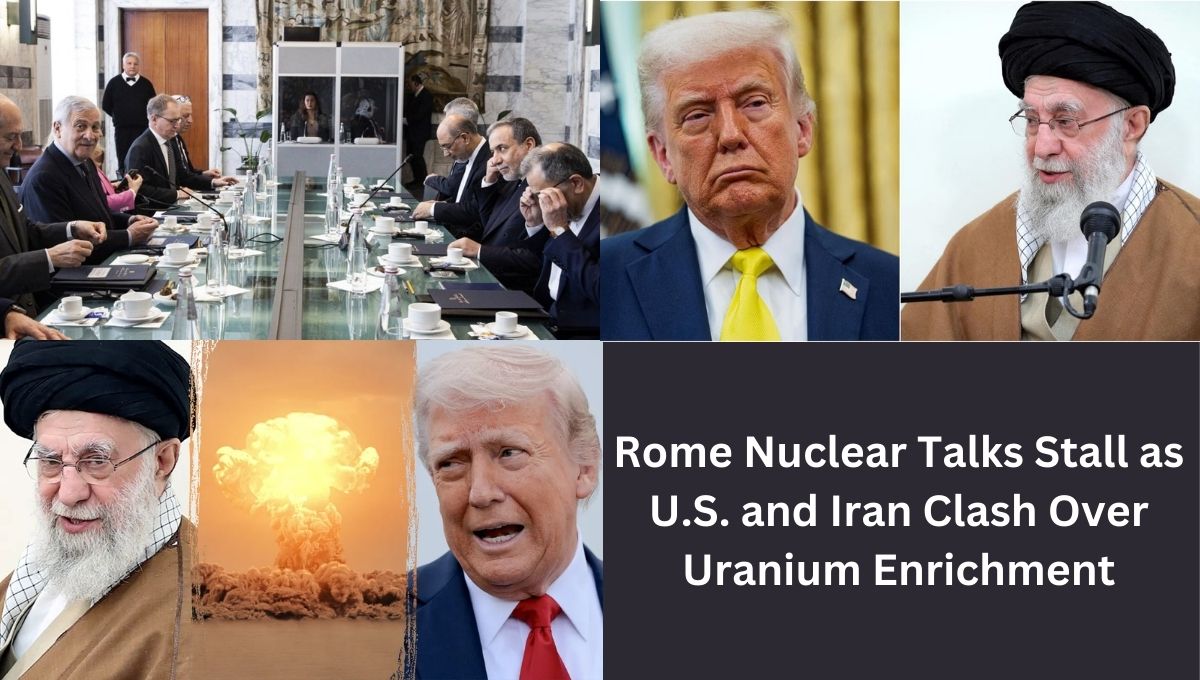
The fifth round of Rome Nuclear Talks Stall as U.S. and Iran Clash Over Uranium Enrichment. The nuclear talks between Tehran and Washington concluded in Rome on Friday, May 23, 2025, with no breakthrough in sight as uranium enrichment remains the central obstacle. Trump pushes for zero enrichment while Iran demands sanctions relief. Regional tensions rise amid Israeli threats.
Despite growing international pressure and increasing tensions across the Middle East, the core issue of uranium enrichment continues to divide the United States and Iran, leaving the future of diplomacy uncertain.
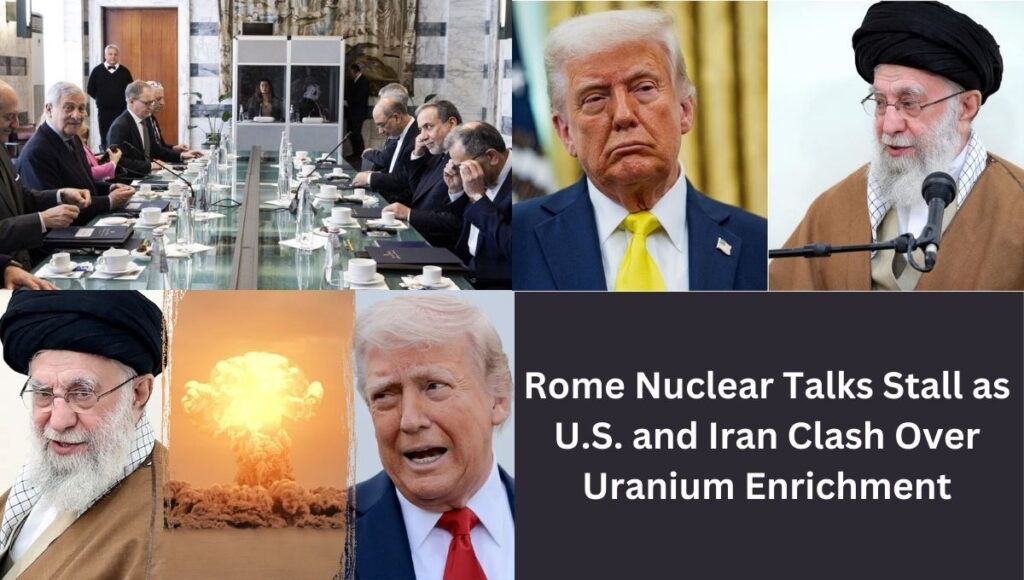
Rome Nuclear Talks Stall as U.S. and Iran Clash Over Uranium Enrichment
Enrichment at the Heart of the Deadlock
At the center of the current standoff is the unresolved issue of uranium enrichment, a process that Iran insists is essential for its civilian nuclear energy program.
The Trump administration, however, has made clear that zero enrichment is the baseline for any renewed nuclear deal.
“Iran will never stop enrichment not now, not ever,” said Iran’s Foreign Minister Abbas Araghchi, who led the delegation in Rome. On social media platform X, he stated:
“Zero nuclear weapons = we DO have a deal. Zero enrichment = we do NOT have a deal.”
This hardline rhetoric underscores Tehran’s determination to maintain what it considers a sovereign right under the Nuclear Non-Proliferation Treaty (NPT), even as Washington views domestic enrichment as a red flag for potential nuclear weapons development.
Trump Pushes ‘Maximum Pressure’ Again
Since returning to the White House, President Donald Trump has reinvigorated his “maximum pressure” campaign against Iran, reinstating heavy sanctions and demanding broader limitations on Iran’s nuclear program.
Trump is seeking what he calls a “better deal,” one that goes beyond the 2015 Joint Comprehensive Plan of Action (JCPOA).
In remarks last week, Trump warned, “We’re very close to stopping Iran from making ‘nuclear dust’. We will not let them play the world.”
According to White House officials, Trump sees Rome as a key test of Iran’s seriousness and has threatened military action if negotiations collapse.
Oman Mediates With Limited Progress
The Rome talks were indirectly conducted, with Omani Foreign Minister Badr al-Busaidi acting as the go-between.
Oman has a long history of mediating between Washington and Tehran, and while some progress was reported, the enrichment stalemate remains unresolved.
Oman has proposed a Middle Eastern uranium consortium, backed by regional powers and international oversight, to supply Iran with low-enriched uranium for peaceful use.
However, Iranian officials have dismissed such arrangements, insisting on domestic control over enrichment.
Iran’s Red Lines and Sanctions Relief Demands
Iran’s stance is heavily influenced by its crippling economic crisis. The Islamic Republic seeks the lifting of U.S. sanctions, especially those targeting its oil exports and financial systems.
In April, the Iranian rial briefly surpassed 1 million to the U.S. dollar, highlighting the economic desperation.
Iran also wants guarantees that the U.S. will not renege on a new agreement, as Trump did in 2018 when he withdrew from the JCPOA.
“Without firm guarantees, we cannot risk dismantling 30 years of nuclear progress,” said political analyst Mohammad Marandi.
Israeli Threats Raise the Stakes
Meanwhile, Israel is closely watching the negotiations and has hinted at unilateral military action if Iran’s enrichment activities continue.
Prime Minister Benjamin Netanyahu, after a phone call with Trump, emphasized that Israel will “do whatever is necessary to stop a regime that threatens to annihilate us.”
U.S. intelligence sources told CNN that Israel may be preparing for a preemptive strike on Iranian nuclear sites if diplomacy fails.
Iran responded by warning that it would hold the U.S. accountable for any Israeli aggression. Adding to the tension, Iranian students formed a human chain around the Fordo enrichment facility, showing public resistance to foreign intervention.
IAEA and the JCPOA Snapback Clock Ticking
The outcome of the Rome talks is also critical as the International Atomic Energy Agency (IAEA) prepares for a major review session in Vienna in June.
European JCPOA signatories France, Germany, and the UK have signaled they may trigger the “snapback” mechanism, which would reimpose UN sanctions if Iran is deemed non-compliant.
Iran is currently enriching uranium to 60% purity, far above the 3.67% cap set by the 2015 agreement.
While Iran claims this is for peaceful use, Western nations see it as a dangerous step toward weapons-grade levels.
Araghchi responded that triggering the snapback would “mark the end of Europe’s role” in the negotiations and could escalate tensions irreversibly.
Shifting Alliances: Iran, Russia, and China
Isolated by the West, Iran is increasingly reliant on Russia and China. Moscow has reportedly exchanged military and nuclear expertise for Iranian drones, while Beijing is accused of supplying materials linked to missile development.
Still, Iran wants Western companies to re-enter its market. In a March op-ed, Araghchi wrote that American businesses are losing out on a “trillion-dollar opportunity” due to outdated sanctions and Congressional barriers.
Conclusion: Narrowing Window for Diplomacy
As negotiators prepare for another round of U.S.-Iran nuclear talks, the outlook remains bleak. The Rome talks ended with both sides standing firm, particularly on uranium enrichment.
While officials from both camps claim to prefer diplomacy, the window for a peaceful resolution is shrinking.
The upcoming IAEA review, threats from Israel, and internal pressures within Iran make this a volatile moment for regional and global security.
Whether a new nuclear agreement can be reached or whether the world is heading toward a more dangerous confrontation will depend on the next few weeks of diplomacy.
Stay with The News for continuing coverage on U.S.-Iran relations, nuclear diplomacy, and developments from the Middle East.
Also Read: Iran Defiant on Nuclear Enrichment Despite US-Israel Strikes; Araghchi Urges Negotiated Solution
Also Read: Iran turns to Oman in bid to soften US stance in nuclear talks
Related Posts:
- 7 Powerful Facts About Ayatollah Ali Khamenei’s…
- 5 Major Takeaways from the US Supreme Court's…

- 9 Explosive Claims as Trump Says US Winning Iran War

- 3 Explosive Conditions Iran Sets to End War with US…
- 11 Explosive Warnings as Trump Vows to ‘Knock the…

- 7 Heartbreaking Facts About Venezuela's Earthquake Disaster