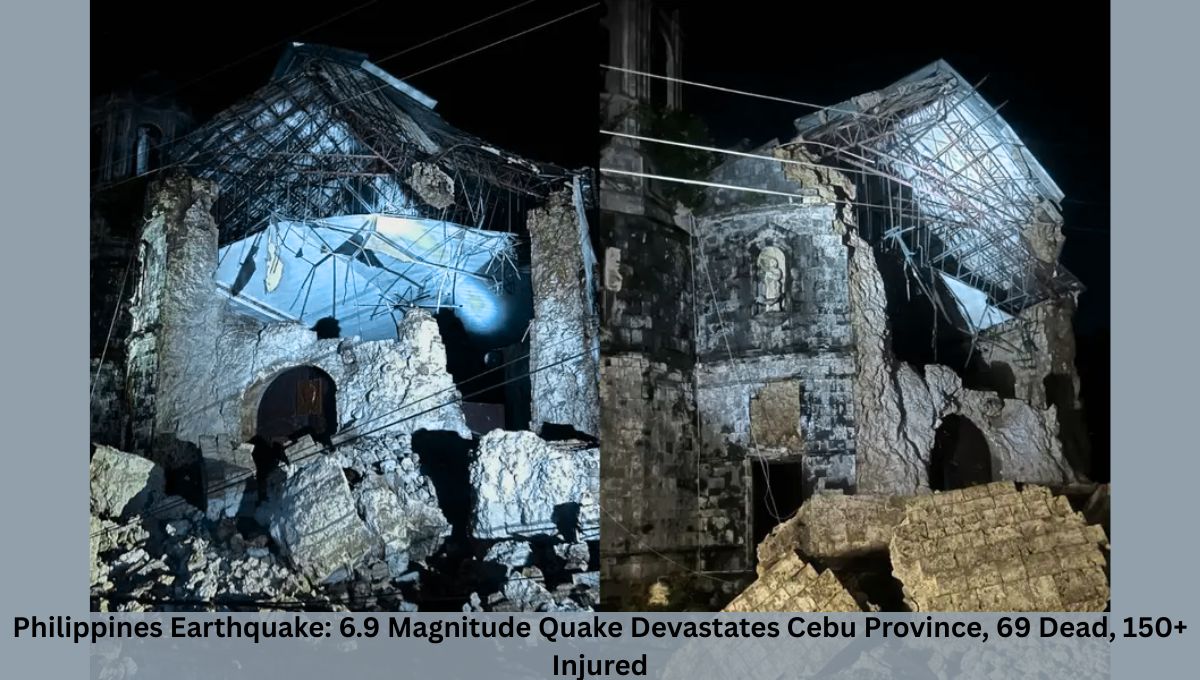
A massive Philippines Earthquake: 6.9 Magnitude Quake Devastates Cebu Province, 69 Dead, 150+ Injured. A powerful 6.9 magnitude earthquake struck the central Philippines late Tuesday night, devastating Cebu province and nearby towns. At least 69 people have been confirmed dead and more than 150 injured, with the toll expected to rise as rescue operations continue amid collapsed buildings, landslides, and widespread structural damage.
The United States Geological Survey (USGS) reported that the earthquake’s epicenter was located 17 kilometers northeast of Bogo City, a coastal hub in Cebu province with around 90,000 residents. The quake, triggered by a local fault line, struck at approximately 9:59 p.m. local time, jolting thousands of residents from their homes and causing mass panic across the region.
Philippines Earthquake: 6.9 Magnitude Quake Devastates Cebu Province, 69 Dead, 150+ Injured
Cebu Province Hit Hard
Among the hardest-hit areas was Bogo City, which reported at least 14 deaths. A landslide in a mountain village buried several homes, leaving rescuers scrambling through hazardous terrain to reach survivors.
Authorities confirmed that the local hospital in Bogo had been “overwhelmed” by the inflow of casualties, forcing medical workers to treat patients in hallways and outdoor tents.
Emergency officials warned that the death toll could rise as search teams continue to dig through rubble and collapsed homes. Sniffer dogs, police, military units, and civilian volunteers are conducting door-to-door searches, while heavy equipment including backhoes are being deployed to clear debris.
Also Read: What triggered the Philippines’ 6.9 earthquake? A look beneath the surface
San Remigio: Casualties and Appeals for Aid
The nearby town of San Remigio also reported multiple fatalities. Vice Mayor Alfie Reynes confirmed at least six deaths, including three Philippine Coast Guard personnel, a firefighter, and a child.
Reynes appealed on radio for urgent relief supplies, saying the quake had damaged the town’s water system, leaving residents in dire need of food and clean drinking water.
“It is raining heavily and there is no electricity, so we really need help, especially in the northern part, because there’s a scarcity of water after supply lines were damaged by the earthquake,” Reynes told DZMM radio.
Witness Accounts of the Quake
Survivors described terrifying moments when the ground shook violently, toppling walls and cracking roads. Firefighter Rey Caete from Bogo recalled:
“We were in our barracks to retire for the day when the ground started to shake. We rushed out but stumbled because of the intensity. The fire station wall collapsed, injuring several people including fellow firefighters.”
Many residents were too frightened to return home, choosing instead to spend the night in open fields and grassy grounds despite heavy rain.
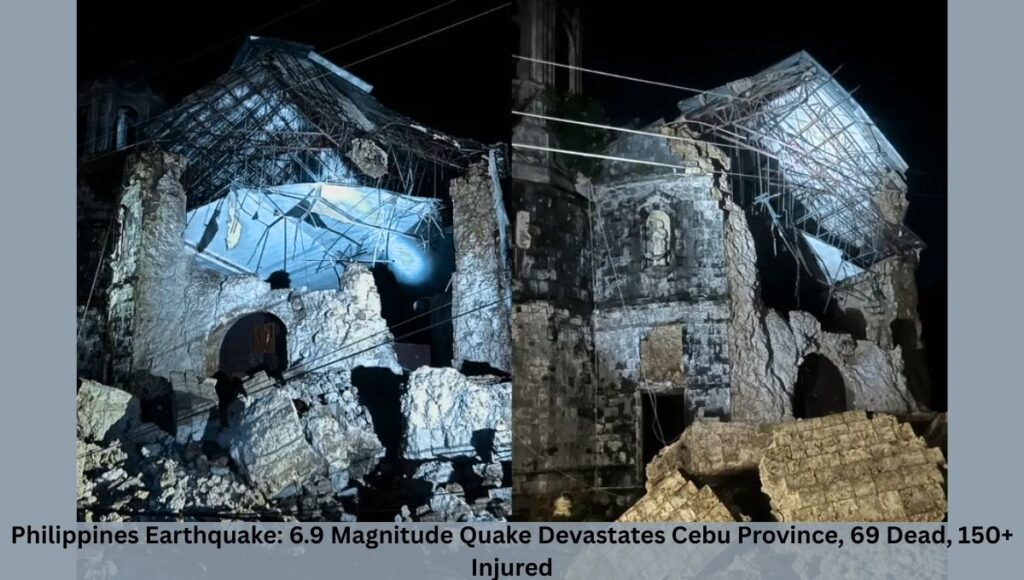
In Daanbantayan, north of Bogo, the historic St. Rita Church partially collapsed, leaving a deep crack in the Municipal Hall as well. The destruction of centuries-old churches such as those in Bantayan Island and Daanbantayan underscores the cultural and historical loss caused by the quake.
Churches and Heritage Structures Damaged
The Parish of Saint Peter the Apostle in Bantayan, a landmark Catholic church, was reduced to rubble as tremors struck during the night. A video widely circulated on social media showed lights flickering as the church trembled, followed by the collapse of its walls.
Cebu Governor Pamela Baricuatro highlighted the gravity of the cultural destruction:
“The current situation in Daanbantayan highlights the severe impact of the earthquake on heritage structures, which form part of Cebu’s rich cultural and spiritual identity.”
Tsunami Warning and Aftershocks
The Philippine Institute of Volcanology and Seismology (Phivolcs) initially issued a tsunami warning for Cebu, Leyte, and Biliran, urging residents along coastal towns to move inland. The warning was later lifted after no unusual wave activity was recorded.
However, residents remain on edge as aftershocks continue to rattle the region. Phivolcs recorded multiple aftershocks, some measuring above magnitude 5. Officials urged residents to remain vigilant and avoid damaged buildings.
Fire, Power Outages, and School Closures
The earthquake triggered fires, including one at a Cebu shopping mall, and left streets littered with debris. In Bogo, a McDonald’s outlet was badly damaged, and videos showed beauty pageant contestants running off a stage mid-event when the tremors struck.
The Medellin municipality announced suspension of classes and work until buildings are inspected for safety. Power remains cut off in several towns, further complicating rescue and relief operations.
Government Response and Call for Aid
Governor Baricuatro confirmed she had spoken with the Office of the President, which pledged immediate aid to Cebu.
“Know that the provincial government is doing its best. Help is coming,” Baricuatro said in a video message.
The Cebu provincial government has declared a state of calamity, calling on medical volunteers, doctors, and nurses to assist overwhelmed hospitals. Trauma teams and mobile medical units are being dispatched to affected towns.
The Philippine Red Cross reported significant damage to schools, homes, and infrastructure. Chairman Richard Gordon described the quake as a “sleeper” that caught people off guard at night.
International Condolences
The Embassy of India in Manila extended condolences, stating on social media:
“The Embassy of India extends its deepest condolences to the people affected by the earthquake in Cebu province and to the government and people of the Philippines. Our thoughts and prayers are with all those impacted.”
Other nations, including the United States and Japan, have offered support, pledging humanitarian aid and technical assistance for rescue operations.
Also Read: Massive 8.8 Earthquake Hits Russia’s Kamchatka, Triggers Tsunami Alerts Across Pacific
Earthquake Triggers Taal Volcano Activity
Phivolcs also reported a minor eruption at Taal Volcano, located about 70 kilometers south of Manila. The eruption sent a 2,500-meter ash plume into the sky but remained at Alert Level 1, indicating no imminent threat.
Philippines: A Disaster-Prone Nation
The Philippines lies along the Pacific Ring of Fire, an area prone to earthquakes, volcanic eruptions, and frequent typhoons. The country experiences nearly daily seismic activity, though most tremors are too weak to be felt.
In 2022, a 7.0 magnitude earthquake in northern Luzon killed five people and injured over 100. In 2019, a 6.1 magnitude earthquake in Luzon left 11 dead.
The 6.9 magnitude quake in Cebu now ranks among the deadliest in recent years, a stark reminder of the Philippines’ vulnerability to natural disasters.
Ongoing Rescue Efforts
Rescue teams are in a race against time, with officials emphasizing that the “golden hours” after a disaster are crucial for saving lives. Civil Defense Deputy Administrator Bernardo Rafaelito Alejandro IV said:
“We’re still in the golden hour of our search and rescue. Many people are believed trapped under debris. We are deploying all available resources.”
Heavy rains, power outages, and damaged roads remain major obstacles for rescuers.
Outlook: Rising Death Toll, Long Recovery
As of Wednesday evening, the death toll stands at 69, with over 150 injured. Authorities warn the number could rise significantly as rescue teams access remote villages.
Thousands of residents remain displaced, staying in evacuation centers or open spaces amid ongoing aftershocks.
The Cebu government and national disaster agencies are appealing for food, water, medicine, and shelter supplies, as well as international humanitarian assistance.
Final Word
The 6.9 magnitude Philippines earthquake in Cebu has left a devastating trail of destruction, killing dozens, injuring hundreds, and shattering cultural heritage. With rescue teams racing against time, the disaster has once again highlighted the Philippines’ fragility against natural calamities and the urgent need for stronger infrastructure, disaster preparedness, and international cooperation in relief and recovery.
Related Posts:
- Philippines Earthquake Kills 69: Miss Asia-Pacific…

- 6.3-Magnitude Earthquake Devastates Northern Afghanistan

- 7 Heartbreaking Facts About Venezuela's Earthquake Disaster

- 6.1-Magnitude Earthquake Rocks Western Türkiye:…
- Japan Earthquake 2026: Deadly 7.1 Kumamoto Quake…
- 7 Devastating Facts About Typhoon Kalmaegi:…