10 Shocking Facts About Two Years of Israel–Gaza War and its devastating toll. Two years after the deadly Hamas attack on Israel on October 7, 2023, the region remains embroiled in violence, destruction, and political upheaval. The conflict has left over 67,000 Palestinians and 1,665 Israelis dead, displaced millions, and triggered widespread humanitarian crises. In Israel, thousands gathered to mourn the victims, while in Gaza, explosions continued to echo amid destruction. Leaders worldwide, including Congress MP Shashi Tharoor, have called for an end to the horrors in Gaza.
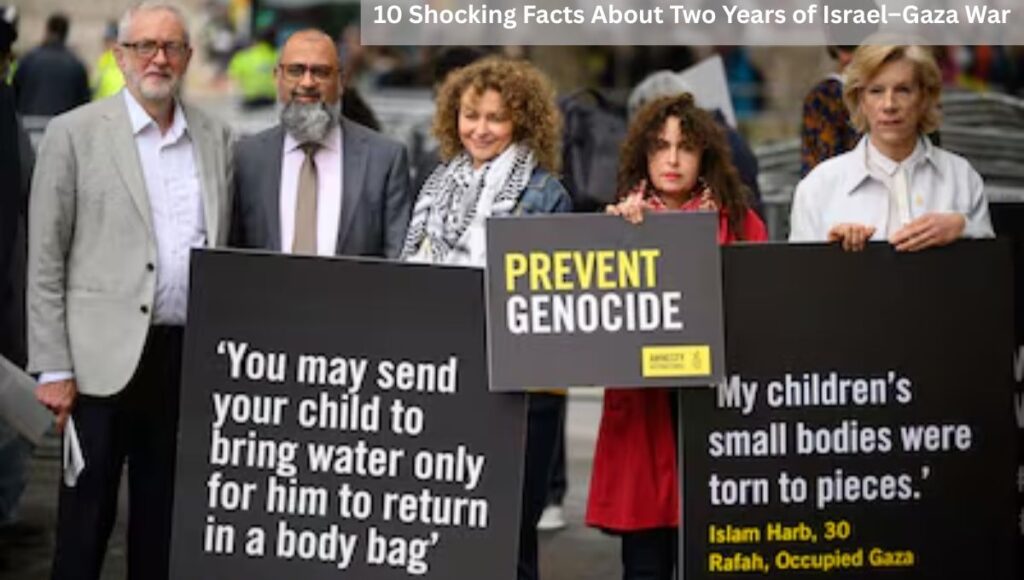
10 Shocking Facts About Two Years of Israel–Gaza War
Remembering October 7, 2023
The October 7 Hamas attacks were unprecedented in scale and brutality. Thousands of militants infiltrated southern Israel after a surprise rocket barrage, targeting army bases, towns, and civilian areas, including the Nova music festival near Reim, where nearly 400 were killed.
- 1,200 civilians died, including women, children, and elderly citizens.
- 251 hostages were taken, with 48 still in Gaza and around 20 believed alive.
- Hamas demanded a ceasefire and Israeli withdrawal in exchange for their release.
The event remains the bloodiest day in Israel’s modern history, profoundly shaping its domestic politics and society.
Israel Mourns, Shashi Tharoor Calls for Peace
On the second anniversary, Israelis gathered at memorials across the south, with survivors and bereaved families sharing memories.
Congress MP Shashi Tharoor tweeted:
“It’s been two years since the terrorist attack on Israel, and the brutal assault on Gaza that followed. A day to bow our heads in prayer and remembrance for all the lives lost, the destruction of homes and hope. And a fervent wish that the horror ends — very soon.”
Despite the memorials, the conflict continues unabated, with Gaza facing ongoing Israeli military operations, widespread destruction, and humanitarian crises.
Also Read: Trump Orders Israel to Halt Gaza Bombing After Hamas Move
The Humanitarian Toll in Gaza
The conflict has decimated Gaza:
- 90% of the population displaced.
- Severe hunger and famine conditions reported in Gaza City.
- Over 50,000 Palestinian civilians killed, including thousands of children.
- The Gaza Strip has become a moonscape of rubble, with 92% of buildings destroyed.
Medical and humanitarian experts describe conditions in Gaza as “incompatible with human life”, underscoring the catastrophic impact of the war.
Political Fallout in Israel
Two years of war have deeply impacted Israeli society:
- Public division and fatigue dominate social and political life.
- Extremist parties, including National Security Minister Itamar Ben-Gvir and Finance Minister Bezalel Smotrich, have gained veto power over government policy.
- Opposition voices are marginalised, with war policy largely dictated by the far right.
Analysts highlight Israel’s international isolation, with countries such as the UK, France, and Germany condemning its actions in Gaza and recognising Palestine.
Netanyahu’s Struggle for Survival
Prime Minister Benjamin Netanyahu faces multiple pressures:
- Maintaining a coalition with far-right factions.
- Postponing corruption trials.
- Declaring “total victory” while pursuing hostages’ release and the destruction of Hamas.
Israel’s domestic politics remain deeply intertwined with ongoing military campaigns and national security priorities.
Israel’s Military Campaigns and Regional Impact
Israel’s military response to Hamas has reshaped the Middle East:
- Strikes on Gaza, Lebanon, Syria, Iran, Qatar, and Yemen.
- Weakening of Iran-backed groups like Hezbollah.
- Collapse of Syria’s Shia-led regime.
- B-2 Midnight Hammer strikes de-nuclearised Iran’s nuclear programme.
The war has also disrupted shipping lanes in the Red Sea, prompting India to invest in domestic shipbuilding.
“The Middle East has been quieter than it has ever been in two decades,” US National Security Adviser Jake Sullivan said shortly before October 7.
Timeline of the Conflict
October–November 2023: Israel Strikes Back
Israel launched airstrikes and ground operations, destroying homes, hospitals, and schools. Over a million Palestinians were displaced. Initial ceasefires offered brief respite, but violence resumed quickly.
2024: War Intensifies
Operations in Rafah, Khan Younis, and Gaza City led to further humanitarian crises. International agencies accused Israel of creating conditions incompatible with life, while Israel cited Hamas’ use of human shields.
2025: Renewed Offensive and Peace Talks
Israeli offensives in May–August 2025 captured key areas in Gaza. In October 2025, indirect peace talks mediated by the US and Qatar began, guided by Donald Trump’s 20-point Gaza peace plan.
Trump called for Israel to “immediately stop the bombing” to facilitate hostage releases, while Netanyahu pledged to implement the first stage of the plan.
Hostage Crisis Continues
- 48 hostages remain in Gaza.
- Hamas continues to demand ceasefire and withdrawal in exchange for their release.
- Families of hostages have staged persistent mass protests.
The hostage situation remains a major obstacle to lasting peace, with both sides maintaining firm stances.
Donald Trump’s Role in Peace Talks
Trump has leveraged US influence over Israel to advance negotiations:
“Why are you so f***ing negative?” Trump reportedly said to Netanyahu when warned Hamas was delaying.
Trump’s deal-making instincts and assertive approach have pressured both parties toward indirect engagement, though many challenges remain.
The International Dimension
- Israel relies heavily on US military and diplomatic support.
- Former allies, including the EU, UK, Canada, and Australia, condemned Israeli actions.
- Recognition of Palestine by over 159 UN member states has grown, leaving the US as the primary supporter of Israel.
The conflict has also redrawn alliances in the Middle East, with Saudi Arabia and Qatar now key mediators.
Gaza Peace Plan: Challenges Ahead
The Trump 20-point Gaza peace plan aims to:
- Secure the release of Israeli hostages.
- Rebuild Gaza under technocratic governance.
- Address limited Palestinian independence.
Major obstacles include:
- Hamas’ desire to maintain sufficient military capacity.
- Netanyahu’s insistence on total victory.
- Domestic pressures on both sides to continue fighting.
Analysts caution that the plan, while promising, cannot resolve long-term Israeli–Palestinian conflict, particularly over the West Bank.
Long-Term Consequences
Two years after October 7:
- Israel remains militarily dominant but socially fractured.
- Hamas’ original military structure is broken, replaced by urban guerrilla tactics.
- Humanitarian catastrophe persists in Gaza, with famine and displacement ongoing.
- Regional power dynamics have shifted, weakening Iran and Syria while reshaping alliances.
The conflict has fundamentally altered the Middle East, leaving future flare-ups likely.
Will Peace Be Achieved?
The Sharm el-Sheikh talks offer a window of opportunity:
- Negotiations focus on hostage exchange, ceasefire, and partial Palestinian autonomy.
- Trump’s mediation pressures Hamas and Israel to engage, though scepticism remains high.
- Both parties face domestic critics who advocate continuation of the war.
The coming weeks are critical in determining whether two years of bloodshed can give way to fragile peace.
Also Read: Key US and regional mediators join talks in push to end Gaza war
Conclusion
Two years on, the Israel–Gaza conflict continues to define regional politics, global diplomacy, and humanitarian crises. While Shashi Tharoor and other leaders call for an end to the suffering, the realities on the ground highlight the immense challenges ahead.
The Trump-mediated peace talks offer hope, but only careful diplomacy, political will, and international support can translate that hope into a lasting ceasefire.
Related Posts:
- Trump’s 20-Point Gaza Peace Plan Gains Urgent Global…

- Israel–Hamas Ceasefire Under Strain: 4 More Hostage…

- 5 Key Developments as Israel Confirms Hamas Handed…

- 3 Explosive Conditions Iran Sets to End War with US…

- 7 Heartbreaking Facts About Venezuela's Earthquake Disaster
- 5 Major Takeaways from the US Supreme Court's…