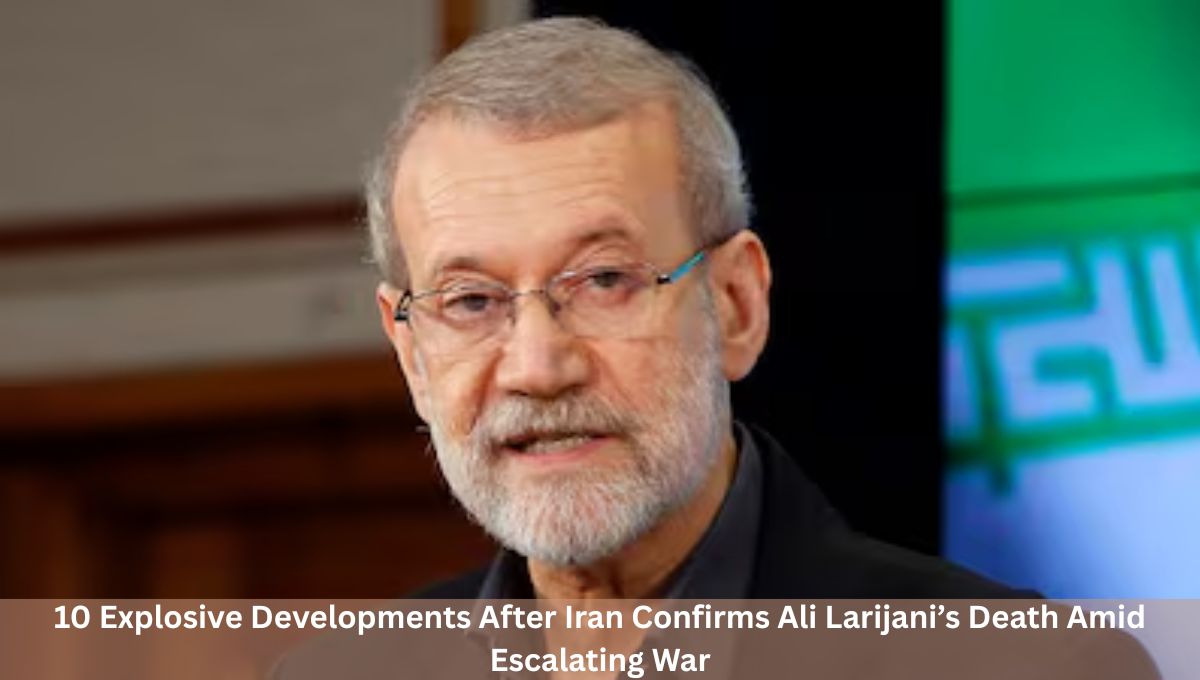
10 Explosive Developments After Iran Confirms Ali Larijani’s Death Amid Escalating War, marking a turning point. The confirmation of Ali Larijani’s death marks a dramatic escalation in the ongoing conflict involving Iran, Israel, and the United States.
As one of the most influential figures in Iran’s political and security architecture, Larijani’s killing represents far more than the loss of a senior official—it signals a shift in the strategic balance of the war.
Within hours of Iran confirming his death, the region witnessed retaliatory missile strikes, renewed military operations, and growing fears of a wider regional war.
The implications stretch far beyond the Middle East, affecting global oil markets, international diplomacy, and geopolitical stability.
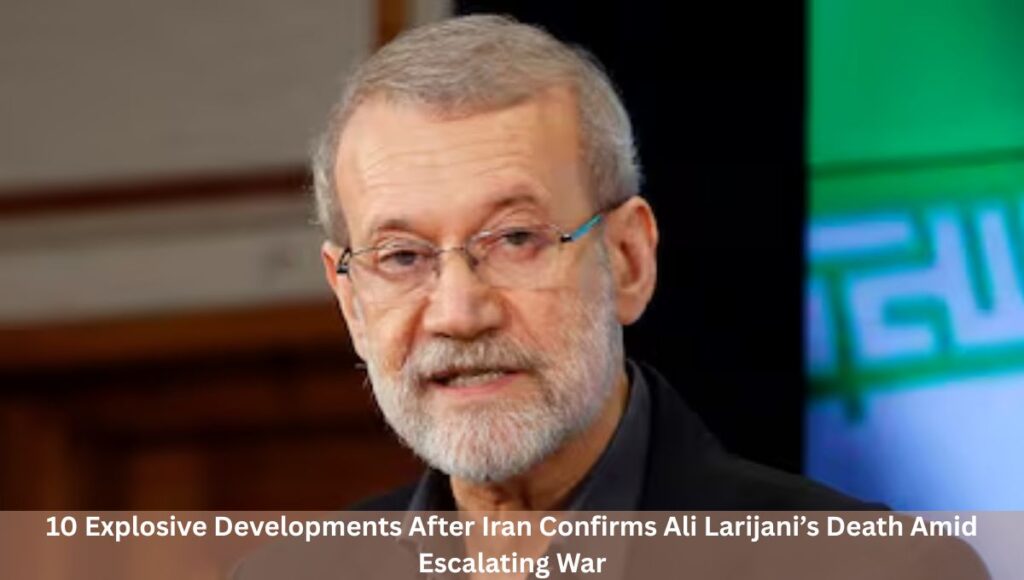
10 Explosive Developments After Iran Confirms Ali Larijani’s Death Amid Escalating War
Who Was Ali Larijani and Why His Death Matters
A Central Architect of Iran’s Power Structure
Ali Larijani was not just another political figure.
He served as the secretary of Iran’s Supreme National Security Council and was widely considered a central figure in shaping the country’s defense, foreign policy, and internal security strategy.
With decades of experience across multiple branches of government, Larijani operated at the intersection of military power and political authority.
He had previously served as parliament speaker, nuclear negotiator, and a key adviser within Iran’s leadership.
A Strategic Bridge Between Factions
Unlike many hardliners, Larijani was known for his ability to navigate Iran’s complex political landscape.
He maintained relationships with both conservative factions and more pragmatic elements within the system.
This made him uniquely positioned to:
- Coordinate wartime strategies
- Manage diplomatic channels
- Influence internal political consensus
His removal creates a vacuum that is not easily filled.
How the Strike Happened
Targeted Airstrike in Tehran
According to reports, Larijani was killed in a targeted Israeli airstrike at his daughter’s residence in the Pardis area near Tehran.
The strike also killed his son, a senior aide, and multiple security personnel.
The operation appears to have been highly precise, suggesting deep intelligence penetration into Iran’s internal security networks.
Israel’s Strategic Objective
Israeli officials confirmed responsibility for the strike, stating that the operation aimed to weaken Iran’s leadership and disrupt its command structure.
The attack also reportedly killed Gholamreza Soleimani, the head of Iran’s Basij paramilitary force, further compounding the blow to Iran’s security apparatus.
Iran’s Immediate Response
Missile Strikes on Tel Aviv
In retaliation, Iran launched missile attacks targeting Tel Aviv. Some of these missiles reportedly carried cluster warheads, which disperse smaller explosives over a wide area.
The attack resulted in civilian casualties and heightened fears of further escalation.
Expanding the Conflict Zone
Iran’s response was not limited to Israel. Reports indicate:
- Drone strikes near U.S. assets in Iraq
- Missile activity targeting Gulf states
- Increased threats against shipping routes
This signals a deliberate strategy to widen the battlefield.
Rising Tensions Around the Strait of Hormuz
A Global Economic Chokepoint
The Strait of Hormuz, through which roughly 20% of the world’s oil supply passes, has become a central flashpoint in the conflict.
Iran has effectively threatened or restricted passage through the strait, raising alarm across global markets.
Impact on Oil Prices
Since the escalation:
- Oil prices have surged significantly
- Global markets are experiencing volatility
- Energy-dependent economies face rising inflation risks
The disruption highlights how regional conflict can rapidly evolve into a global economic crisis.
The Role of the United States
Military Involvement Intensifies
The United States has conducted strikes on Iranian missile installations near the Strait of Hormuz, citing threats to international shipping.
These strikes involved heavy ordnance targeting fortified sites along Iran’s coastline.
Diplomatic Challenges
Despite calls for allied support, several U.S. partners have shown reluctance to get directly involved.
This has exposed divisions within traditional alliances and complicated efforts to secure maritime routes.
Leadership Crisis Inside Iran
Loss of a Key Power Broker
Larijani’s death comes shortly after the killing of Iran’s Supreme Leader, creating a severe leadership crisis.
He had effectively become a stabilizing figure during wartime, managing both internal and external pressures.
Rise of Hardline Leadership
With Larijani gone:
- Power is shifting toward more hardline factions
- Diplomatic channels may weaken
- Military responses could become more aggressive
This transformation could make the conflict more unpredictable and prolonged.
Regional Fallout
Gulf States Under Threat
Iran’s retaliatory strategy includes targeting:
- Oil infrastructure
- Military bases
- Urban centers in Gulf nations
Countries hosting U.S. bases are particularly vulnerable.
Lebanon and Wider Instability
The conflict has also intensified in Lebanon, where ongoing strikes have caused widespread displacement and casualties.
The risk of a multi-front war is increasing, drawing in additional actors.
Global Implications
Energy and Inflation Crisis
The conflict is already triggering:
- Rising fuel costs
- Supply chain disruptions
- Increased cost of goods globally
If the Strait of Hormuz remains unstable, the economic impact could deepen.
Aviation and Trade Disruptions
Airspace closures across the Middle East have:
- Forced flight reroutes
- Increased airline costs
- Disrupted global travel networks
These disruptions add another layer of economic strain.
Could This Prolong the War?
Loss of a Diplomatic Channel
Analysts widely agree that Larijani was one of the few figures capable of facilitating negotiations.
His death removes a potential bridge between Iran and international actors.
Hardliners Gain Ground
Without moderating voices:
- War strategies may dominate over diplomacy
- Escalation becomes more likely
- Ceasefire prospects diminish
This increases the probability of a prolonged and more destructive conflict.
Israel’s Broader Strategy
Decapitation of Leadership
The targeting of senior Iranian figures suggests a deliberate strategy to dismantle Iran’s leadership structure.
This approach aims to:
- Disrupt decision-making
- Weaken coordination
- Create internal instability
Psychological Impact
Beyond military objectives, such strikes send a strong signal intended to:
- Undermine morale
- Expose vulnerabilities
- Pressure the regime internally
Humanitarian Concerns
Rising Casualties
Thousands have reportedly been killed since the conflict began, with civilians bearing a significant portion of the impact.
Risk of Food and Energy Crises
International organizations warn that prolonged conflict could trigger:
- Food shortages
- Fertilizer supply disruptions
- Energy crises in vulnerable regions
The humanitarian fallout could extend far beyond the immediate conflict zone.
What Happens Next?
Escalation or Containment
The coming weeks will determine whether the conflict:
- Escalates into a broader regional war
- Stabilizes through diplomatic intervention
Key Factors to Watch
- Control of the Strait of Hormuz
- Further targeted assassinations
- U.S. military involvement
- Iran’s internal political shifts
Conclusion: A Defining Moment in Modern Geopolitics
The death of Ali Larijani represents a critical inflection point in the Middle East conflict.
It has intensified hostilities, disrupted political stability within Iran, and heightened global economic risks.
As retaliation continues and alliances are tested, the world is watching a rapidly evolving crisis that could reshape the geopolitical landscape for years to come.
The path forward remains uncertain—but the stakes have never been higher.
Also Read: 10 Powerful Facts Behind the $10 Million US Bounty on Iran’s Top Leaders
Also Read: Larijani’s Visit To Daughter’s House Sealed His Fate. How He Was Located
Related Posts:
- 3 Explosive Conditions Iran Sets to End War with US…
- 10 Explosive Warnings as Donald Trump Calls Iran…
- 7 Powerful Facts About Ayatollah Ali Khamenei’s…
- 10 Explosive Signals: Trump Rates Iran War “15/10”…
- 10 Powerful Revelations from the Trump–Putin Call on…

- 7 Explosive Signs Russia Is Quietly Backing Iran in…